
Pickleball Court Orientation: Which Direction Courts Should Face and Why
Which direction should a pickleball court face? An outdoor pickleball court should be oriented with its long axis running north-south. Players face along the length of the court, so a north-south layout keeps the rising and setting sun out of both players’ sightlines for most of the playing day. This is the same convention used […]
Tennis Court Drainage: Slope, Subsurface Systems, and the 60 by 120 Problem
How is a tennis court drained? An outdoor tennis court is drained by sloping the entire pad in a single plane at roughly one percent, so that water crosses the surface in one direction and leaves at a defined edge. Where the subgrade holds water, or the surrounding site sends water toward the court, the […]
Pickleball Court Drainage: Slope, Subsurface Systems, and Why Water Decides Surface Life
How is a pickleball court drained? An outdoor pickleball court is drained by sloping the entire playing surface in a single plane at roughly one percent, so that water crosses the court in one direction and leaves at a defined edge. Where the subgrade holds water or the surrounding grade sends water toward the court, […]
Design-Build Pickleball Courts: How the Delivery Model Changes the Outcome
What does design-build mean for a pickleball court project? Design-build is a delivery model in which one party holds responsibility for both the design of the court system and its construction under a single contract. The alternative, design-bid-build, splits those responsibilities: an architect or engineer produces drawings, the drawings go out to bid, and a […]
Tennis Court Repair: Cracks, Drainage, and Repair vs Rebuild
Tennis court repair: reading what the court is telling you A tennis court fails from the bottom up and shows it from the top down. By the time a crack is visible in the color coat, the decision that matters has already been made somewhere below it, in the asphalt or concrete, in the slope, […]
Pickleball Court Repair: Cracks, Low Spots, and When to Rebuild
Pickleball court repair: what is worth fixing and what is not Most pickleball court repair decisions come down to one question: is the damage in the surface, or is the surface showing you a problem in the base? A cracked coating that sits on a sound slab is a repair. A crack that keeps coming […]
Padel Court Lines: Markings, Dimensions, and Painting Standards
What lines does a padel court need? A regulation padel court carries a small, fixed set of lines: two service lines, a center service line that splits each service box, and the side and back boundary lines formed by the court perimeter. Compared with tennis, the padel layout is simpler on paper but less forgiving […]
Tennis Court Windscreen: Materials, Sizing, and Installation (2026)
A tennis court windscreen is a fabric mesh panel attached to the perimeter fence that blocks wind, reduces glare from movement behind the court, and gives players a consistent visual backdrop for tracking the ball. It is one of the least expensive upgrades on a court and one of the most noticeable on playability, which […]
Converting a Tennis Court to a Padel Court: Fit, Structure, and Cost (2026)
Converting a tennis court to a padel court means reusing an existing court’s footprint and infrastructure to install one or more enclosed padel courts. It is one of the fastest-growing questions facility operators are asking as padel expands across the United States, because many clubs and communities hold underused tennis courts on land that is […]
Tennis Court Striping: Line Dimensions, Colors, and Blended Layouts (2026)
Tennis court striping is the layout and application of the painted lines that define the playing area: baselines, sidelines, service lines, the center service line, and center marks. Correct striping is what makes a resurfaced or newly built court playable to standard, and it is also where a facility decides whether the court will carry […]
Racquet Club Pickleball Courts: Adding Pickleball Without Compromising the Club
Last updated: July 22, 2026 Racquet clubs are adding pickleball courts to meet clear member demand while protecting the tennis programs, court inventory, and member experience the club is built around. The core decisions are whether to convert existing tennis courts, build dedicated pickleball courts, or do both; how to allocate court time across sports; […]
Padel Court Resurfacing: When and How to Renew the Playing Surface
Last updated: July 22, 2026 Padel court resurfacing is the process of renewing a court’s playing surface once the original turf or coating has worn past the point where brushing and sand top-ups can maintain fair, safe play. On the artificial-turf courts that make up most of the North American market, resurfacing usually means lifting […]
College Pickleball Courts: Campus Facility Planning Guide (2026)
College pickleball courts are moving from an intramural side project to a planned line item on campus recreation and athletics master plans. Recreation departments are converting underused tennis courts, adding dedicated multi-court complexes near residence halls, and pairing pickleball with existing racquet programs. Athletics departments at a growing number of NCAA institutions are looking at […]
Padel Court Walls: Glass, Mesh, and Structural Design (2026)
Padel court walls are structural: they are not a fence around the court, they are part of the court. A regulation padel court measures 20 meters by 10 meters and is enclosed on all four sides by a combination of tempered glass panels and metal mesh. Balls bounce off the walls in active play, so […]
Padel Court Maintenance: Turf, Sand Infill, and Glass Enclosure Care
Last updated: July 2026 What does padel court maintenance involve? Padel court maintenance is the routine care that keeps the turf playing true, the sand infill evenly distributed, and the glass enclosure safe and clear. A padel court is a system of parts that wear at different rates: an artificial turf surface with sand infill, […]
Tennis Court Base: Concrete vs. Asphalt Foundations and Subgrade Prep
Last updated: July 2026 What is a tennis court base? A tennis court base is the structural foundation built under the color-coated playing surface. It carries the load, keeps the court flat and true over years of freeze-thaw and drainage cycles, and determines whether the finished surface cracks early or lasts. The base is everything […]
Padel Court Base: Concrete Slab, Drainage, and Structural Anchoring
Last updated: July 2026 What is a padel court base? A padel court base is the structural foundation built under the playing surface and, on a padel court specifically, under the steel-and-glass enclosure that defines the sport. It does two jobs at once: it carries and drains the playing area the way any court slab […]
What a 20-Minute Scoping Conversation Covers for a Racquet Club Operator

Last updated: July 24, 2026 A 20-minute PICKLETILE scoping conversation covers four things: your facility concept and operating model, which products fit (PICKLEGLASS, INFINITYFLEX, AUTONOMOUS), your build timeline against a target date, and a real quote based on your actual project. You do not need a finalized floor plan or approved budget to have it. […]
Tournament Hosting Infrastructure: What Facility Decisions Enable It and What It Returns
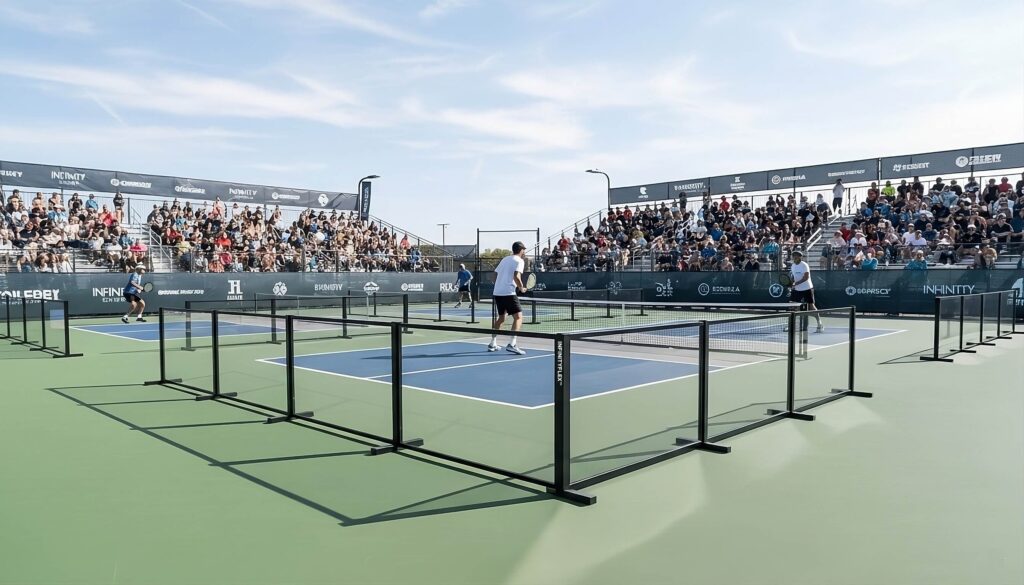
Last updated: July 24, 2026 Tournament hosting is a revenue model, not just a prestige play. A single well-attended regional tournament can generate the equivalent of several weeks of normal operating revenue in one weekend. The clubs that capture it reliably designed for it: at least four courts, transparent spectator sightlines, evening-capable lighting, and staging […]
Designing the Social Side of a Racquet Club: Spectator Areas, Lounges, and Food and Beverage

Last updated: July 24, 2026 The fastest measure of good racquet club design is dwell time, not utilization. Clubs where players stay after their session were designed for it: transparent enclosures that make watching easy, a lounge that flows from the court entrance, and food and beverage positioned within steps of the court exit. These […]
Surfaces and Structural Systems for Commercial Court Traffic
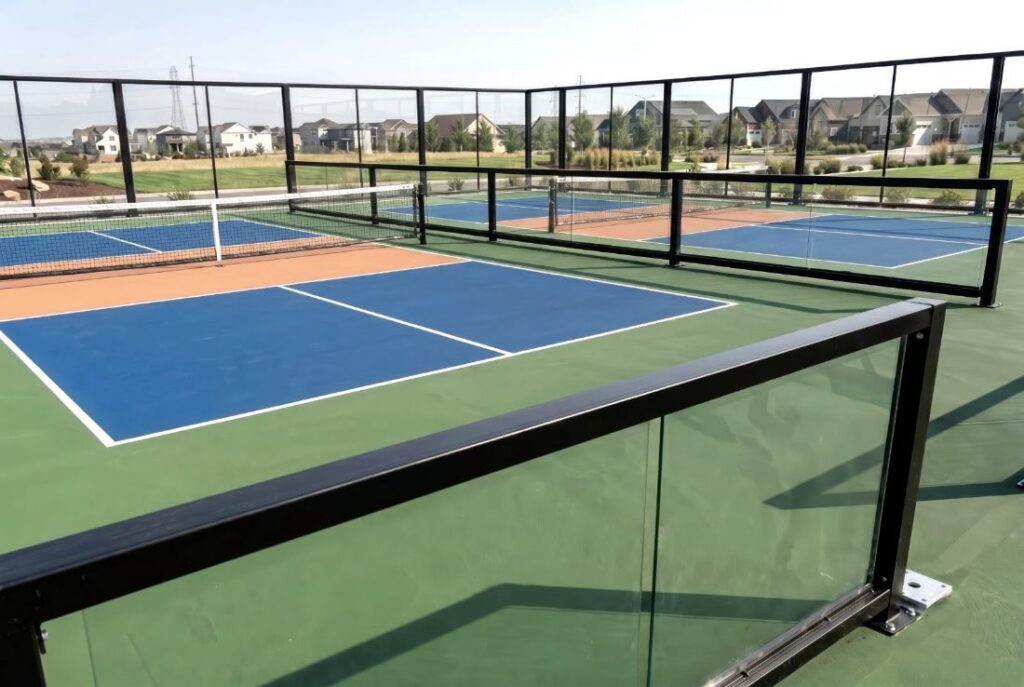
Last updated: July 24, 2026 A commercial racquet club court is not the same engineering problem as a residential one. It runs 8 to 14 hours a day, seven days a week, under rotating traffic. The operators who spend least on maintenance over five years specified correctly at the start: a post-tensioned slab, commercial-grade enclosure […]
Revenue Per Court: The Metric That Should Drive Every Racquet Club Facility Decision
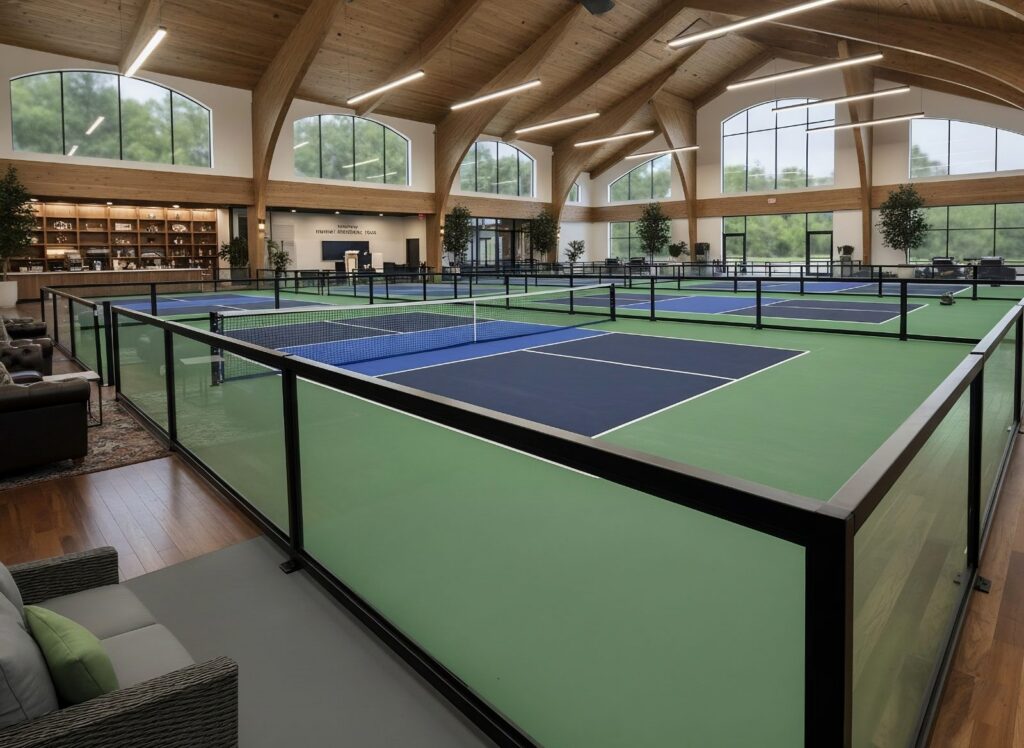
Last updated: July 24, 2026 Revenue per court is total court-generated revenue divided by your number of active courts, over a set period. It is a sharper decision tool than overall utilization because it combines rate and fill. The most profitable clubs built their facility design, programming, and product selection around maximizing it, and made […]
INFINITYFLEX and AUTONOMOUS: Products Built for Commercial Racquet Clubs
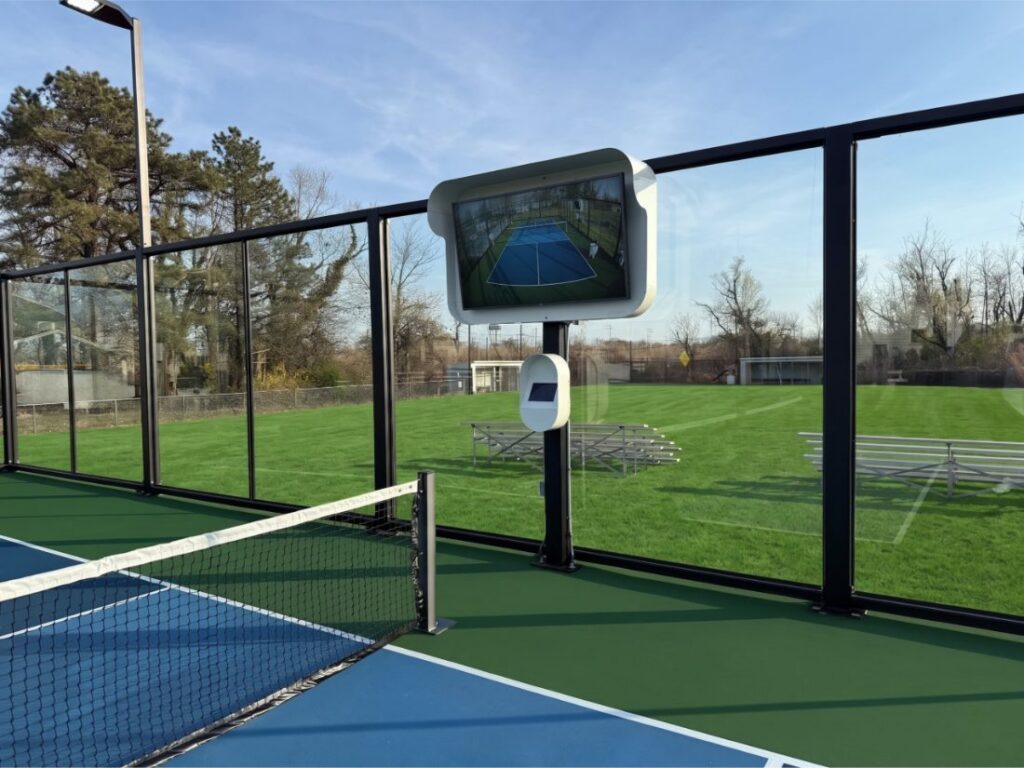
Last updated: July 24, 2026 Two PICKLETILE products are purpose-built for commercial racquet clubs. INFINITYFLEX is a modular, portable polycarbonate enclosure that lets you reconfigure courts and convert the space into event revenue. AUTONOMOUS is integrated access control that lets members self-serve during any hour, extending revenue-generating court time without staffing cost. Why is product […]
What Separates Racquet Clubs That Hit Utilization Targets
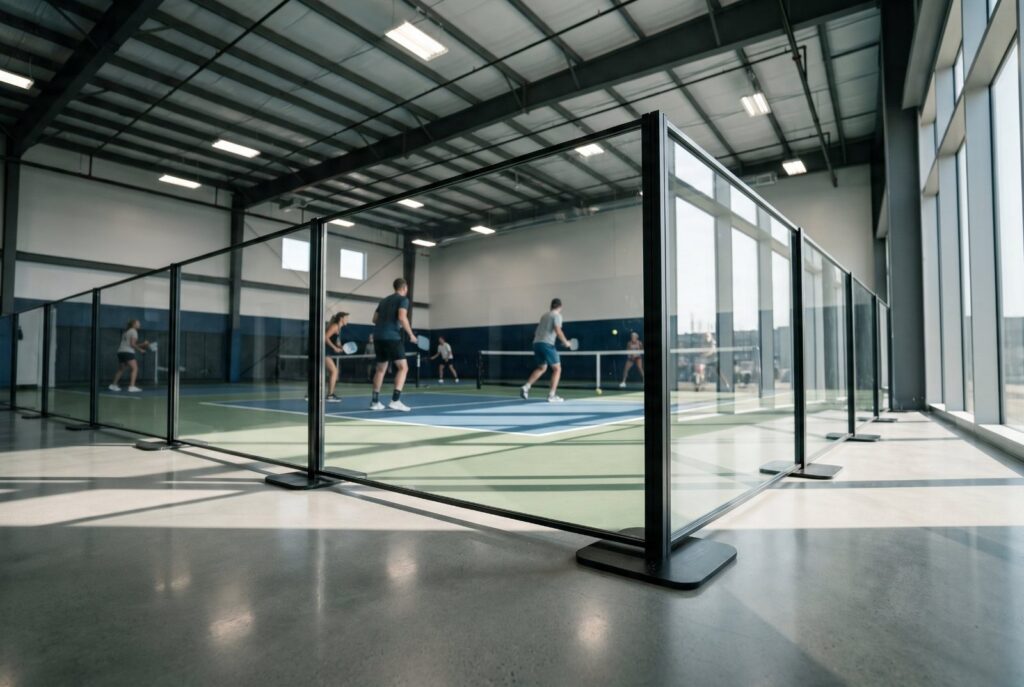
Last updated: July 24, 2026 Racquet clubs that hit utilization targets do it by design, not marketing. Clubs that sustain 75 to 85 percent court utilization share three facility decisions made before opening: a right-sized court count for the market, integrated access control that monetizes off-peak hours, and a programming-ready layout. Clubs that struggle usually […]
Padel Court Surfaces: Types, Materials, and How to Choose
Last updated: July 2026 What surface is used on a padel court? Most padel courts use an artificial grass (turf) playing surface laid over a rigid, well-drained base, with silica sand infill brushed into the fibers. The turf sits inside the glass-and-mesh enclosure that defines the sport, so the surface choice and the enclosure are […]
