
Last updated: July 24, 2026
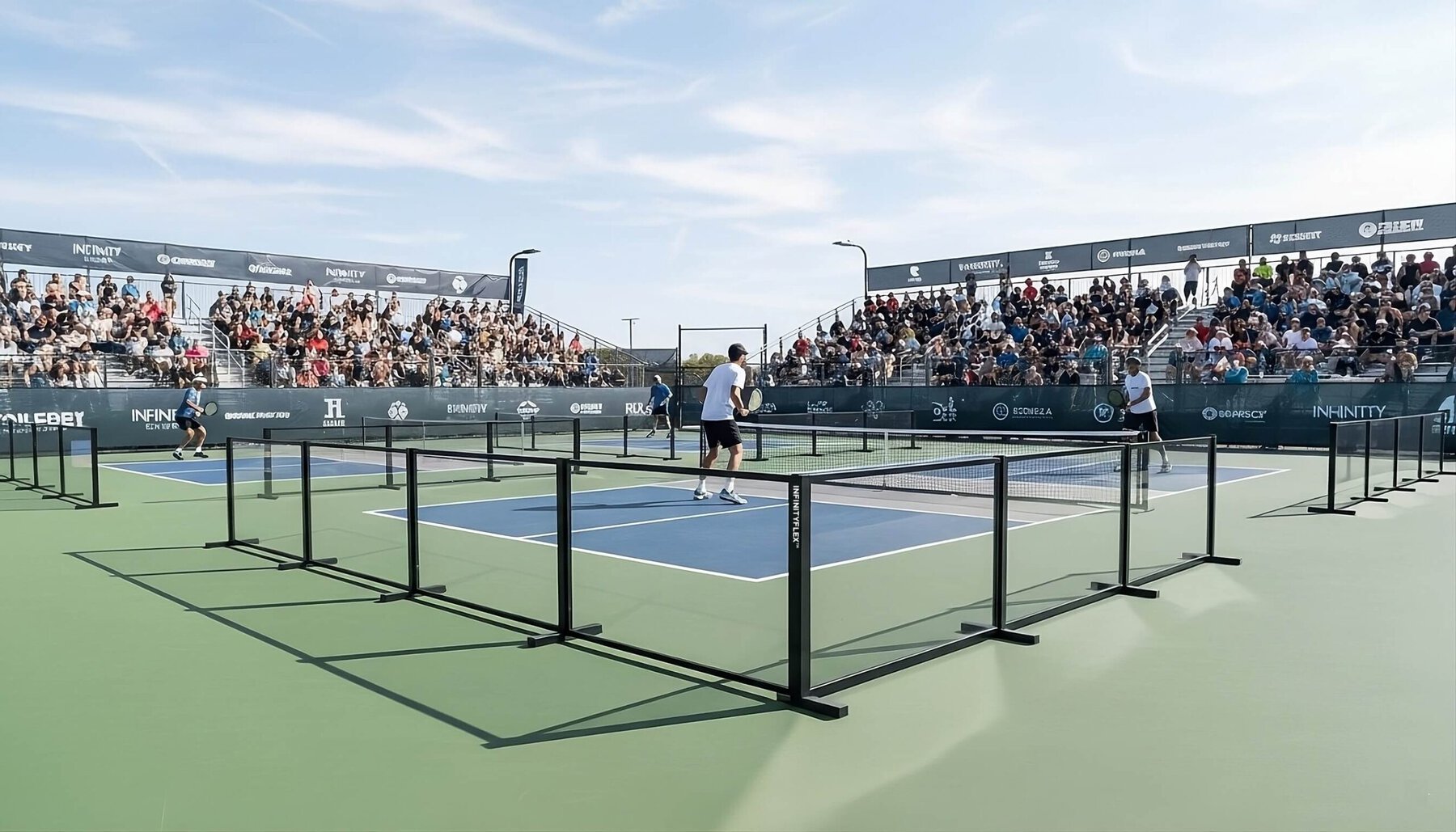
Tournament hosting is a revenue model, not just a prestige play. A single well-attended regional tournament can generate the equivalent of several weeks of normal operating revenue in one weekend. The clubs that capture it reliably designed for it: at least four courts, transparent spectator sightlines, evening-capable lighting, and staging space, all decided before the build.
Is tournament hosting actually a revenue model?
Tournament hosting is often framed as brand-building: a way to attract attention, build community credibility, and establish the club as a serious venue. All true, but it understates the direct revenue case. A well-run tournament generates entry-fee revenue, drives food and beverage sales at multiples of a typical day, fills hotel blocks that may carry referral arrangements, and introduces your facility to competitive players evaluating where to play ongoing. A single well-attended regional tournament, run in a facility designed for it, can generate the equivalent of several weeks of normal operating revenue in a single weekend. The clubs that capture that reliably are the ones whose facilities were designed to support it. The ones that attempt it on a facility that was not find that operational friction and participant experience underperform the expectation.
How many courts do you need to host a tournament?
The minimum viable count for meaningful hosting is four. With four courts you can run a standard double-elimination bracket in skill-based divisions across a weekend without the schedule bottlenecks that push an event past participants’ patience. Six to eight courts allow more divisions, faster brackets, and a significantly better participant experience because wait times between matches are shorter.
Court proportions matter. The standard pickleball court is 30 by 60 feet with a minimum 10-foot buffer on each end and 7 feet on each side. These are USA Pickleball specifications, and PICKLETILE, as the Official Court Builder of USA Pickleball, builds to these standards by default. Participants notice undersized or improperly dimensioned courts immediately, and that perception reflects on the event and the host club.
What spectator infrastructure does a tournament need?
Hosting without spectator infrastructure is a logistical problem and a missed revenue opportunity. Players, coaches, and spectators need to follow matches without crowding court zones. Food and beverage needs to be accessible. Results and bracket status need to be visible. The enclosure system is a significant factor: PICKLEGLASS, with full transparency, lets spectators watch from outside the court perimeter without entering the play area. In a multi-court facility, spectators can follow several matches at once from a common zone without disrupting play. Portable seating, temporary staging for check-in and bracket display, and food and beverage positioning for a high-traffic day all require design space that was planned for, not improvised. Facilities designed with event hosting in mind have this space; facilities that were not end up managing spectator overflow into court zones.
Why does lighting determine tournament viability?
Regional and national tournaments frequently run into evening hours. A facility that cannot run competitive play after 5 p.m. cannot host full-day or multi-day brackets reliably. LSI Zone LED fixtures integrated into the PICKLEGLASS court system provide the uniform illumination and color rendering competitive play requires. Players performing in a well-lit facility associate the experience with professional standards, which influences whether they return, whether they recommend the venue, and whether organizers consider your club for larger events.
How does INFINITYFLEX add tournament-weekend revenue?
For clubs using INFINITYFLEX, tournament weekends present extra revenue. Courts not in the main draw can be configured for warm-up space, parallel skills clinics, or recreational open play for participants awaiting their match. More significantly, the evening of a tournament day, once the competitive draw is complete, is a natural event opportunity: a sponsor reception, player dinner, or social gathering in cleared court space keeps participants on-site, extends food and beverage revenue, and builds the experience that makes them return next year. Designing for this at the plan stage, rather than improvising around fixed infrastructure, is what separates hosts that build a returning annual event from those that run a one-time experiment.
When do these decisions have to be made?
All of them, court count, spectator sightlines, lighting, enclosure system, staging space, and social zone design, are made before the first court goes in. If tournament hosting is part of the business model, it needs to be on the table at the start of the design conversation, not added as a requirement after the facility is built.
Frequently asked questions
What is the minimum court count to host a pickleball tournament?
Four courts is the minimum viable count for a standard double-elimination bracket across a weekend. Six to eight courts allow more divisions, faster brackets, and shorter wait times, which materially improves the participant experience.
What are the standard pickleball court dimensions for tournament play?
30 by 60 feet with a minimum 10-foot buffer on each end and 7 feet on each side, per USA Pickleball specifications. PICKLETILE builds to these standards by default as the Official Court Builder of USA Pickleball.
Why is lighting critical for tournament hosting?
Tournaments often run into the evening. Without adequate lighting a facility cannot reliably host full-day or multi-day brackets. Integrated LSI Zone LED fixtures provide the uniform illumination and color rendering competitive play requires.
How much revenue can a tournament generate?
A single well-attended regional tournament, run in a facility designed for it, can generate the equivalent of several weeks of normal operating revenue in one weekend through entry fees, elevated food and beverage sales, and hotel referral arrangements.
