
Last updated: August 26, 2026
Racquet clubs are adding pickleball courts to meet clear member demand while protecting the tennis programs, court inventory, and member experience the club is built around. The core decisions are whether to convert existing tennis courts, build dedicated pickleball courts, or do both; how to allocate court time across sports; and how to manage the noise and scheduling friction that surface when pickleball shares space with tennis. This page covers how racquet and tennis clubs approach those decisions and what separates a well-planned addition from a source of ongoing member complaints.
Should a racquet club convert tennis courts or build dedicated pickleball courts?
The right answer depends on court inventory, land, and how member demand splits between the sports. A single tennis court can be restriped or converted to hold up to four pickleball courts, which makes conversion the fastest way to add capacity when tennis utilization has softened. But converting removes tennis capacity that established members may still value, so clubs with strong tennis participation more often add dedicated pickleball courts on separate land, or blend the two: convert underused tennis courts while building dedicated courts to grow total capacity.
The economics of a tennis court to pickleball court conversion are attractive per court, but the strategic question at a racquet club is rarely purely financial. It is about not alienating one membership base to serve another. Clubs that survey members and model demand before allocating courts tend to avoid the reallocation fights that follow rushed decisions.
Managing noise between pickleball and tennis
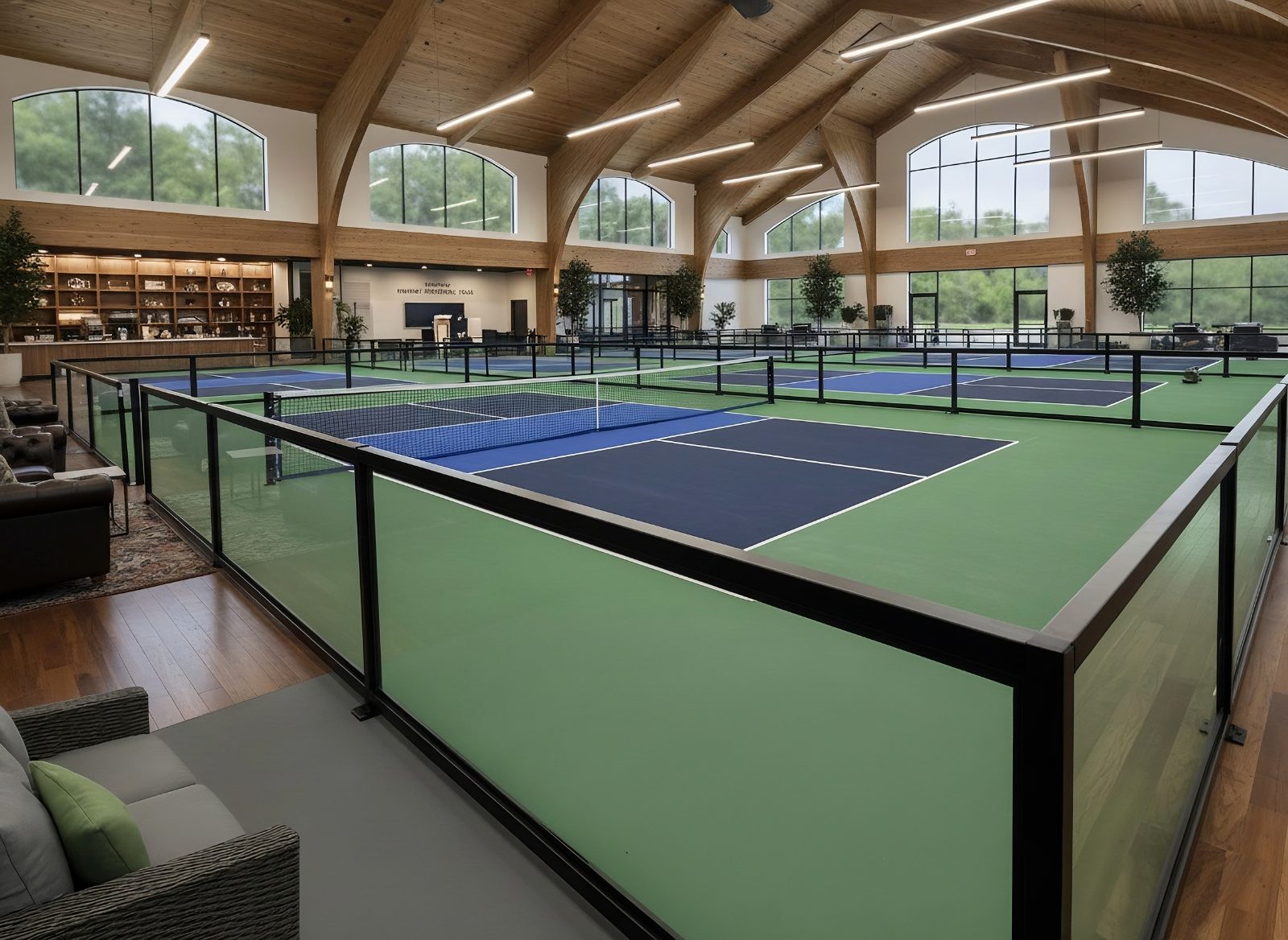
Noise is the issue most likely to generate member complaints at a racquet club, because pickleball’s sharp impact sound carries and is markedly more noticeable than the sound of tennis play, especially where new pickleball courts sit close to tennis courts, clubhouses, or neighboring properties. The tools are separation distance, orientation, acoustic fencing or barriers, and in the most sensitive settings, engineered enclosure systems. Planning pickleball noise reduction into the layout from the start is far cheaper and more effective than retrofitting mitigation after neighbors or members object. For premium clubs where courts sit near occupied buildings, a structural glass court enclosure both contains sound and integrates with the architecture rather than reading as an industrial barrier.

Design and layout for club play
Beyond the court count, a club-grade addition accounts for the elements that shape day-to-day member experience: pickleball court fencing that separates courts and contains balls without feeling like a cage, pickleball court lighting that supports evening league and social play to the standard members expect, shade and seating for the social viewing that defines pickleball’s appeal, and circulation that keeps pickleball traffic from cutting across tennis play. Surface selection, run-off margins, and gate placement all follow from how the club intends to program the courts.
Programming and court allocation
The operational challenge that outlasts construction is scheduling. Pickleball’s fast, social, high-turnover play pattern is different from tennis court booking, and clubs that apply tennis scheduling assumptions to pickleball courts tend to under-serve demand. Dedicated pickleball courts remove the daily allocation contest between sports; shared or convertible courts preserve flexibility but require clear, published time splits and a reservation system members trust. The right mix depends on the club’s demand data, not a default.
Planning the investment
A racquet club pickleball addition sits within the broader disciplines of pickleball facility planning and pickleball court cost budgeting. For a member-owned or member-driven club, the addition is best framed the way the rest of the club’s infrastructure is: a durable asset that shapes the member experience for years, where the enclosure, surface, noise strategy, and lighting are specified to a standard consistent with the club, not value-engineered down to the point where the courts become the amenity members complain about. Racquet clubs sit alongside country club pickleball courts as the private-club settings where architectural integration and member experience carry the most weight.
If you are scoping this work for your facility, an instant estimate will put real numbers behind the options discussed here, so scope, phasing, and budget can be weighed together.
Frequently asked questions
Should our racquet club convert tennis courts or build new pickleball courts?
Convert when tennis utilization has softened and speed to capacity matters; one tennis court yields up to four pickleball courts. Build dedicated courts when tennis demand is still strong and reallocating courts would alienate tennis members. Many clubs do both. Survey members and model demand before allocating.
How many pickleball courts fit on a tennis court?
Up to four pickleball courts fit within a standard tennis court footprint, depending on the run-off margins and fencing the club wants between courts. Fewer, more generously spaced courts play better for league and social use than four courts packed to the minimum.
How do we keep pickleball noise from bothering tennis players and neighbors?
Plan for it in the layout: separation distance, court orientation, and acoustic fencing or an engineered enclosure where courts sit near buildings or property lines. Designing mitigation in from the start is cheaper and more effective than retrofitting after complaints begin.
Will adding pickleball hurt our tennis program?
It does not have to. The clubs that protect tennis participation are the ones that decide court allocation from member demand data rather than reallocating tennis capacity by default, and that give pickleball its own scheduling model rather than forcing it into tennis booking patterns.
