
Last updated: August 26, 2026
What is a tennis court base?
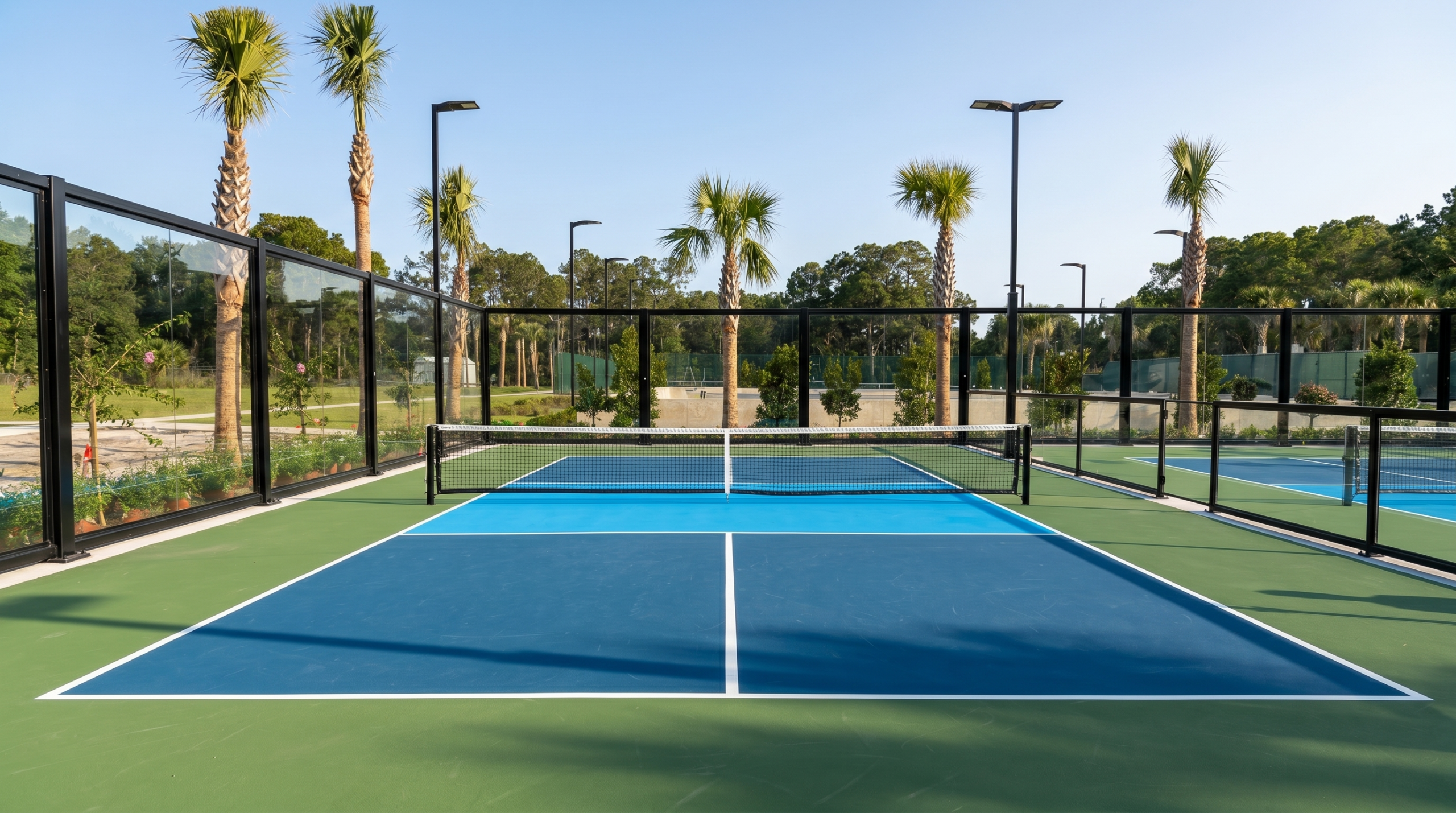
A tennis court base is the structural foundation built under the color-coated playing surface. It carries the load, keeps the court flat and true over years of freeze-thaw and drainage cycles, and determines whether the finished surface cracks early or lasts. The base is everything below the acrylic coatings: the prepared subgrade, any aggregate layer, and the concrete or asphalt slab itself. Get the base right and the surface is a maintenance item. Get it wrong and no coating can save it.
Below are the base types used on tennis courts, how the subgrade is prepared, and how to decide between concrete and asphalt.
The layers under a tennis court
Subgrade. The native soil, graded and compacted to a uniform, stable plane. Expansive or poorly draining soils are the most common source of long-term cracking, so problem soils are excavated and replaced or stabilized before anything is poured. Uniform compaction matters more than any single spec number, because differential settlement is what cracks slabs.
Aggregate base course. On many asphalt courts, a compacted stone layer sits between subgrade and pavement to distribute load and aid drainage. Thickness is set by soil conditions and local frost depth.
Structural slab. The concrete or asphalt layer that the surfacing bonds to. This is the layer that defines flatness tolerance and long-term crack resistance.
Concrete vs. asphalt tennis court base
Concrete (typically post-tensioned or reinforced). Post-tensioned concrete is widely regarded as the most crack-resistant base for tennis, especially on expansive soils and in freeze-thaw climates, because the tensioning keeps the slab in compression and resists the cracking that plagues rigid slabs. Reinforced concrete is a step below post-tension but still very stable. Concrete costs more upfront and takes longer to cure before surfacing, but it moves the least over time.
Asphalt. A proven, lower-cost base with a long track record for tennis. Asphalt is more forgiving to place and can be surfaced sooner, but it is more prone to cracking as it ages and oxidizes, and it needs a sound aggregate base and good drainage to reach its full life. Many recreational and municipal courts use asphalt successfully with disciplined maintenance.
The short version: post-tensioned concrete for the longest crack-free life and the toughest soils, asphalt when upfront budget leads and conditions are favorable.
Drainage and slope
Every tennis court base is built with a planned slope so water sheets off the surface. A true, consistent one-plane slope (side to side, end to end, or corner to corner) is standard, and the base is where that slope is established. Water that ponds or that gets under the slab is the enemy of any court, so subsurface drainage and perimeter grading are designed in at the base stage, not added later.
Why the base decision drives everything downstream
The playing surface, the tennis court surfaces you choose, and even the tennis court lighting footings all sit on decisions made at the base. Flatness tolerance set during the pour dictates how the finished court plays and how evenly the acrylic wears. This is why base work is scoped as part of overall tennis court construction rather than treated as a commodity. For the budget side of the base-versus-surface tradeoff, see cost to build a tennis court.
Frequently asked questions
Is concrete or asphalt better for a tennis court?
Post-tensioned concrete is the most crack-resistant base and performs best on expansive soils and in freeze-thaw climates, while asphalt is a proven lower-cost option that surfaces sooner but is more prone to cracking as it ages. The right choice depends on soil, climate, and budget.
How thick is a tennis court base?
Slab and aggregate thickness are set by soil conditions, climate, and base type rather than a single universal number. A geotechnical assessment of the subgrade drives the structural design, which is why base specs are engineered per site.
What is a post-tensioned tennis court?
It is a court built on a concrete slab with steel tendons tensioned after the concrete cures. The tensioning keeps the slab in compression, which strongly resists the cracking that can affect conventional slabs, making it a preferred base in demanding soil and climate conditions.
Can you build a tennis court without a proper base?
No. The base carries the load and holds the court flat and drained over time. Skipping proper subgrade preparation and structural slab work leads to cracking and unevenness that surface coatings cannot correct.
Does the base affect how the court plays?
Yes. The flatness tolerance established at the base stage determines how true the ball bounces and how evenly the surface wears, which is why base flatness is a core part of the specification.
