
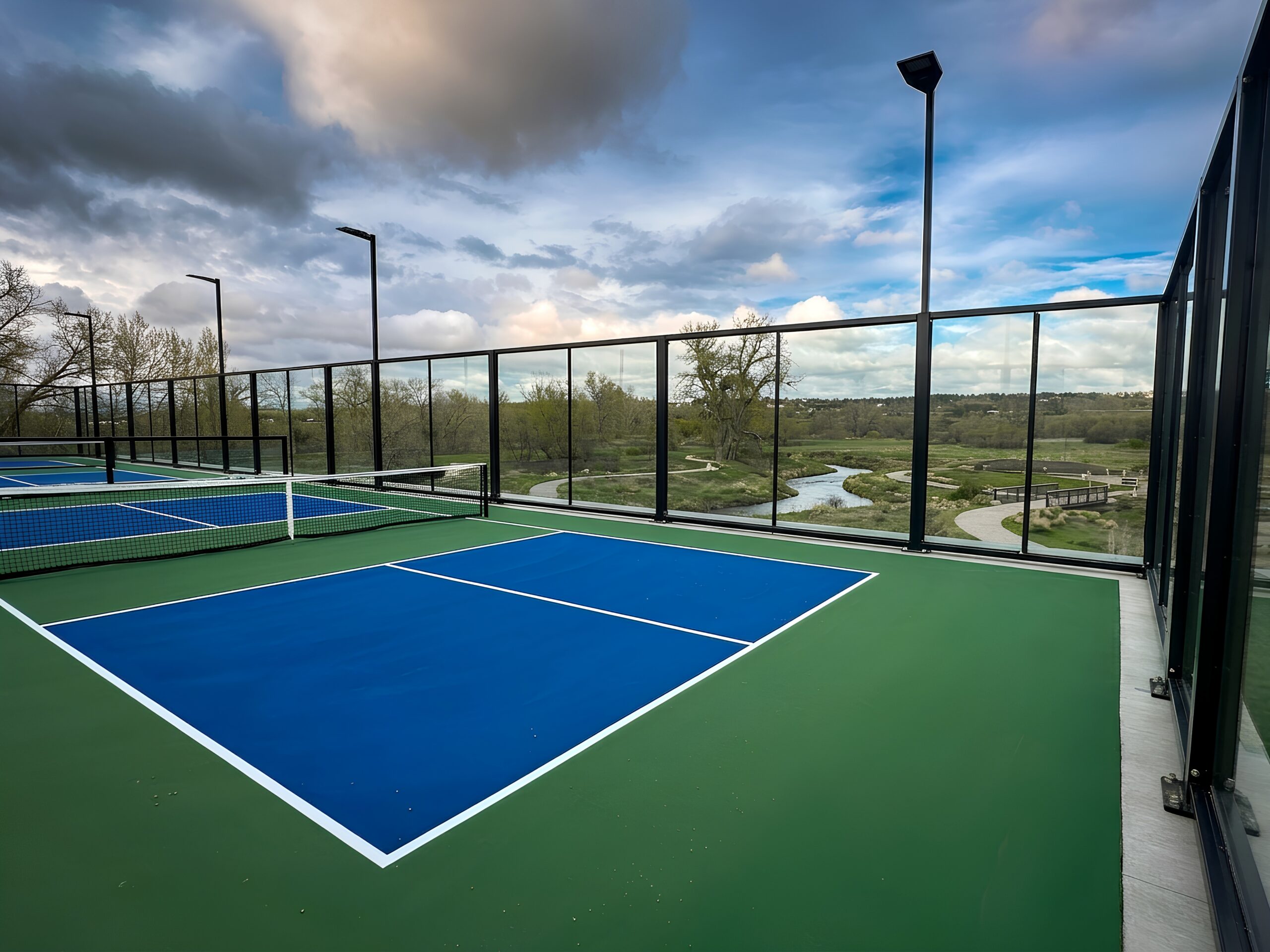
Pickleball court repair: what is worth fixing and what is not
Most pickleball court repair decisions come down to one question: is the damage in the surface, or is the surface showing you a problem in the base? A cracked coating that sits on a sound slab is a repair. A crack that keeps coming back after every patch is the base telling you it moves, and no amount of surface work will stop it.
That distinction decides whether you spend a modest amount on a repair, a moderate amount on a full resurface, or a significant amount on reconstruction. Getting it wrong is expensive in both directions. Patching a failing base means paying repeatedly for the same defect. Rebuilding a court that only needed a recoat means replacing a slab that had years of service left.
This guide covers how to read the common failure modes, which ones repair cleanly, and the specific signals that mean a court needs rebuilding rather than repairing.
The four failure modes you will actually see
Hairline cracks in the coating. Fine cracks confined to the acrylic color system, usually under about an eighth of an inch, often in a shallow map pattern. These come from coating age, thermal cycling, and UV exposure. They are cosmetic and they repair cleanly as part of a normal recoat.
Structural cracks. Cracks that run in long lines, are wider than an eighth of an inch, show vertical displacement between the two sides, or reappear in the same place after being filled. These originate below the coating, in the asphalt or concrete, and they reflect movement in the slab or the ground under it.
Low spots and ponding. Depressions that hold water after the rest of the court has dried. The working test is depth: if standing water is deeper than the thickness of a nickel, roughly a sixteenth of an inch, the area needs correcting. Ponding is both a play problem and a durability problem, because standing water is the single largest driver of surface failure.
Edge and perimeter deterioration. Crumbling asphalt edges, separation where the slab meets a footing or a drain, and vegetation growth at the perimeter. These are often the first visible sign that water is getting under the court rather than off it.
How to tell a surface problem from a base problem
Walk the court after a rain, not on a dry day. A dry court hides its two most diagnostic symptoms.
Look for these base indicators:
Cracks that recur. A crack that was filled in a prior cycle and has reopened in the same line is active. The filler did not fail, the slab moved.
Displacement across a crack. If one side sits higher than the other, the two sections are moving independently. Surface filler cannot bridge differential movement.
Ponding that is not at a low point of the design slope. Courts are built with a planned slope of roughly one inch per ten feet in a single plane so the surface sheds water. Water sitting where the slope should carry it away means the slab has deflected or settled.
Cracks that follow the perimeter or a straight line across the middle. These often trace an underlying joint, a change in sub-base material, or a trench that was backfilled without proper compaction.
Multiple symptoms in the same area. A crack plus a birdbath plus edge deterioration in one quadrant is a base and drainage story, not three coincidences.
If none of those are present and the distress is uniform coating wear, faded color, worn lines, and fine map cracking, the court is a resurfacing candidate rather than a repair or rebuild candidate. The pickleball court resurfacing guide covers that path.
For a court going in rather than coming back, our pickleball court installation guide covers the sequence and the realistic timelines.
What each repair actually involves
Hairline crack repair. Cleaning the crack, filling with an acrylic crack filler compatible with the existing coating system, then feathering and recoating so the repair does not read as a patch. This is normally done as part of a resurface rather than on its own, because a spot repair on a weathered court is visible.
Structural crack repair. Options run from routing and filling with a flexible sealant, to fabric or membrane overlay systems that bridge the crack and absorb some movement, to full depth removal and replacement of the affected section. Overlay systems extend service life and improve appearance, and they are genuinely useful, but it is important to understand what they are: they manage a crack, they do not eliminate the movement causing it. On an asphalt court, crack repair is a recurring cycle rather than a permanent fix.
Low spot correction. Patching with an acrylic patch binder mixed with sand, built up in thin lifts and screeded flat to the surrounding grade, then recoated. Small isolated birdbaths correct well. Large or numerous low spots point to slab deflection and belong in the reconstruction conversation.
Perimeter and drainage repair. Restoring edge integrity, clearing or correcting drains and swales, and re establishing positive drainage away from the court. This is often the highest value repair on the list, because it addresses the cause rather than the symptom.
When repair stops being the right answer
Reconstruction, meaning removal and replacement of the surface and base rather than repair of the existing one, is the correct call when any of the following are true:
1. Cracks have been repaired before and returned. Two cycles of the same crack in the same place is a definitive answer. 2. Drainage cannot be corrected at the surface. If water sits because the slab has lost its plane, patching the low spots is treating a symptom that will return. 3. The base is heaving or settling. Frost movement, expansive soils, tree root intrusion, or fill that was never properly compacted all produce movement that surface systems cannot accommodate. 4. Cumulative repair cost approaches replacement cost. When the patch, overlay, and recoat scope starts to approach a rebuild, the rebuild buys a full service life instead of a few more seasons. 5. The court is being repurposed or expanded anyway. If the plan includes adding courts, converting a tennis court, adding lighting, or adding an enclosure, rebuilding the base while the site is already open is materially cheaper than doing it later.
A rebuild is also the moment to correct the original decisions that produced the failure. Base type, slope, drainage, and footprint are all fixed at construction and effectively unchangeable afterward. Our pickleball court base guide covers the substructure decisions that determine whether the next court cracks the way this one did, and pickleball court surface options covers the playing systems that sit on it.
The repair pattern that keeps recurring
Across the projects we assess, the same sequence shows up repeatedly. A court is built to a price. Base and drainage are the least visible line items, so they are where the scope was thinned. The court plays acceptably for a few years. Then cracks appear, and the owner begins a repair cycle: fill, recoat, fill again, recoat again. Each cycle costs less than a rebuild and buys less time than the last one. Ten years in, the cumulative spend has exceeded what an engineered base would have cost, and the court still needs replacing.
The alternative is not spending more. It is spending in the right place. A court that drains correctly and sits on a base engineered for its soil and climate does not enter that cycle, which is why base and drainage are where the durability argument is won or lost rather than in the coating.
That is the difference between maintaining a court and operating a facility. Routine care, covered in pickleball court maintenance, preserves a court that was built correctly. Repair cycles manage a court that was not. For facilities being planned now, the pickleball court construction guide walks the decisions that determine which of those two futures a court has, and pickleball court cost covers how those decisions show up in a budget.
Planning a repair, a resurface, or a rebuild and want the diagnosis before the scope? Request an estimate and we will assess what the court is actually telling you.
Frequently asked questions
How do I know if a pickleball court crack needs repair or reconstruction?
Check whether the crack recurs and whether the two sides are level. A hairline crack confined to the coating repairs cleanly with a recoat. A crack wider than an eighth of an inch, showing vertical displacement, or reopening in the same line after a prior repair is coming from the base, and surface repair will only postpone it.
Can you repair a pickleball court without resurfacing it?
You can, but spot repairs on a weathered surface are visible, because new filler and fresh coating will not match aged color. Most repairs are done as part of a resurface so the finish is uniform. Structural crack repair and drainage correction are the exceptions worth doing on their own schedule.
How deep does standing water have to be before a low spot needs fixing?
The working standard is the thickness of a nickel, roughly a sixteenth of an inch. Water deeper than that after the court has otherwise dried marks a low spot that should be corrected, both because it interferes with play and because standing water is the primary driver of surface failure.
Is it cheaper to repair a pickleball court or rebuild it?
A single repair is always cheaper than a rebuild. A repair cycle often is not. If a court has already been patched once for the same defect, or if water sits because the slab has lost its plane, the repair is buying a season or two while a rebuild buys a full service life. The comparison to run is cumulative repair spend over the next several years against replacement cost today.
How often should a pickleball court need repair?
A court built on a properly engineered and drained base should not need structural repair at all within its service life. It should need resurfacing roughly every four to eight years, sooner under heavy daily play or harsh freeze and thaw cycles. Structural cracking inside that window is a base or drainage signal, not normal wear.
