
Last updated: July 24, 2026
Revenue per court is total court-generated revenue divided by your number of active courts, over a set period. It is a sharper decision tool than overall utilization because it combines rate and fill. The most profitable clubs built their facility design, programming, and product selection around maximizing it, and made those decisions before opening.
Why track revenue per court instead of utilization?
Revenue per court is not complicated: total court revenue divided by active courts over a defined period. Most operators know it in broad terms; fewer track it precisely enough to use as an active decision tool. The operators who run the most profitable facilities built their facility design, programming calendar, and product selection around maximizing this number, and they built that discipline in from the start rather than arriving at it after years of trial and error.
What are the two levers that move revenue per court?
Revenue per court is a product of two variables: the rate you charge per hour and the percentage of available hours you fill. Improving the metric means moving one or both.
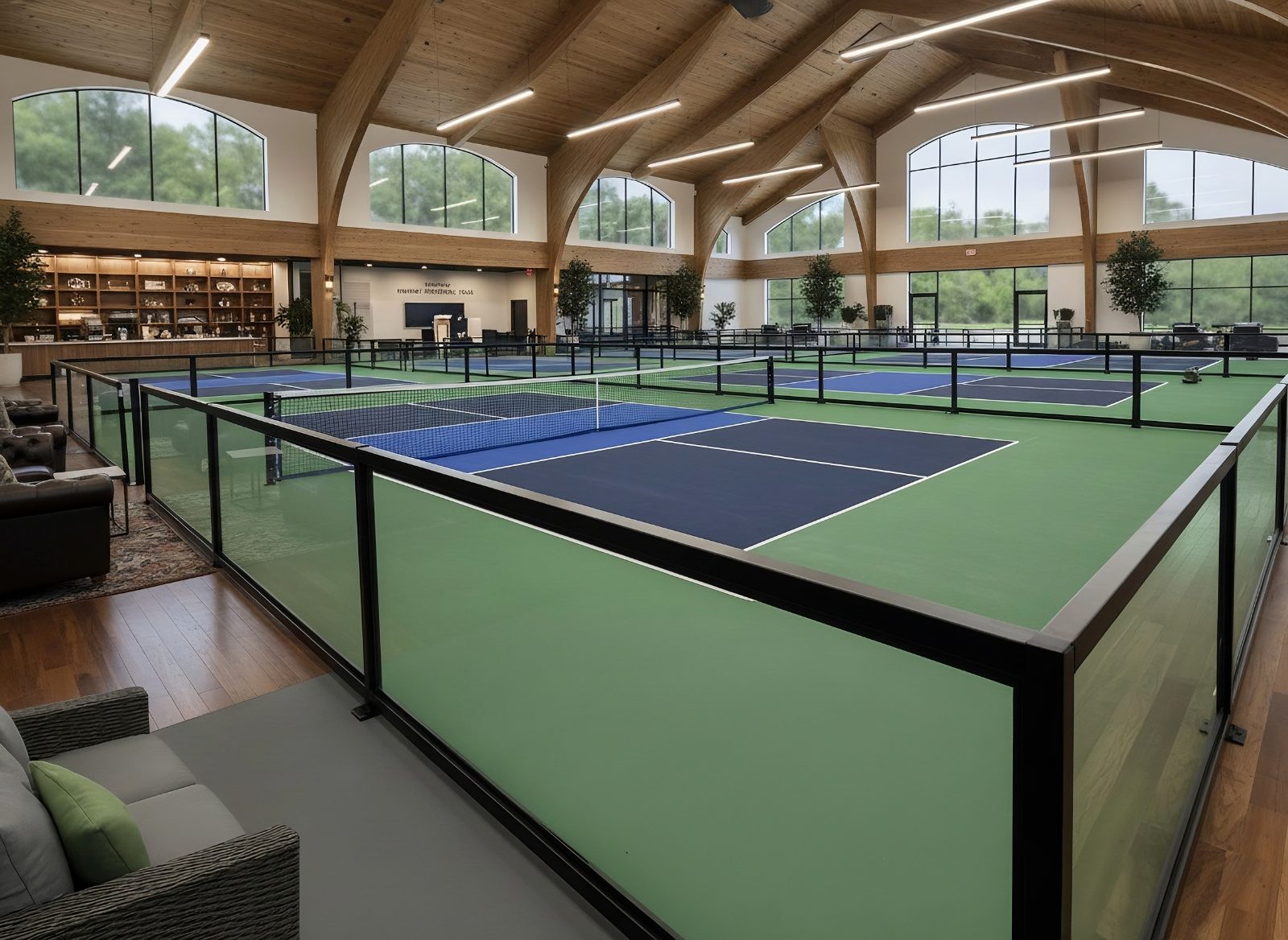
Rate is a function of positioning, market, and what your facility justifies. A well-designed facility with professional-grade courts, clean architectural finishes, integrated lighting, and managed access commands a higher rate than a converted warehouse with chain-link enclosures and a sign-up sheet. Infrastructure investment and sustainable rate are directly connected. Operators who underinvest and then struggle to hold rates are living the downstream consequence of an upstream specification decision.
Utilization is how many available hours you fill with paying court time across all open hours. This is where most operators have more upside than they realize.
How much revenue does off-peak access actually add?
Most clubs run strong utilization during peak hours and much lower utilization the rest of the day. Early mornings, weekday early afternoons, and late evenings are available revenue hours that most facilities undermonetize, because accessing them requires either staff overhead that erodes margin or a willingness to leave courts dark.
The clean solution is integrated access control. AUTONOMOUS, PICKLETILE’s SmartLock platform connected to PodPlay and CourtReserve, lets members self-serve during any hour without staff at the gate. The court is available, the booking is automated, access is logged, and revenue is generated without incremental staffing cost.
The math: across a six-court facility, recovering two off-peak hours per day at a $20 per hour rate adds over $87,000 in annual revenue. The AUTONOMOUS installation cost recovers against that number quickly.
How does space conversion raise revenue per square foot?
Revenue per court, as conventionally measured, captures only court-time revenue. It misses the value of the physical space when courts are not in use.
Clubs that install INFINITYFLEX, PICKLETILE’s modular polycarbonate enclosure, can convert the court area into event space when court programming is not scheduled: weddings, corporate events, private parties, fitness classes, and community gatherings. The court area stops being a single-use asset and becomes a multi-use venue. The effective revenue per square foot of a facility that runs court time during the day and private events on weekend evenings is materially higher than a court-only venue. INFINITYFLEX’s free-standing frame and portable panels make the conversion simple: panels come down for the event and go back up for the next morning, with no permanent infrastructure disrupted.
How does programming structure raise the ceiling?
The upper bound of revenue per court is set by how intensively courts are used across all hours, at the highest rate the market supports, with the lowest operational overhead. Programming structure pushes the metric toward that ceiling. Leagues, clinics, drop-in sessions, and lessons generate revenue at different rates and staffing implications. A well-structured calendar fills courts at the right rate tier during the right hours and makes sure high-rate prime time is never yielding to lower-rate programming that could run off-peak.
The facility design has to support that structure. Courts proportioned and enclosed for organized events, with transparent enclosures for spectator sightlines, staging areas for event management, and access control that automates player entry and exit, generate more programming revenue with less friction than courts that require manual management at every step. Getting the design right at the outset, and building the programming model around it, is the fastest path to a strong revenue per court number.
Request a quote and let’s run the revenue per court math for your specific facility and market.
Frequently asked questions
How is revenue per court calculated?
Divide total court-generated revenue by the number of active courts over a defined period. It combines the rate you charge and the share of available hours you fill, which makes it more actionable than overall utilization alone.
How much can off-peak access add to annual revenue?
As an example, a six-court facility that recovers two off-peak hours per day at a $20 per hour rate adds over $87,000 per year. Integrated access control captures those hours without adding staffing cost.
Does raising facility quality actually raise the rate I can charge?
Yes. Professional-grade courts, clean architectural finishes, integrated lighting, and managed access support a higher sustainable rate. Underinvesting in facility quality caps the rate you can hold.
