
Last updated: July 24, 2026
Racquet clubs that hit utilization targets do it by design, not marketing. Clubs that sustain 75 to 85 percent court utilization share three facility decisions made before opening: a right-sized court count for the market, integrated access control that monetizes off-peak hours, and a programming-ready layout. Clubs that struggle usually trace it back to those same decisions, made poorly or skipped.
Why do so many operators miss their utilization projection?
Every commercial racquet club opens with a utilization projection. Most operators are surprised, in one direction or the other, by how quickly reality diverges from the model. The clubs that reach and sustain 75 to 85 percent court utilization within the first 18 months share a consistent set of characteristics. They did not all open with the same number of courts, the same market, or the same membership structure. But they made similar decisions about facility design, access infrastructure, and the programming their courts were built to support. The clubs that struggle share patterns too, and in most cases those patterns trace back to facility decisions made before the first player walked in.
How many courts should a commercial racquet club open with?
Utilization is not just a marketing problem. It is a supply and demand problem with a facility design component at its core.
Operators who open with too few courts relative to their market find that peak-hour courts fill quickly, off-peak courts sit idle, and the overall rate looks acceptable on paper while the business underperforms because most revenue is concentrated in two or three hours per day. Per-court revenue is capped by the inability to capture off-peak demand that exists but cannot be monetized once peak capacity is maxed out.
Operators who open with too many courts for their initial market spend months trying to drive utilization across a surface their member base cannot yet fill, creating the impression of an underperforming facility before programming and community have had time to build.
Getting the initial count right requires more than a demographic study. It requires a realistic demand model by day-part, by membership tier, and by programming type, cross-referenced against a floor plan and enclosure system that lets the facility expand without major reconstruction. Building for phase two at the time of phase one is standard practice for operators who scale well.
What is the biggest undermonetized opportunity at a racquet club?
Off-peak court time. Morning slots before 9 a.m., early weekday afternoons, and late evenings represent real revenue for clubs that can make those hours accessible without staffing cost.
The clubs that capture off-peak revenue reliably have integrated access control that lets members book and enter courts independently, without staff opening the facility or managing the gate. Courts accessible only when staff is on-site generate zero revenue outside those hours, regardless of member demand.
AUTONOMOUS, the SmartLock access control system PICKLETILE integrates into its court infrastructure, connects directly with PodPlay and CourtReserve to automate booking and access across all hours. A member books online, receives credentials, and enters during their reserved slot with no staff involvement. Usage is logged. Court time runs during hours that would otherwise be dark.
The difference in annual revenue between a club that captures two additional off-peak hours of court time per day per court and one that does not is meaningful at any court count above four.
How does programming drive sustained utilization?
Clubs that sustain high utilization are not just selling court time. They run programming that creates recurring attendance, social relationships, and community identity: leagues, clinics, open play, and round robins that fill courts on a predictable schedule and generate the member engagement that drives retention.
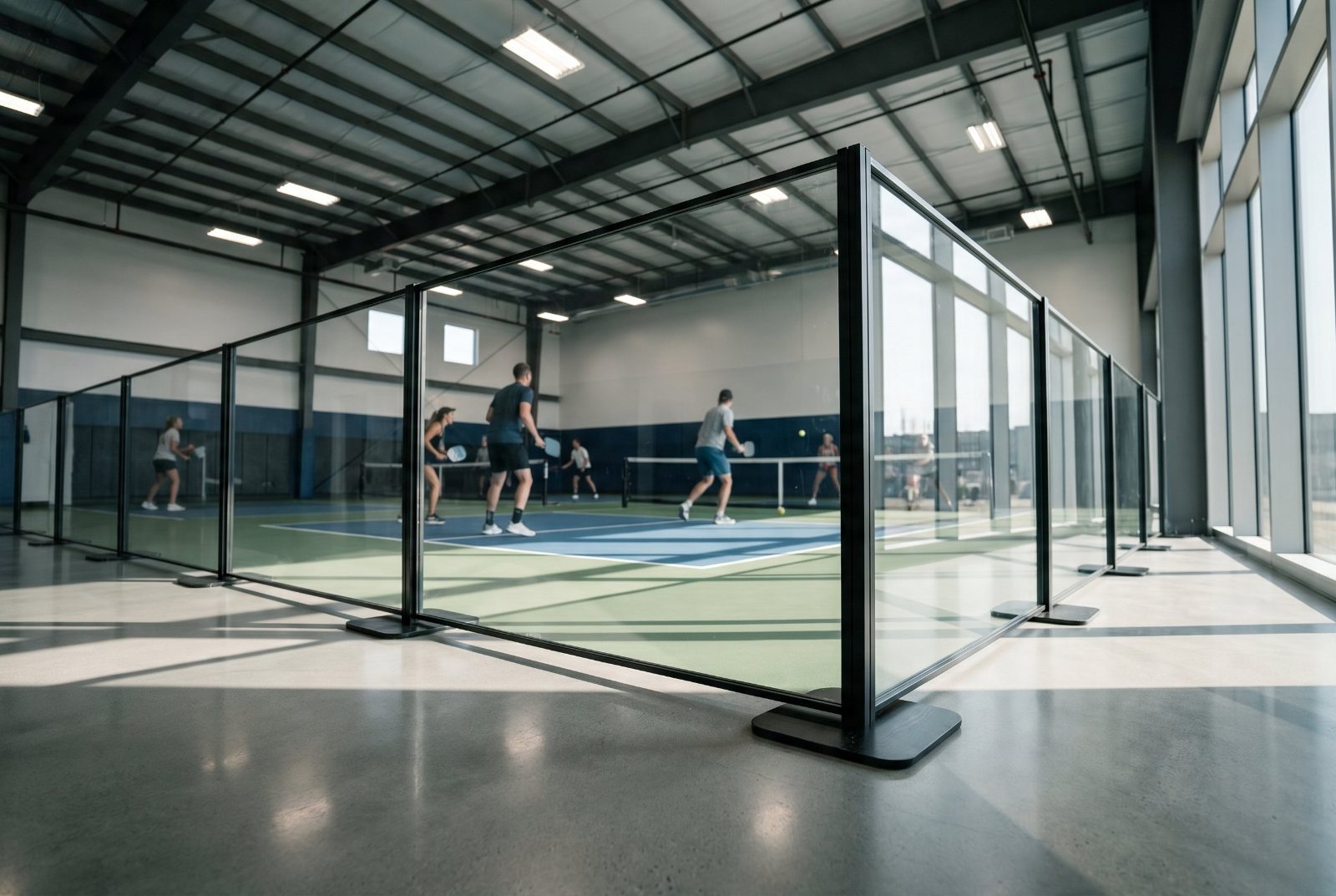
Programming density requires courts that support organized events without operational friction. Courts too narrow for round robins, enclosures that block spectator sightlines, and facilities without staging space for check-in and rotation all limit programming capacity in ways that are hard to fix later. Court proportions, enclosure transparency, circulation space, and access management are all design-phase decisions, far more expensive to address as retrofits than as original specifications.
What this means for the planning conversation
Operators who hit utilization targets consistently made these decisions during design, not after opening. Court count, access infrastructure, enclosure system, and programming-ready layout were all addressed before the build, which is exactly what PICKLETILE’s scoping process is designed to support.
If you are planning a new racquet club or expanding an existing one, the scoping conversation covers your market, your court count model, and the facility design that gives your utilization targets a realistic foundation.
Frequently asked questions
What court utilization rate should a commercial racquet club target?
Well-run commercial clubs reach and sustain 75 to 85 percent court utilization within the first 18 months. The rate alone can be misleading if revenue is concentrated in only two or three peak hours per day.
How can a racquet club make money from off-peak court hours?
Integrated access control lets members book and enter courts without staff present. Recovering two off-peak hours per day per court adds meaningful annual revenue at any facility with more than four courts.
Should I build extra courts now or expand later?
Plan the floor plan and enclosure system so phase two can be added without major reconstruction. Opening with too few or too many courts for your market both hurt utilization, so size the initial count to a day-part demand model.
