
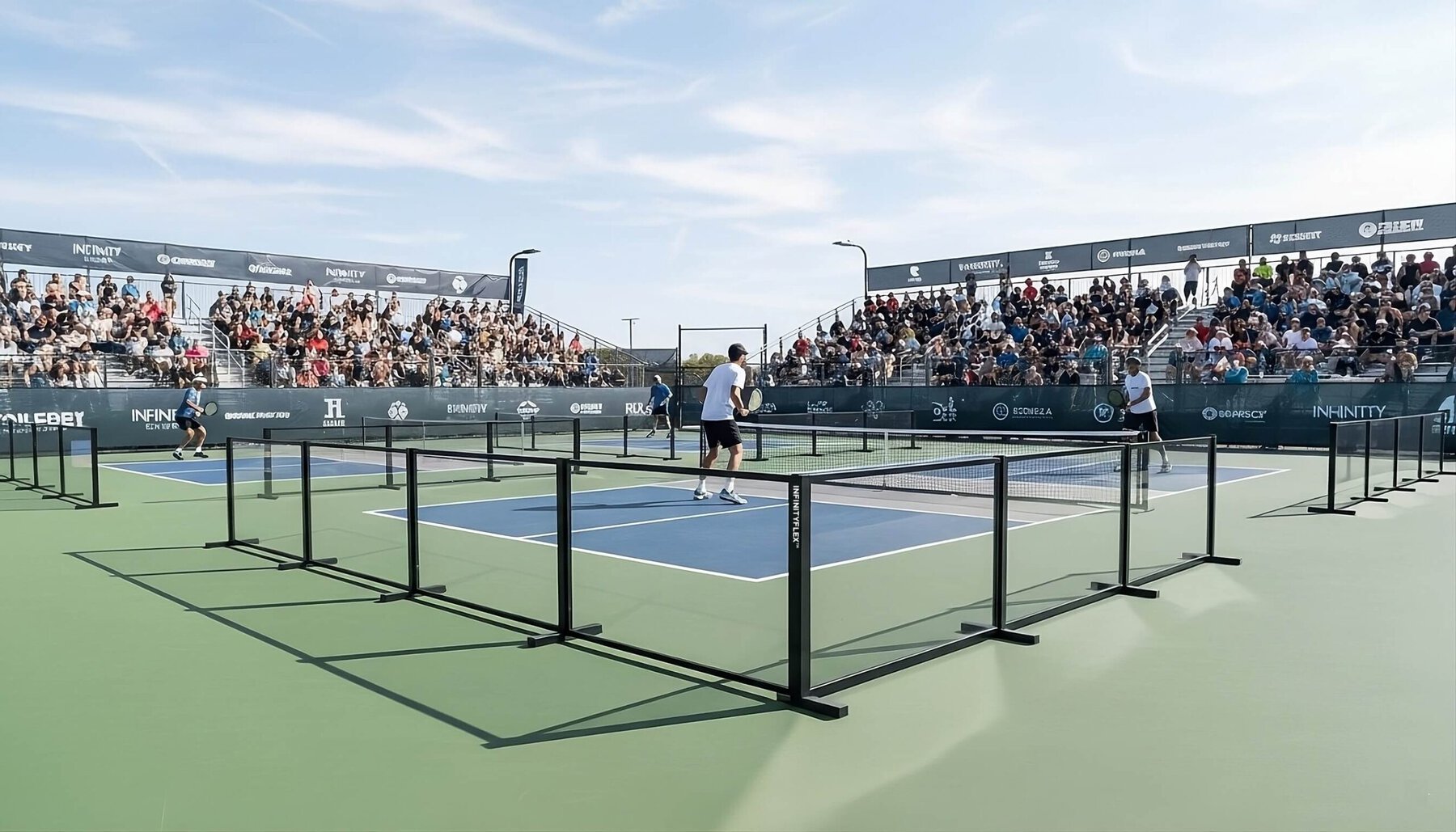
Demand for pickleball courts has outrun supply in most American communities, and the first question a parks director, HOA board, or club committee usually asks is not how to build courts but how to pay for them. Pickleball court grants and adjacent funding sources exist at the federal, state, and local level, and most successful projects stack two or more of them. This guide maps the funding landscape for public and community court projects and explains what makes an application competitive.
Who funds pickleball courts
Federal outdoor recreation programs. The Land and Water Conservation Fund (LWCF) is the longest-running federal source for public outdoor recreation facilities, administered through state agencies that award matching grants to local governments. Community Development Block Grants (CDBG) have also funded park and recreation improvements in eligible areas. Federal programs are matching programs: the sponsor typically funds a significant share of the project and is reimbursed after completion, so cash flow planning matters.
State recreation grant programs. Most states run their own outdoor recreation or park development grant cycles, funded through state budgets, lottery proceeds, or dedicated conservation funds. These are the workhorse source for municipal court projects. Award ceilings, match requirements, and eligible costs vary by state and by cycle, so the current program manual is always the controlling document.
Municipal capital budgets. Many public courts are funded directly through a city or county capital improvement plan (CIP), sometimes supplemented by park impact fees collected from new development or by voter-approved parks bonds. Getting a court project into the CIP usually requires demonstrated demand, a cost estimate, and a champion on staff or council.
Sport governing bodies and foundations. National governing bodies and sport foundations have periodically offered facility grants or technical assistance for court projects, and tennis-side facility assistance programs have supported shared-use and conversion projects. These programs open and close by cycle, so verify what is active in the current year before building a budget around them.
Community foundations and local sponsors. Community foundations, hospital and wellness foundations, and local businesses fund recreation projects that show broad public benefit. Naming rights and sponsorship of individual courts are an increasingly common way to close the last gap in a funding stack, particularly on multi-court projects where each court can carry a sponsor.
Private capital within communities. HOAs and master-planned communities typically fund courts through reserves, special assessments, or developer amenity budgets rather than external grants. For clubs and investor-backed facilities, the relevant analysis is the business case, which we cover in are pickleball courts profitable.
What grant reviewers look for
Grant programs receive more applications than they can fund. Projects that win tend to share five characteristics.
A real budget, not a guess. Reviewers can tell the difference between a number pulled from a search result and an estimate built from scope. Budgets should reflect base construction, surfacing, fencing, lighting, and site work as separate lines. Our pickleball court cost guide breaks down the ranges that belong in a planning budget, and a current contractor or manufacturer estimate strengthens an application materially.
Demonstrated demand. Court counts per capita, waitlists at existing facilities, league and clinic registration numbers, and letters from local clubs all convert “people want this” into evidence.
Site control and readiness. A named parcel the sponsor controls, with utilities nearby and a concept layout, scores better than a project still hunting for land. Shovel-ready projects with completed design win tiebreakers.
A noise plan. This is the item most pickleball applications miss. Pickleball’s acoustic profile has generated organized opposition and litigation in communities across the country, and reviewers increasingly know it. An application that addresses setbacks, orientation, and acoustic mitigation up front, rather than after complaints arrive, removes the most common political objection to a court project. Our guide to pickleball noise complaints explains the problem, and acoustic strategy belongs in the site plan from day one.
Maintenance and operations commitment. Funders want assets that stay usable. A named owner for ongoing maintenance, with a simple O&M budget line, signals the project will still look good in year ten.
Building the funding stack
A typical public multi-court project stacks sources in this order: the sponsor’s own capital budget or bond as the anchor, a state recreation grant as the largest external piece, a federal match where the project qualifies, and sponsorships or foundation gifts to close the remainder. Because state and federal programs reimburse rather than prepay, the sponsor carries the cash flow, and grant cycles often run a year or more from application to award. Realistic project calendars treat funding as a phase of the project, parallel to design, not a step before it.
Planning documents pay for themselves here. A funding application is far stronger when it can attach a site plan, a phased cost estimate, and a facility program. That package is exactly what a pickleball facility planning process produces, and the construction sequence it feeds into is covered in our pickleball court construction guide.
FAQ
Are there grants specifically for pickleball courts?
Yes, though most funding comes from general outdoor recreation programs rather than pickleball-only funds. State recreation grants, LWCF matching funds, and municipal capital budgets fund the majority of public court projects, with sport governing bodies and foundations offering cycle-based programs that should be verified in the current year.
How much of a pickleball court project will a grant cover?
Most public programs are matching grants that cover a portion of eligible costs, commonly requiring the sponsor to fund a meaningful share. Award ceilings vary widely by state and cycle. Treat any figure as an illustrative planning range until the current program manual confirms it.
Can an HOA or private club get pickleball court grants?
Most federal and state recreation grants require a public agency sponsor and public access. HOAs and private clubs usually fund courts through reserves, assessments, amenity budgets, sponsorships, or financing, though public-private partnerships with a municipality can open grant eligibility in some cases.
What makes a pickleball court grant application competitive?
A scoped budget, documented demand, site control, an acoustic mitigation plan, and a maintenance commitment. Applications that address noise proactively stand out because reviewers increasingly know pickleball’s track record of neighbor opposition.
How long does pickleball court grant funding take?
Plan on 12 to 24 months from application to construction for state and federal programs, including award, agreements, and reimbursement-based disbursement. Locally funded projects through a CIP can move faster once budgeted.
Funded projects are planned projects. PICKLETILE works with municipalities, communities, and clubs to turn court concepts into grant-ready packages: engineered site plans, phased budgets, and acoustic mitigation strategies that answer reviewer questions before they are asked. To put real numbers behind a funding application for a multi-court project, request a consultation.
