
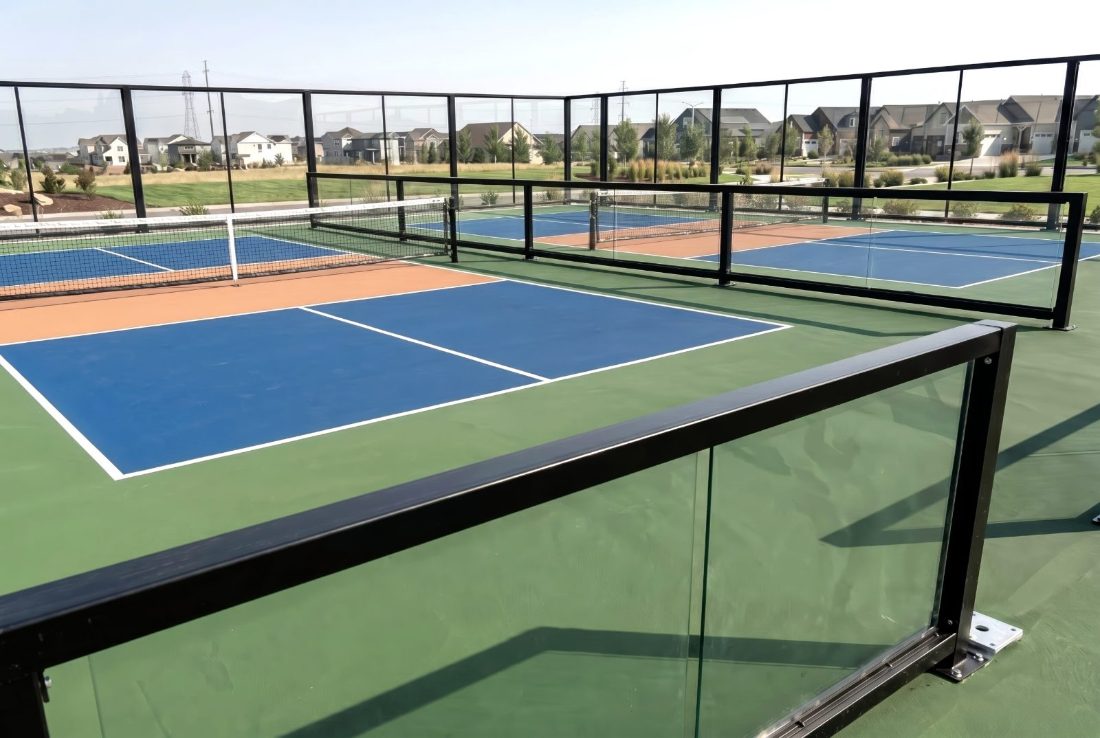
Master-planned communities add pickleball courts to differentiate the community, support lot absorption, and anchor an amenity package that buyers now expect, and the developers who do it well treat courts as part of the amenity-center program from the first phase rather than as a late add-on. The planning questions that matter most are how many courts to build for the community’s projected population, where to site them so play does not carry into nearby homes, how to phase construction against the sales absorption schedule, and how the courts and their reserves transition to the homeowners association at buildout.
This guide is written for master developers, community developers, and the amenity and land-planning teams who decide what gets built and when.
Why pickleball has become an absorption amenity
Amenities in a master-planned community are not decoration. They are a sales tool that shortens the time to sell lots and supports pricing. Pickleball has moved into that category because it draws a wide age range, it programs easily (leagues, clinics, open play, social events), and it signals an active, connected community. Unlike a single marquee amenity that serves a narrow slice of buyers, a small court cluster serves families, working adults, and active retirees at once, which is why it has become a common line item in amenity-center planning.
The strategic point for a developer is that courts contribute to absorption and differentiation, and that value is highest when the amenity is visible and usable early in the sales cycle, not delivered in a final phase. At Sterling Ranch, a master-planned community in Douglas County, Colorado, an eight-court facility became the most used amenity in the entire development, ahead of the trails, pools, and fitness centers, a measure of how strongly courts can perform when they are planned as a core amenity rather than an afterthought.
How many courts a community should plan
Court count follows projected population and the role the amenity is meant to play, not a fixed ratio. A useful way to frame it:
- A neighborhood-scale amenity for a few hundred homes may open with two to four courts and room to expand.
- A community-scale amenity serving thousands of homes and hosting programmed play often plans for six or more courts, sometimes in more than one location.
- Communities that intend to host leagues, tournaments, or regional play size up further and plan spectator and support space accordingly.
Building expansion capacity into the site plan (space, grading, and utility stubs for future courts) is usually cheaper than retrofitting later and lets the amenity grow with the community.
Siting and noise, the issue that generates the most homeowner complaints
The single most common regret in residential court planning is siting courts too close to homes. Pickleball’s sharp, repetitive sound carries, and a court placed near lots will generate complaints from the same buyers the amenity was meant to attract. In a master-planned community the developer controls the land plan, which is an advantage: courts can be located near the amenity center and buffered from residential lots by distance, grading, landscape, and, where separation alone is not enough, engineered acoustic treatment.
Designing for sound at the land-planning stage is far less expensive than mitigating a problem after homes are sold. Our guides to reducing pickleball noise and to structural glass enclosures cover the engineering options when courts must sit closer to homes than distance alone would allow.
Phasing courts against the absorption schedule
Because amenities drive sales, timing is a financial decision. Delivering courts early in the community’s life puts a visible, usable amenity in front of prospective buyers during the phases when absorption matters most. The counterweight is capital: courts and their surrounding amenity infrastructure are an upfront cost carried before the lots that justify them have sold. Most developers resolve this by phasing, opening a starter court cluster with the first amenity center and expanding as the community fills in, using the reserved expansion space in the site plan.
Cost and the transition to the HOA
Court cost in a community setting depends on court count, site and grading conditions, surfacing and enclosure selections, lighting, and shared infrastructure such as parking and restrooms at the amenity center. For a component-level view of what drives the number, see pickleball court cost and the broader pickleball facility planning guide.
Two ownership questions specific to master-planned communities deserve attention early. First, the courts and the amenity center almost always transition from the developer to the homeowners association at buildout, so the reserve study and long-term maintenance funding that the association will inherit should be planned from the start rather than handed over as a surprise. Second, once the association owns and governs the amenity, the operating and rule-making questions shift to it; our guide to HOA pickleball courts covers that governance stage, and for rental and apartment settings the considerations differ again, covered in multifamily pickleball courts.
Courts as community infrastructure, not a line item
A master-planned community is, in the end, a promise about how people will live together, and its amenities are how that promise becomes visible. Pickleball earns its place in that program because it does something few amenities do at its cost: it gives a broad range of residents a reason to leave the house and meet their neighbors. For the developer, that translates into absorption, differentiation, and an amenity that ages into a genuine community asset rather than a maintenance liability. The communities that get the most from it are the ones that plan the courts with the same seriousness as the streets and the amenity center, siting them thoughtfully, phasing them against sales, and handing them to the association funded and built to last.
Case study: pickleball as the top amenity at Sterling Ranch
Sterling Ranch is exactly the setting this guide describes: a 3,400-acre master-planned community in Douglas County, Colorado, one of the largest active developments in the state, built out by seven national homebuilders, with an amenity program held to a high standard. When pickleball entered the plan, the courts had to meet that bar and sit near homes without generating the noise complaints that turn an amenity into a liability.
The community built an eight-court facility inside a full PICKLEGLASS enclosure rated STC 36, roughly a 10 dBA drop at the nearest property line, with the sound modeled before construction using ISO 9613-2 methodology and independently validated. Surfaces, glass, lighting, and access control were delivered by a single team, and autonomous access control lets residents book and enter on their own without staffing.
The developer outcome is the one that matters for absorption: the courts became the most active amenity in the entire development, ahead of the trails, pools, and fitness centers, were approved in a single board meeting with no objection, and have run with zero sound restrictions since opening. It is a working example of courts planned as community infrastructure rather than a late add-on.
Read the full Sterling Ranch case study for the acoustic modeling, access control, and delivery details.
Frequently asked questions
How many pickleball courts should a master-planned community build?
Court count follows projected population and the amenity’s role. Neighborhood-scale amenities often open with two to four courts, community-scale amenities plan for six or more, and communities intending to host leagues or tournaments size up further. Reserving expansion space in the site plan lets the amenity grow with the community.
When should a developer build the courts?
Earlier phases generally deliver the most value because a visible, usable amenity supports lot absorption during the sales-critical phases. Many developers phase construction, opening a starter cluster with the first amenity center and expanding as the community fills in.
How far should pickleball courts be from homes?
Far enough that sound does not carry into occupied lots. The exact distance depends on court count, orientation, grading, and landscape buffering, and where separation alone is insufficient, engineered acoustic treatment closes the gap. Planning for sound during land planning is far cheaper than mitigating complaints after homes sell.
Who owns and maintains the courts long term?
In most master-planned communities the courts and amenity center transition from the developer to the homeowners association at buildout. Planning the association’s reserve funding and maintenance obligations from the start avoids handing over an underfunded liability.
How is a master-planned community different from an HOA or apartment community for court planning?
A master developer builds amenities at community scale during buildout to drive absorption, then transitions them to the association. An HOA governs and funds an already-built community’s amenities, and a multifamily or apartment community serves renters under a single owner-operator. The planning, funding, and timing differ at each stage.
