
The spread between the top projects and the average is getting wider, and it’s visible at the leasing office.
AUSTIN, Texas – June 7, 2026 – In 2026, the gap between how the top multifamily projects are approaching court amenities and how the average project is approaching them is wider than it was two years ago. And it is becoming visible in the ways that matter: lease-up velocity, rent premium hold, and resident retention.
This is not a story about luxury vs. workforce housing. It is a story about how a specific group of developers is treating court infrastructure as a strategic asset, and how that decision is compounding into a durable competitive advantage over the hold period of their assets.
Here is what the top projects are doing, and where the gap shows up against the average.

They are specifying courts as permanent infrastructure, not recreational add-ons
The most consistent characteristic of the developers whose court amenities are performing is that they never framed the court decision as a line item. They framed it as an infrastructure decision, the same way they would frame the decision about a lobby finish package or a rooftop terrace system.
That framing leads to different specification decisions. When a court is infrastructure, you engineer it for durability, acoustic performance, and long-term maintenance simplicity. When it is a line item, you optimize for the number that clears the amenity budget column.
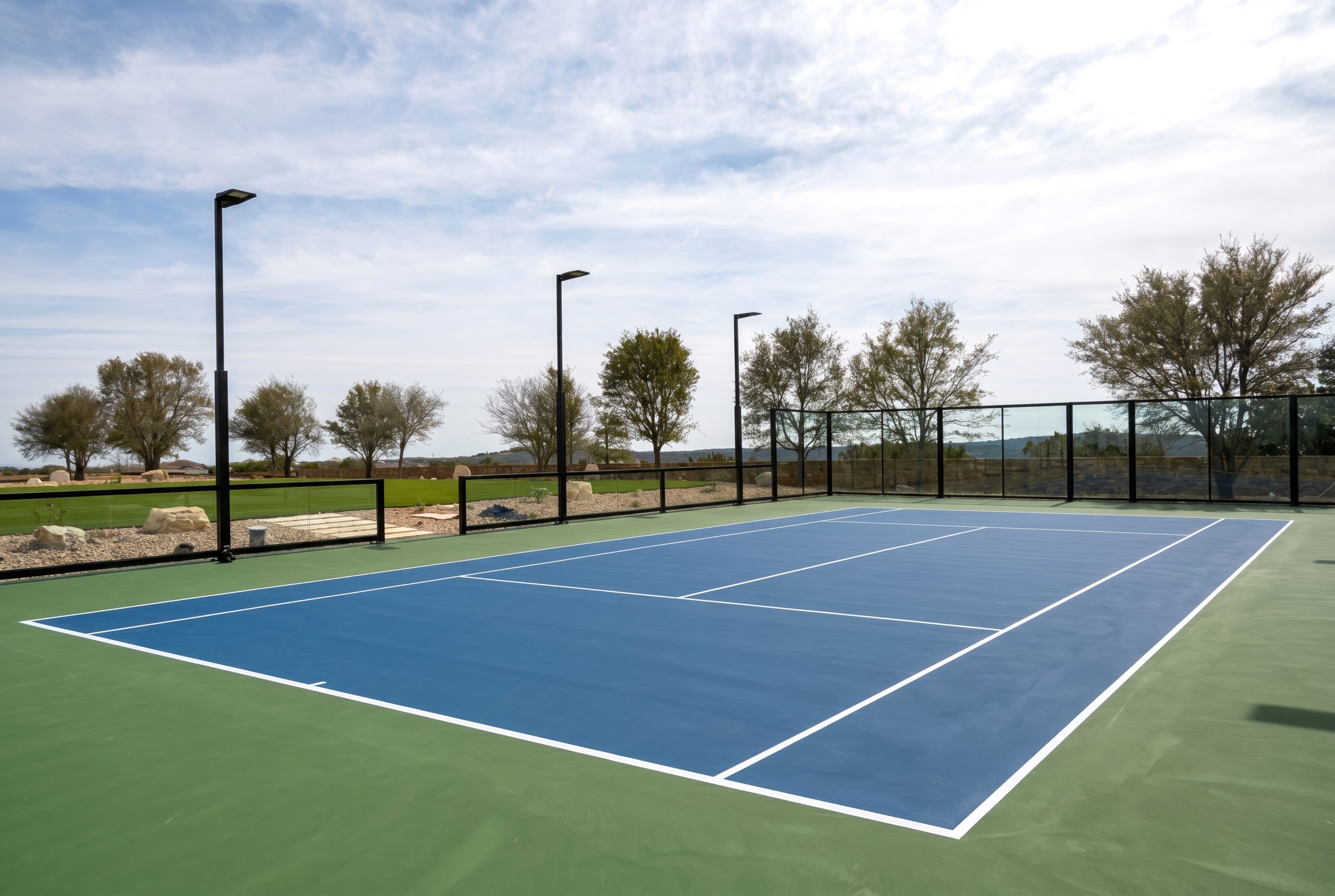
The practical difference in outcome is significant. An infrastructure-spec court using a full-height structural glass enclosure, architectural-grade powder-coated finishes, and integrated lighting looks like a designed facility in year five and year eight. A line-item-spec court with chain-link and windscreens looks like a tired recreational installation by year three. One of these is in your marketing materials for the full hold period. The other one is not.
They are addressing acoustic risk before it becomes a resident relations problem
The top projects in noise-sensitive markets are not discovering the acoustic exposure of their court facilities after residents move in. They are engineering for it at the design phase.
This means specifying a full-height perimeter enclosure with documented acoustic performance ratings for the enclosure system being used. It means understanding what the noise exposure looks like at the setback distances of their specific site. And it means making the enclosure decision before the GC prices the scope, so it is built into the project cost rather than added as a change order after complaints start.
The projects that are handling this correctly are not spending more than they need to. They are spending the right amount on the right specification for their site. A 50-foot setback has different acoustic requirements than a 30-foot setback. An 8-foot enclosure performs differently than a 10-foot one at the same distance. These are engineering questions with verifiable answers.
The projects that are getting this wrong are either skipping acoustic planning entirely, or are assuming that interior divider panels between courts contribute to noise mitigation. They do not. Interior 4-foot glass dividers provide visual separation and ball containment between sport zones. All acoustic performance comes from the full-height perimeter enclosure. This is the distinction that separates a spec that works from one that creates a post-occupancy problem.

They are building programming capability into the facility from day one
The courts that are generating the strongest leasing and retention results are not passive amenities. They are activated spaces with programming capability built into the physical infrastructure.
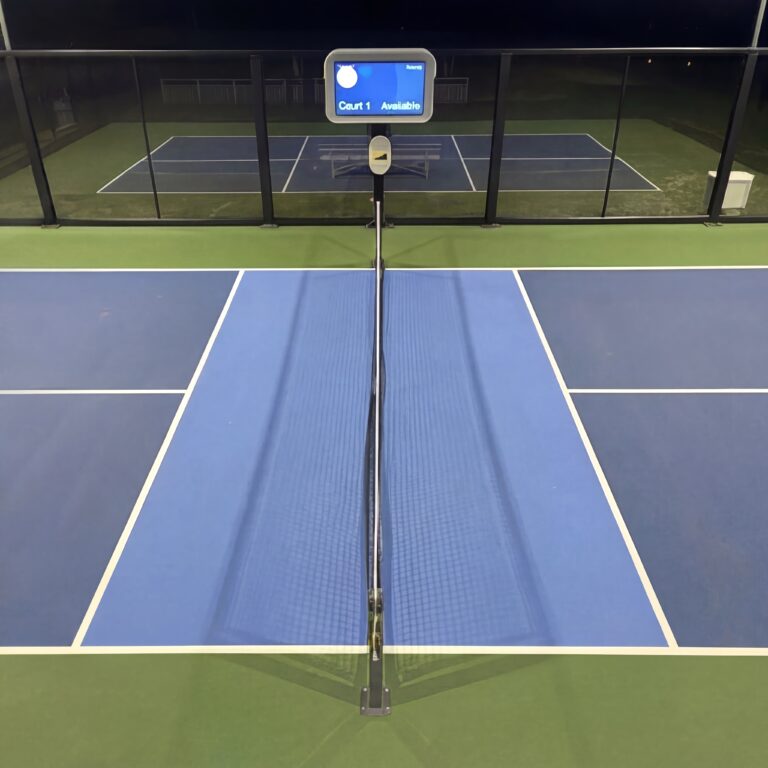
That means integrated access control that allows residents to book courts through the property management platform. It means lighting systems that extend usable hours into the evening, which is when working residents actually use the courts. It means a facility that generates usage data the property manager can use to demonstrate amenity ROI to ownership and capital partners.
The average project installs a court and opens the gate. The top projects install a managed facility and run it as a community asset. The difference in resident engagement, and in the retention numbers that follow from that engagement, is measurable.
AUTONOMOUS access control integrated with PodPlay is the system that enables this. It is installed during the original construction phase, not retrofitted later. The incremental cost of including it in the original scope is a fraction of the cost of retrofitting it after the facility is open.
They are engaging their infrastructure partner before the site plan is finalized
The most consistently avoidable failure mode on multifamily court projects is making the court specification decision too late in the design process. By the time the GC has a scope, the budget has been set against whatever the initial design assumed, and changing the specification becomes a change order negotiation.
The top developers are engaging their court infrastructure partner during the amenity design phase, before the architect finalizes the plans. That engagement produces a site-specific specification, a preliminary timeline, and a quote that reflects the actual project requirements. It also surfaces any acoustic, permitting, or site constraint issues while they are still design problems, not construction problems.
This is not a complicated ask. It is a 20-minute conversation. The developers who are consistently on the right side of the performance gap described in this article are, in large part, the ones who had that conversation early enough to act on the information.
Which side of this gap is your current project on?
The projects that will look right and perform well in 2027, 2028, and 2029 are being designed now. The amenity decisions are being made in the next few weeks and months, before budgets lock and site plans go to permit.
If your project has a court scope in the amenity package and you have not yet had a scoping conversation with PICKLETILE, now is the right time. Not because the window closes soon, but because every week the design advances without the right infrastructure specification is a week that narrows your options.
Request a quote today. We will start with a 20-minute scoping conversation, size the right solution for your project, and give you a quote that reflects your actual site and program. The conversation is free. The information you leave with is not something you can get from a brochure.
The developers who are winning on amenities right now made their court decisions early. Request a quote and let’s make sure your project is set up the same way.
About PICKLETILE™
PICKLETILE™ is the leading design-build firm for premium pickleball court construction and the Official Court Builder of USA Pickleball.
Headquartered in Austin, Texas, PICKLETILE™ simplifies the complex construction process by offering turnkey solutions for residential, commercial, and club-level projects. The company is also the creator of PICKLEGLASS™, a patented soundproof glass wall system engineered to reduce noise by 50% while offering panoramic views and wind protection. For more information, visit www.pickletile.com.
