
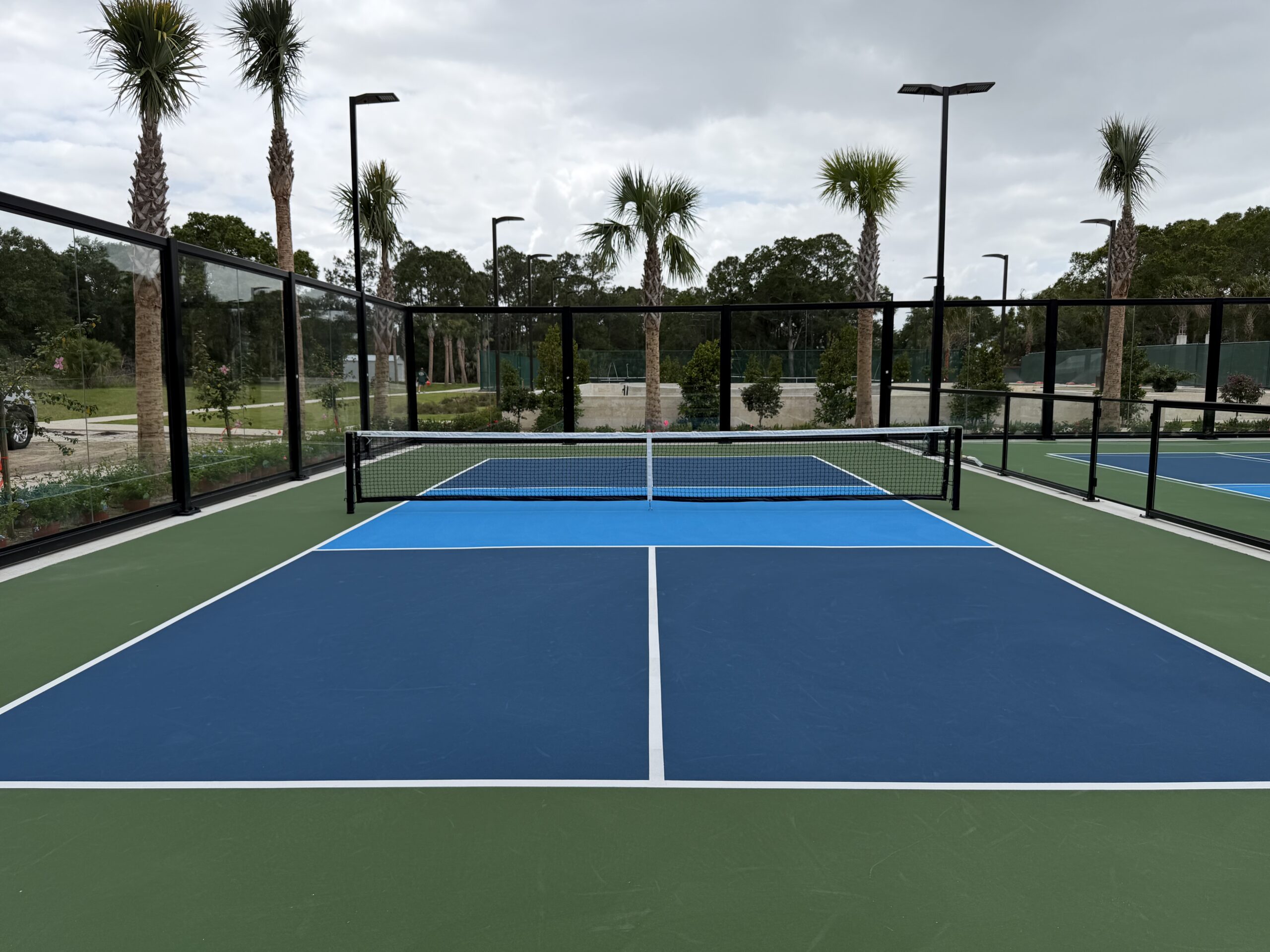
The programming calendar a structural-glass facility makes possible — week by week, and in the club-level metrics that matter.
AUSTIN, Texas – May 5, 2026 – At some point during the scope finalization process, the conversation shifts entirely to logistics: bids, budgets, board presentations, construction timelines, scope trade-offs. Those are necessary discussions. But they can obscure the reason the project started in the first place. The Director saw a gap between what members needed and what the facility could deliver. The President or GM saw the same gap from a different angle — declining engagement in racquets programming, member feedback comparing the club’s facility unfavorably to peer clubs, or a generation of new members asking for amenities the club doesn’t currently offer.
Before the scope gets locked, it’s worth stepping back from the logistics and looking at what the new facility actually changes. Not in abstract terms — in the specific, weekly, practical reality of what becomes possible, and in the specific, club-level metrics that change as a result.
The current constraint
A typical pre-project programming reality at a private club with aging or limited court facilities looks something like this:
Peak hours are fully booked. The 5 to 8 PM window on weekdays is the bottleneck. Members who try to join evening leagues or clinics are turned away or waitlisted. The Director is running a zero-sum schedule — adding a pickleball league means removing a tennis clinic or cutting open play time. Members who don’t get in remember it.
Morning and midday hours are moderately utilized by retirees and stay-at-home members. These hours aren’t the problem. But they can’t absorb the overflow from peak hours, because working members aren’t available during the day.
Weekends are heavily utilized but constrained by court count. Tournaments, social events, and clinics compete for the same courts. Events that could generate revenue and engagement are deferred because there’s no court capacity to host them without canceling regular programming.
Evening play ends at sunset for most of the year. Without lighting, the 6 to 9 PM window is only available during the longest days of summer. The rest of the year, courts go dark at 5 or 6 PM — which is exactly when most working members arrive.
Sound from pickleball disrupts tennis and vice versa. Clinics with instruction can’t run adjacent to competitive matches because the sound bleeds between courts. The Director schedules programs with buffer courts between them, which wastes capacity.
For the Director, this is the reality of the daily calendar. For the President, it shows up differently — in member surveys that flag racquets as a weak spot, in exit interviews where lapsed members mention they couldn’t get court time, in tour conversations where prospective members ask whether they can play in the evenings, and in the gap between what the club’s racquets program could be generating in engagement and what it actually generates.
What changes with the new facility
Here’s the same week with the facility described in your scope:
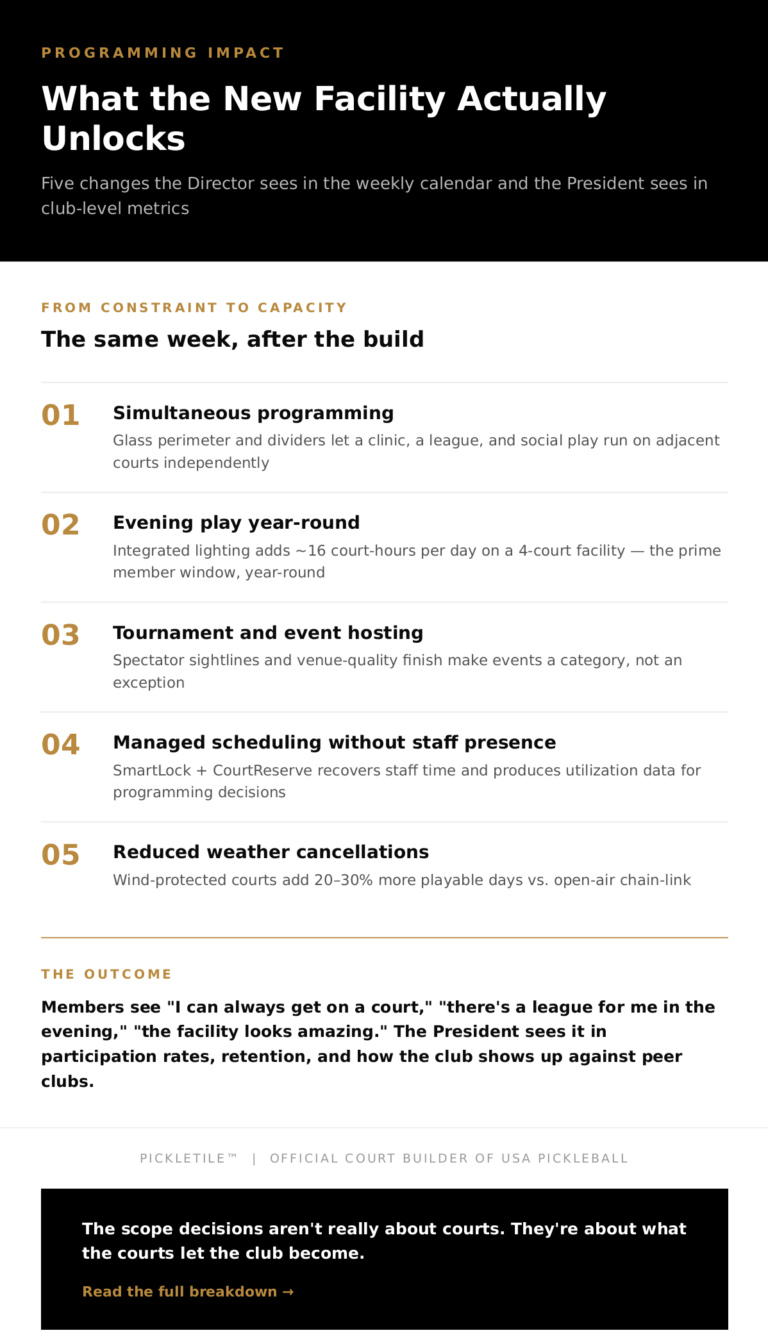
Simultaneous programming
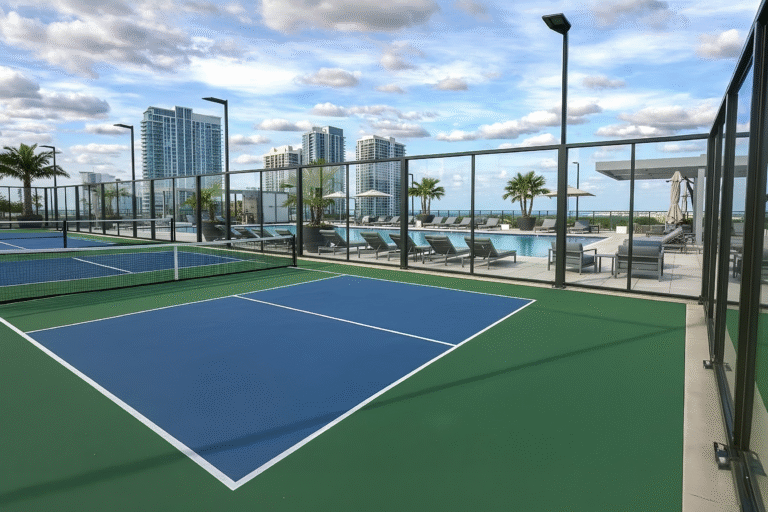
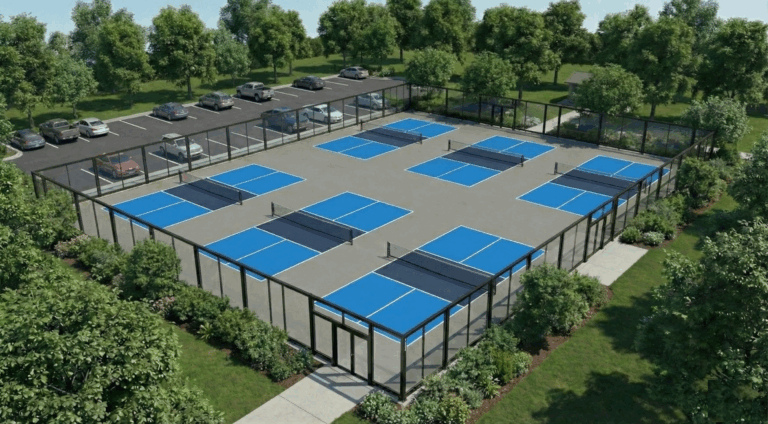
With dedicated courts for each sport and glass enclosures (plus dividers between courts), the Director can run a tennis clinic, a pickleball league, and social play simultaneously on adjacent courts. Sound separation between courts means each program operates independently. Ball retention means no cross-court interference. The programming capacity of each court multiplies because it can be used at the same time as the court next to it.
This is the most direct lever on member engagement the club has. Members who couldn’t get into the evening league because there was only one slot can now get in because there are three running concurrently. Members who avoided the social round-robin because it conflicted with the clinic they wanted now have access to both. The Director sees this in roster sizes and waitlist length. The President sees it in racquets participation rates over the first six months of the new facility — typically a step-change, not a gradual improvement.
Evening programming year-round
With integrated lighting, the courts are usable until 9 or 10 PM every day of the year, not just during summer. For the 5 to 9 PM window, that’s a potential 4 additional playable hours per court per day. On a 4-court facility, that’s 16 additional court-hours per day. Over a month, that’s roughly 480 additional court-hours of programming capacity that didn’t exist before.
The Director’s perspective: the prime member-availability window — when working members get home from work — becomes available for programming year-round, not just for three months in the summer. League nights, mixers, clinics, and social play can all run during the hours members actually want to play.
The President’s perspective: this is where racquets programming starts contributing to retention in a measurable way. Working-age members are the demographic with the highest dues but also the highest sensitivity to whether the club fits their lifestyle. A facility they can use after work — every day, year-round — is materially different from one they can use only on weekends or during summer evenings. That difference shows up in renewal rates and in how working-age members talk about the club to peers and prospective members.
Tournament and event hosting
Glass-enclosed courts with spectator sightlines create a venue-quality environment that chain-link courts cannot provide. The club can host sanctioned tournaments, inter-club competitions, member social events, and charity functions in a facility that looks and feels professional.
The operational impact for the Director is that events become a programming category, not an exception to programming. A monthly mixer, a member-guest tournament, an inter-club series, a charity round-robin — these become regular fixtures on the calendar rather than special events that cancel everything else for a weekend.
The club-level impact for the President is broader. Events drive member engagement, surface members who don’t normally use the courts, attract prospective members who attend as guests, and create the kind of brand moments that show up in member newsletters, social media, and word-of-mouth. They also generate revenue — entry fees, food and beverage during events, guest fees from non-member participants. None of those line items is large in isolation, but in aggregate they’re a meaningful contribution to the racquets program’s contribution margin. And tournaments specifically position the club as a serious racquets venue in the region, which matters when the club is competing for new members against peer clubs.
Managed scheduling without constant staff presence
If the scope includes AUTONOMOUS SmartLock with CourtReserve integration, the courts manage themselves. Members book online, courts unlock for confirmed reservations, and the Director monitors utilization from a dashboard. No physical presence at the courts required during operating hours.
For the Director, this is the recovery of staff time that was previously spent on court access management and scheduling-conflict resolution. That time becomes available for coaching, programming development, and member engagement — the work that actually moves the racquets program forward.
For the President, this is a structural change in how the racquets program scales. The club doesn’t need to add staff to expand evening or weekend hours. Utilization data — who plays, when, how often, which programs fill, which don’t — becomes available as a real input to programming decisions and budget planning. The Director can answer questions like “what’s the right number of league nights?” or “is the morning clinic actually pulling members in?” with data instead of intuition.
Reduced weather cancellations
Wind-protected courts mean fewer cancelled sessions. On a windy day that would shut down open-air chain-link courts, glass-enclosed courts play normally. Over the course of a year, this can add 20 to 30% more playable days depending on the club’s climate and site exposure.
For the Director, fewer cancellations means a more reliable programming calendar — leagues complete their seasons on time, clinics aren’t rescheduled into already-full weeks, and members aren’t getting “session cancelled due to weather” emails three or four times a season. For the President, weather reliability is a member-experience consistency issue. The members who scheduled court time around their week and got cancelled twice in a row will mention it. The members whose programs ran on time, every week, in conditions where peer clubs would have cancelled, will mention that too — usually to people considering joining.
What this means for your members and your club
The members don’t see court-hours or programming capacity. They see: “I can always get on a court when I want to play.” “There’s a league for me in the evening.” “The facility looks amazing.” “I’m proud to bring guests here.” “The other club I visited doesn’t compare to this.”
That’s the outcome the Director is building toward. Every scope decision, every layout choice, every add-on evaluation gets filtered through one question: does this help deliver that experience for the members?
For the President or GM, the same outcomes show up in the club-level metrics that drive board reporting and capital planning. Racquets program participation rates. Member retention by demographic. New-member acquisition where the racquets facility is cited as a factor. Event revenue and the role events play in member engagement. The facility’s appearance in tour quality and how prospective members react when they see it. The club’s competitive position relative to peer clubs that have or haven’t made the same investment.
Both perspectives — the Director’s calendar view and the President’s club-level view — point to the same place. The scope decisions aren’t really about courts. They’re about what the courts let the club become.
If your team wants to walk through how the scope translates to specific programming gains for your club — which programs become possible, which constraints go away, what the weekly schedule looks like, and how those changes connect to the engagement and retention metrics the President and the board care about — happy to map it out together. The exercise is useful for the Director’s planning and equally useful for the President’s board conversation, because it connects the investment to concrete outcomes both sides can speak to.
About PICKLETILE™
PICKLETILE™ is the leading design-build firm for premium pickleball court construction and the Official Court Builder of USA Pickleball.
Headquartered in Austin, Texas, PICKLETILE™ simplifies the complex construction process by offering turnkey solutions for residential, commercial, and club-level projects. The company is also the creator of PICKLEGLASS™, a patented soundproof glass wall system engineered to reduce noise by 50% while offering panoramic views and wind protection. For more information, visit www.pickletile.com.
