
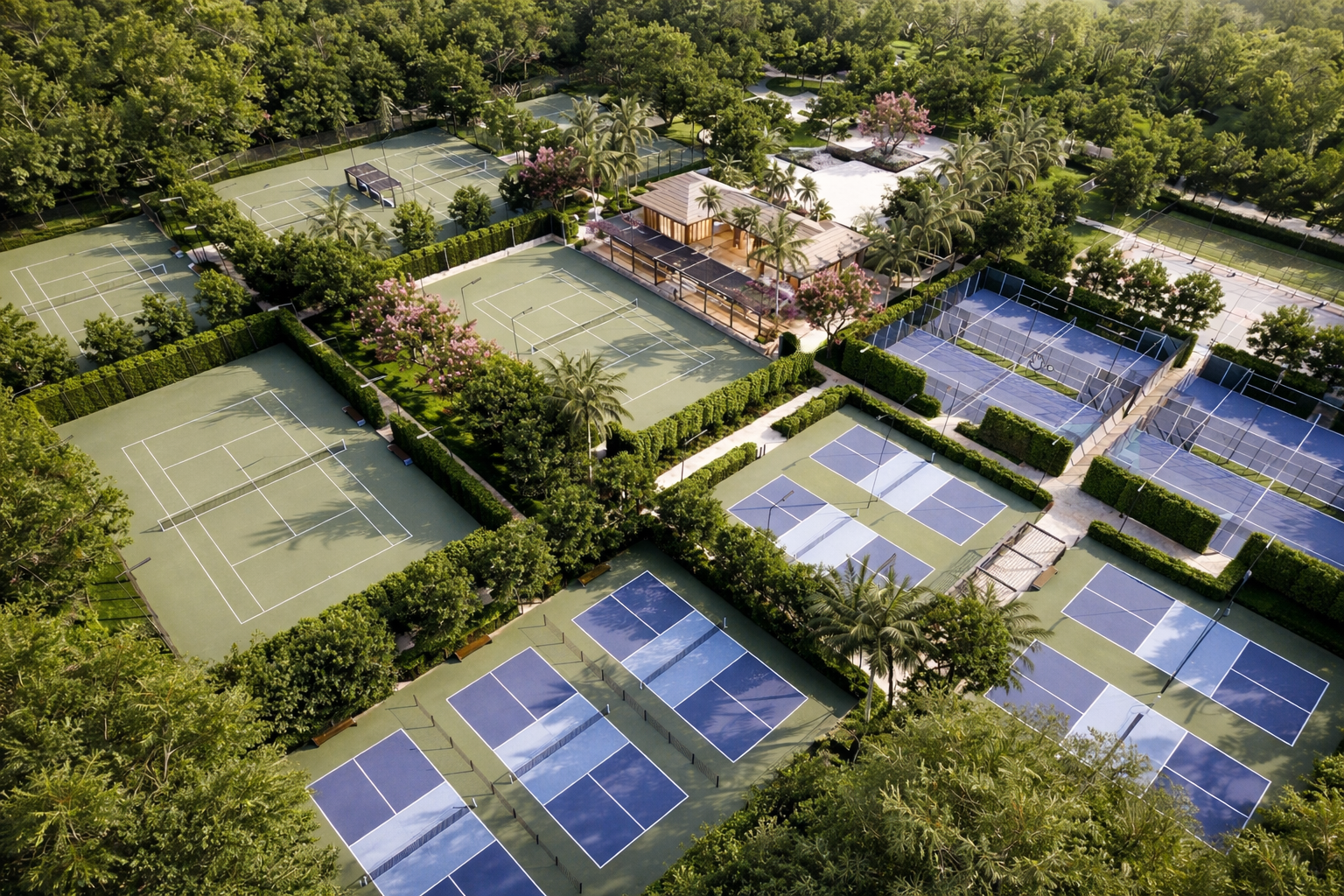
At clubs where the tennis-pickleball debate is stalling a capital decision, the problem is usually the framing — not the budget.
AUSTIN, Texas – May 11, 2026 – The tennis-to-pickleball question lives in two offices at almost every private club in the country right now. In the GM’s office, it shows up as a capital decision under board scrutiny, a budget competing with the clubhouse renovation and the golf course improvements, and a membership conversation where every meaningful upgrade carries political risk. In the Director of Racquets’ office, it shows up earlier and louder: court scheduling conflicts, league overlap, member feedback on aging surfaces, and the daily reality of trying to run two different sports on the same square footage.
Both offices are working the same question. They tend to define it differently. And how the question gets defined determines whether the project moves forward or stalls.
The framing that creates conflict
When a club positions a project as “adding pickleball,” the internal divide forms immediately. Tennis members hear that their courts are being taken. Pickleball members hear that a long-overdue investment is finally happening. The board sees a contested vote. The membership sees a club choosing sides.
That framing turns a facility investment into a political question. Political questions at clubs are slow, contentious, and frequently end with the project being deferred to a future season that never quite arrives.
The framing that builds consensus
The clubs moving through this successfully are not choosing between tennis and pickleball. They are upgrading the club’s racquet facility. The distinction sounds like wordplay until it shows up in the proposal. The investment elevates surfaces that improve play for both sports. The enclosure provides wind protection, acoustic management, and visual presence across the entire racquet area. Lighting extends programming hours for everyone. The scheduling system reduces conflicts across all programs, not just new ones.
When the project serves every racquet member, the board conversation shifts from “who gets the courts” to “how do we elevate the racquet experience the club offers.” That is a different vote.
For the framing to hold, the facility has to do what the framing claims. Which is where the design work begins.
Why dual-line striping doesn’t solve it
The most common attempt to thread the needle is painting pickleball lines onto existing tennis courts. It is the cheapest option and the fastest to execute. It also satisfies neither group and creates new problems in both offices.
For the Director of Racquets, dual-line striping multiplies the scheduling problem rather than reducing it. The same court can now be used for tennis or pickleball at any given time, but not both, so every booking window adds a sport-configuration question. League programming, clinics, and open play all compete for the same surface. Players from both sports report visual clutter that interferes with focus. Members from both sports read the same message: their sport is not important enough for its own courts.
For the GM, dual-line striping looks like a compromise but reads to members like a half-investment. The political question has not been resolved. It has been spread across every Tuesday evening for the next ten years.
The design that resolves the tension
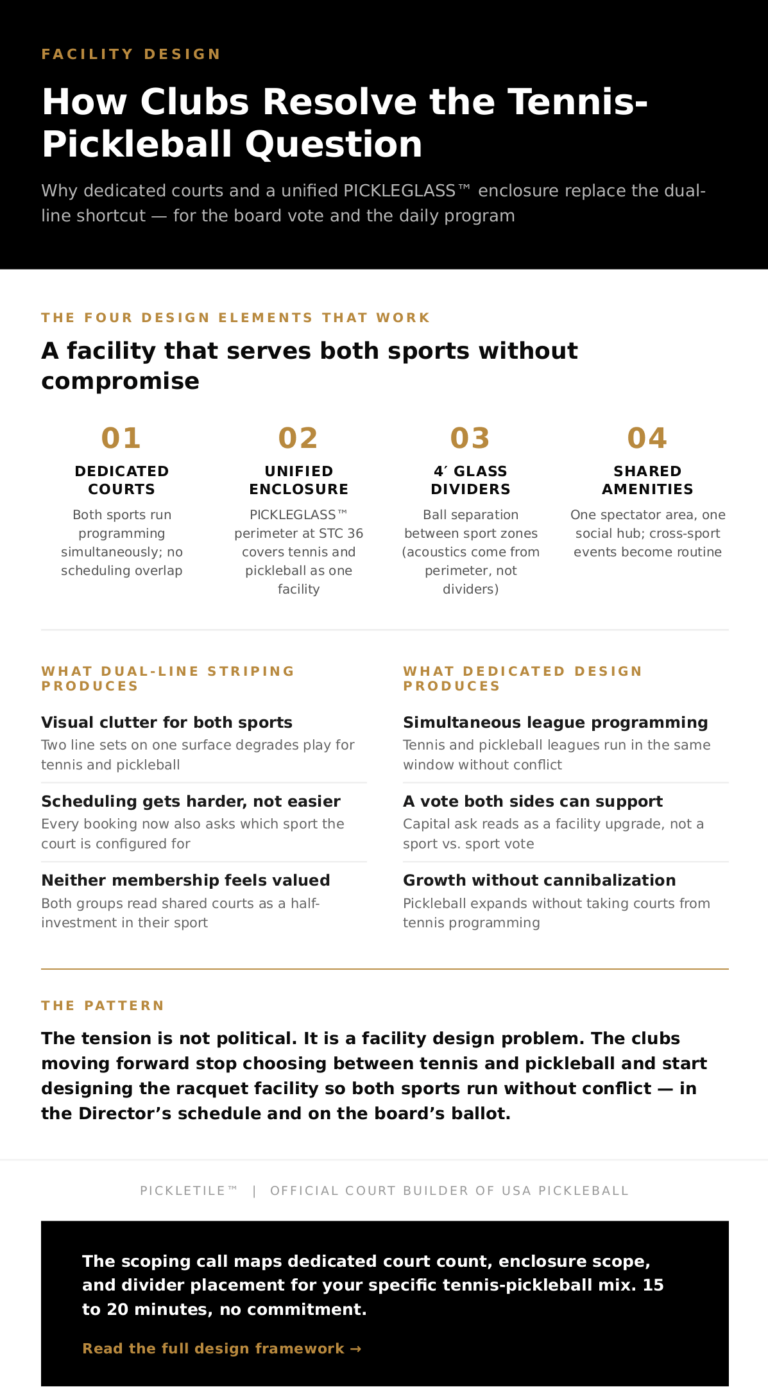
Clubs that move past dual-striping to dedicated courts for each sport report a consistent outcome: the political tension dissolves. When tennis has its own courts and pickleball has its own courts, scheduling conflicts go away. Both sports run programming simultaneously. Neither group feels displaced. The Director can plan leagues, clinics, and events for each sport independently. The GM has a cleaner story to tell members and the board.
A few design elements determine whether the framing holds:
Dedicated courts for each sport. Non-negotiable. The exact ratio depends on the club’s specific demand patterns, but shared courts produce conflict and dedicated courts eliminate it.
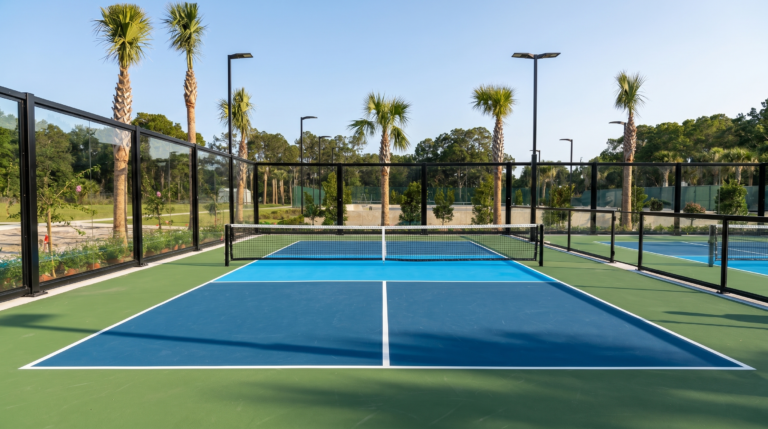
A unified enclosure across the full racquet area. When the same structural glass enclosure covers tennis and pickleball, the facility reads as one cohesive racquet complex rather than two separate areas. Tennis members see that the upgrade includes their courts. Pickleball members see a purpose-built facility that signals the club is taking their sport seriously.
PICKLEGLASS™ glass dividers between sport areas. Four-foot glass dividers between the tennis and pickleball sections provide visual separation and ball containment without creating a physical wall. Players in each section focus on their own game. Spectators see across the facility. The separation is functional without being divisive. (Acoustic performance comes from the perimeter PICKLEGLASS enclosure, not from the four-foot dividers.)
Shared amenities. A common spectator area, shaded seating, water stations, and access paths create one social hub rather than two segregated camps within the same club.
The acoustic dimension applies to both sides of the project
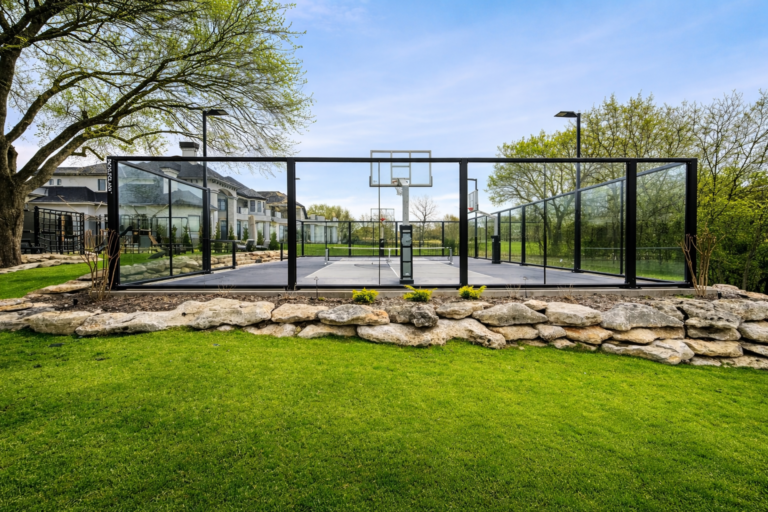
One element that crosses both sports is sound. Pickleball generates a higher-frequency impact noise that carries further than tennis and is perceived as more irritating by neighboring residents. But ball sounds, coaching voices, and wind noise from any court sport carry through open-air chain-link environments. A PICKLEGLASS™ enclosure with verified acoustic engineering (rated STC 36, the Official Acoustic Solution of USA Pickleball) reduces sound transmission from all court activity, not just pickleball.
For the Director, that translates into expanded operational hours and fewer restrictions on early-morning or evening programming. For the GM, it translates into protecting the club’s relationship with its neighbors and avoiding the complaint cycle that has restricted playing hours at clubs across the country. One engineering decision serves both objectives.
Construction timing affects members and programming differently
When the project moves from proposal into a real construction calendar, both offices have to coordinate around the same window for different reasons. The GM is thinking about member visibility and disruption to the broader club experience. The Director is thinking about programming continuity and what happens to leagues, clinics, and tournaments during the construction phase.
The full project runs approximately 12 to 17 weeks from kickoff to a finished facility. The on-site portion (site preparation, foundation, and surfacing) takes roughly 45 days and is the phase when the court area is inaccessible. The PICKLEGLASS™ enclosure design and fabrication runs in parallel, off-site, with zero impact on club operations. Installation on the finished slab takes only 3 to 7 days.
Most clubs schedule the on-site phase during their off-season or lowest-usage window. The clubs that get the timing right start the planning conversation one full season ahead so the construction window lands in the right place. The clubs that wait until the current season ends often miss the window and push the project another year.
The pattern that is working
Clubs moving forward successfully tend to share three things: they frame the project around the entire racquet program rather than one new sport, they design with dedicated courts for each sport rather than shared surfaces, and they begin planning early enough to secure an off-season construction window. The conversation in the GM’s office and the conversation in the Director’s office stay aligned because the project is genuinely serving both.
The clubs that are stalling tend to be stuck somewhere else: in the framing, in the dual-line compromise, or in a planning timeline that keeps missing the window.
If you and your counterpart are working through this, the scoping conversation walks through court count, layout, enclosure options, and construction timing for your specific situation. Takes about 20 minutes. Happy to set it up whenever works.
About PICKLETILE™
PICKLETILE™ is the leading design-build firm for premium pickleball court construction and the Official Court Builder of USA Pickleball.
Headquartered in Austin, Texas, PICKLETILE™ simplifies the complex construction process by offering turnkey solutions for residential, commercial, and club-level projects. The company is also the creator of PICKLEGLASS™, a patented soundproof glass wall system engineered to reduce noise by 50% while offering panoramic views and wind protection. For more information, visit www.pickletile.com.
