
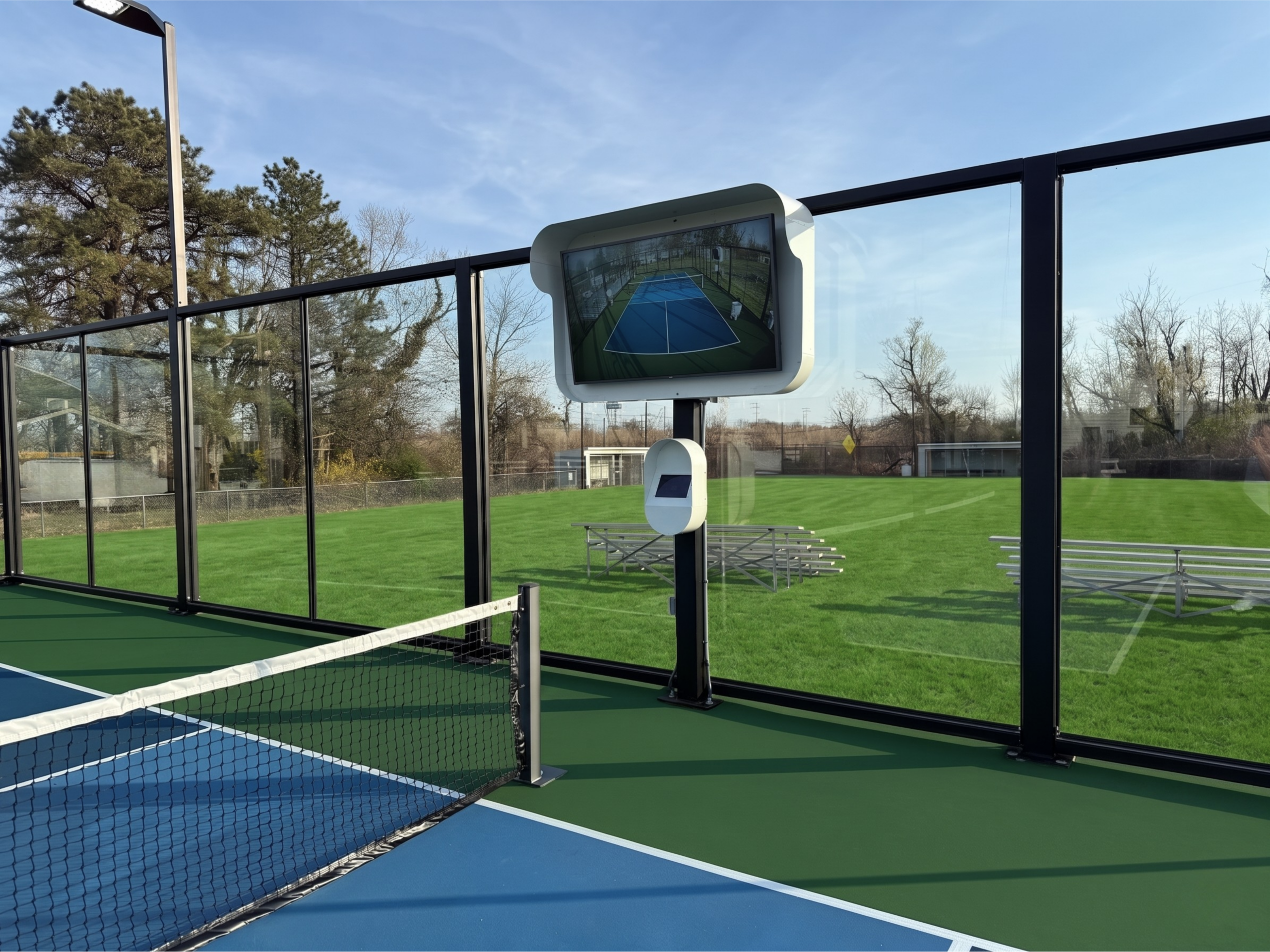
Court access management absorbs more of the Director of Racquets’ week than almost any other task — and smart access changes that for both offices.
AUSTIN, Texas – May 15, 2026 – Ask any Director of Racquets what consumes the most time in a typical week, and scheduling and access management will be near the top of the list. Who gets the courts at 5 PM on Tuesday. How to handle the member who did not reserve but shows up expecting to play. Guest access. Event holds. The transition between league play and open court time. Lock-up at the end of the night. Unlock at six in the morning for early players.
At most clubs, this is managed through some combination of a sign-up sheet, a reservation board, physical keys, and the Director’s personal presence at the courts during peak hours. It works. It also consumes time the Director would rather spend on programming, instruction, and member engagement.
For the GM, the same picture looks different. Court management is operationally invisible most weeks, until member complaints surface about access conflicts, until staff hours add up, or until the question of whether the courts could generate revenue (paid reservations, guest fees, tournament registration) gets raised in a board meeting. The Director’s daily friction and the GM’s questions about court productivity are the same question seen from two seats: is the facility running the way it should be?
Smart court access systems change this dynamic at both ends. Here is what the technology looks like in practice and what it changes in each office.

Automated lock schedules
The court facility’s doors operate on a programmable schedule. Courts unlock at 6 AM and lock at 10 PM, or whatever hours the club sets. No staff member needs to be present to open or close the facility. Early-morning players and evening players access the courts without anyone from the club physically managing the gate.
The schedule can vary by day of week. Weekday mornings might open at 6 AM for early play. Weekend mornings might open at 7 AM. Event days might have modified access. The Director sets the rules once and the system enforces them automatically. For the GM, this removes a quiet operational cost: the staff hours previously absorbed by unlock-and-lockup routines go to higher-value work, and the courts run reliably on a schedule whether anyone is on-site or not.
Member access methods
Members access the courts through PIN codes, key fobs, key cards, or a mobile app. The club chooses which methods to enable based on its membership structure and preferences. Different access levels can be assigned to different member categories: full members get unrestricted access, social members get access during off-peak hours, guests get temporary access codes that expire after a set period.
For the Director, this eliminates the key management problem entirely. No physical keys to distribute, track, or replace. No gate codes shared publicly on member forums. Each member’s access is individually controlled and can be modified or revoked instantly. For the GM, the same architecture creates a clean audit trail of who accessed the facility and when, which becomes useful for incident response, liability questions, and any data the board may want about how the courts are being used.
Reservation integration through PodPlay
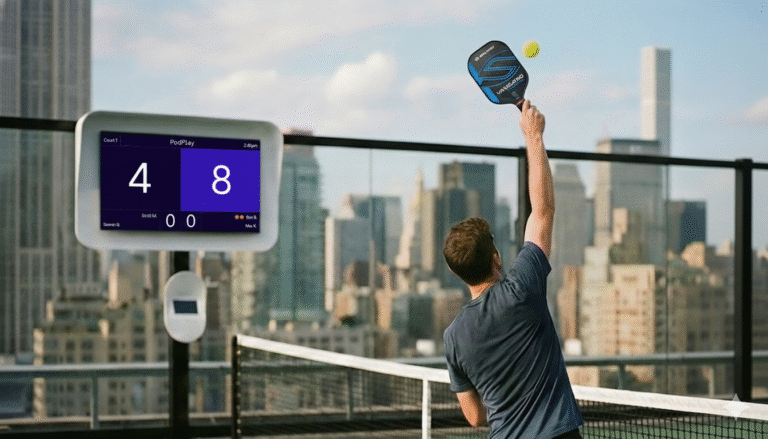
The smart access system integrates with CourtReserve, a court reservation software platform, through PodPlay™. Members book courts online or through a mobile app. The reservation system communicates with the door locks so that the court unlocks for the member who booked it during their reserved time.
For the Director, this creates a complete view of court utilization: who is playing, when, how often, and which courts have the highest demand. The data informs programming decisions directly. If courts are consistently booked solid from 5 to 8 PM, that is data supporting the case for additional courts or extended lighting hours. If certain time slots are underutilized, the Director can experiment with new programming in those windows. The Director stops running programs on intuition and starts running them on what the data is showing.
For the GM, the same data set tells a different story: court utilization rates, peak demand windows, programming attachment to facility usage. When the board asks how the racquet investment is performing, the answer is not anecdotal. It is a dashboard.
Revenue potential
For clubs that want to monetize court access (paid reservations, guest fees, clinic registration, tournament entry), the smart access system enables it. Members pay through the reservation system, and the court unlocks upon confirmed booking. Guest fees are collected automatically. The courts generate revenue without requiring staff to collect payments or manage access manually.
Not every club needs or wants to monetize court access, and the system works the same way whether monetization is enabled or not. For clubs that do enable it, the infrastructure is built into the system rather than requiring a separate payment and access management solution. From the GM’s view, this converts the courts from a fixed-cost amenity into an optional revenue stream, which can fundamentally change how the racquet facility shows up on the club’s financial statements.
Why integration with the enclosure scope matters
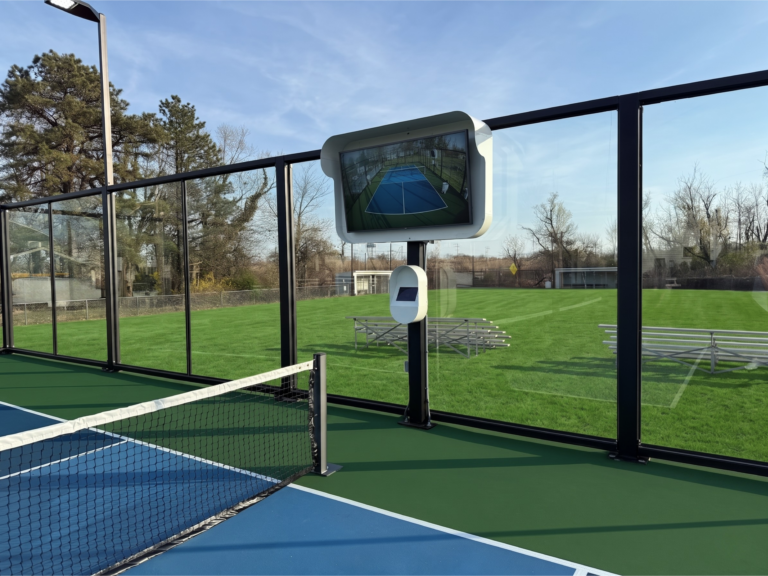
The AUTONOMOUS™ system integrates directly into the PICKLEGLASS™ enclosure doors. The lock hardware, wiring, and software integration are part of the enclosure scope, not a separate installation from a separate vendor. This means the access system is designed alongside the door placement, electrical routing, and enclosure engineering rather than being retrofitted onto a finished facility.
Including smart access in the initial project scope is simpler and less expensive than adding it later, because the electrical routing and hardware integration are part of the original construction. Retrofitting requires modifications to the existing doors and electrical, which is possible but adds cost and complexity. The GM evaluating the line items on the estimate should understand that including AUTONOMOUS at project start is a meaningfully different financial decision than retrofitting it in year three. The Director evaluating the same project should understand that the moment the enclosure is finished is the cheapest moment the system will ever be available.
The Director’s daily life with smart court access
Before: arrive early to unlock courts, manage physical keys, handle scheduling conflicts in person, stay late to lock up, track reservations manually, field calls from members about availability and access.
After: set the schedule, let the system manage access, review utilization data from a dashboard, adjust programming based on actual demand data, spend time on coaching, programming, and member engagement instead of gate management.
The change is not incremental. The work the Director was doing before does not need to be done at all. The time it consumed becomes time available for the work the Director was hired to do in the first place.
For the GM, the change shows up as cleaner operations, better data for board reporting, a Director whose hours are spent on member-facing work rather than facility administration, and, optionally, a court facility that generates revenue rather than absorbing it.
If you would like to see how smart access and scheduling would work for your specific facility and programming model, the scoping conversation covers the setup options and how they integrate with the enclosure design. Happy to walk through it whenever works.
About PICKLETILE™
PICKLETILE™ is the leading design-build firm for premium pickleball court construction and the Official Court Builder of USA Pickleball.
Headquartered in Austin, Texas, PICKLETILE™ simplifies the complex construction process by offering turnkey solutions for residential, commercial, and club-level projects. The company is also the creator of PICKLEGLASS™, a patented soundproof glass wall system engineered to reduce noise by 50% while offering panoramic views and wind protection. For more information, visit www.pickletile.com.
