
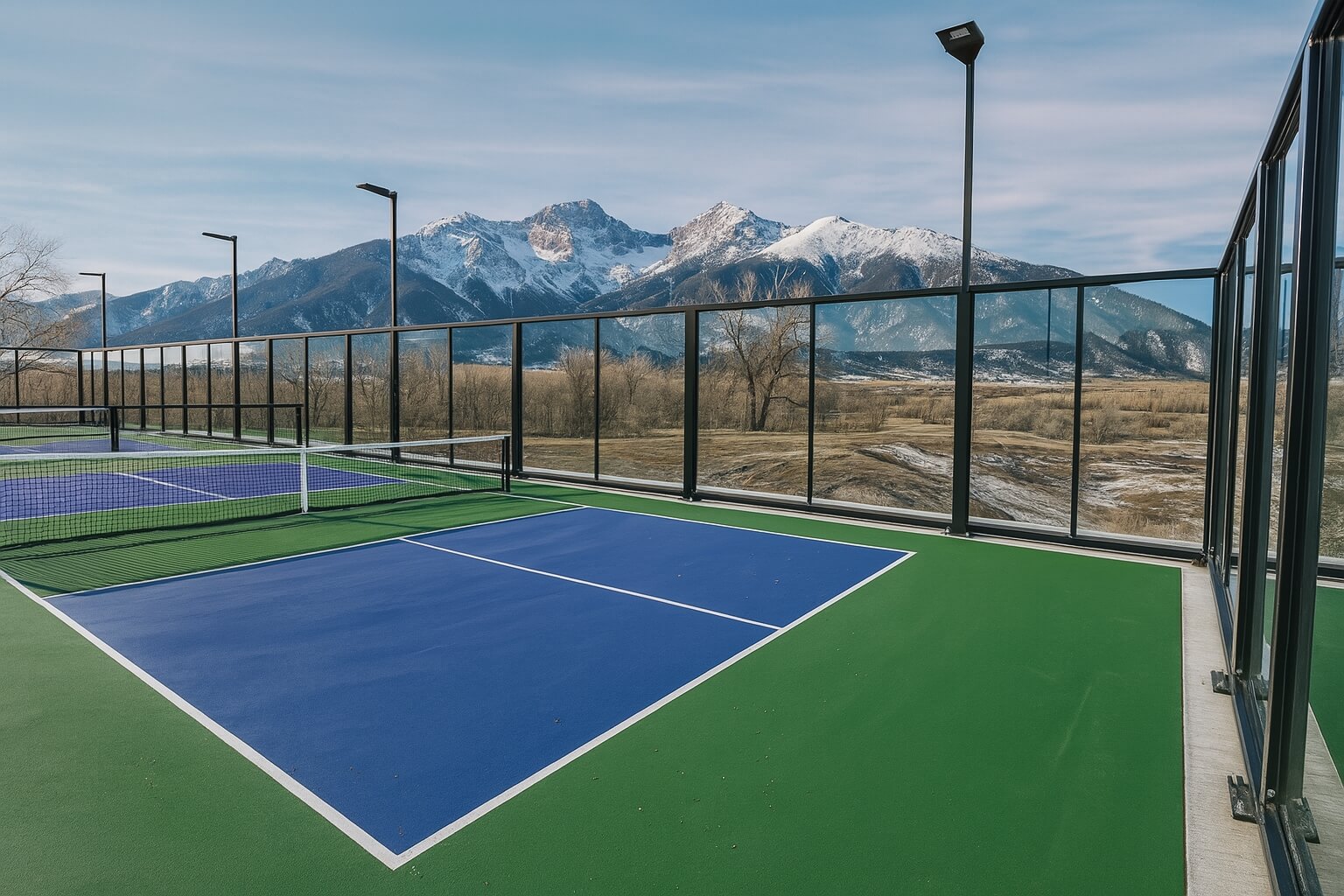
If you’re mapping out your sitework and amenity timeline, this might save you some coordination later.
AUSTIN, Texas – Apr. 10, 2026 – Court facilities are one of the most commonly mis-sequenced scopes on multifamily construction projects. Not because they’re complicated, but because most PMs treat them as a late-stage amenity installation when they actually have dependencies that start much earlier in the schedule.
Here’s how the court scope typically interacts with a multifamily construction timeline, and where the critical dependencies sit.
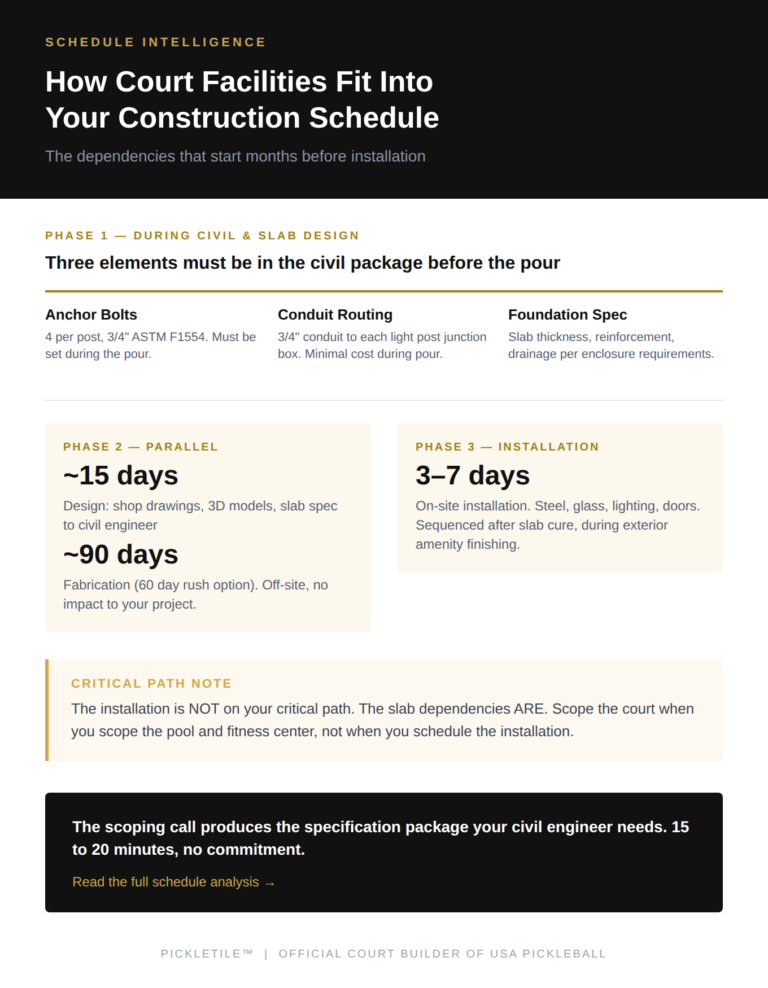
Phase 1: During civil and slab design (months before installation)
The court scope has three elements that must be incorporated into your civil package before the slab is poured:
Anchor bolt layout. The structural glass enclosure anchors to the slab through steel base plates with four 3/4 inch anchor bolts at each post location. The bolt pattern is specific to the enclosure engineering and needs to be set in the slab during the pour. If the bolts aren’t set correctly, or aren’t set at all, the enclosure installation requires field modifications that cost time and money.
Conduit routing. If the court includes integrated lighting (which most multifamily projects do), electrical conduit is routed underground through the slab to junction boxes at each light post location. This happens during the slab pour at minimal incremental cost. If the conduit is missed during the pour, it has to be trenched into finished concrete later, which is disruptive and significantly more expensive.
Foundation specification. The slab thickness, reinforcement, and drainage slope are all determined by the enclosure system’s structural requirements. A standard 4-inch slab that works for a chain-link fence may not meet the engineering requirements for a structural glass enclosure, depending on wind load and enclosure height. This needs to be coordinated with your civil engineer before the slab is designed, not after.
Phase 2: Design and fabrication (runs in parallel with your construction)
Once the court scope is confirmed, the design and fabrication process runs on its own timeline without impacting your site:
Design takes approximately 15 days. This produces architectural shop drawings, 3D models, and structural engineering documents. The slab specification is delivered to your civil engineer during this window.
Fabrication takes approximately 90 days (or 60 days with a rush option). This happens off-site at the manufacturing facility. Your project site is unaffected.
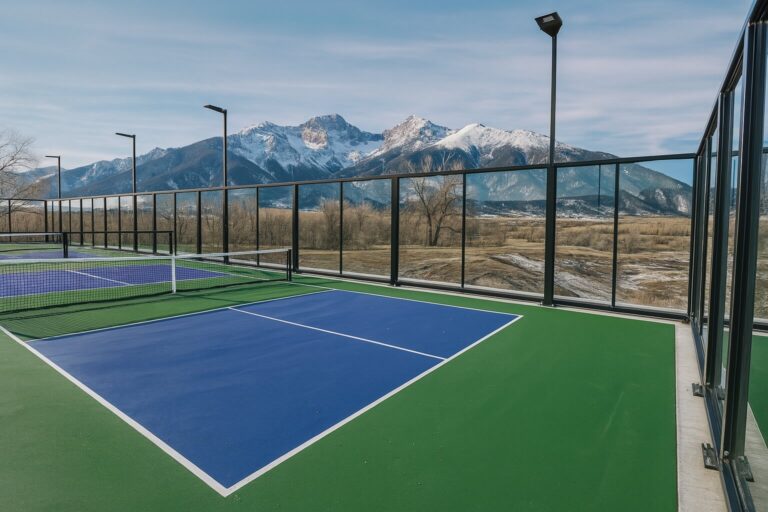
Phase 3: Installation (late in your construction sequence)
On-site installation takes 3 to 7 days depending on the project size. The steel columns are anchored into the completed slab, glass panels are installed, lighting is mounted to the frame, and doors are set. The installation crew arrives with all materials and manages the on-site work.
This phase is sequenced after the slab is cured and ready, and typically happens late in the construction timeline, often in the same window as other exterior amenity finishing work.
The critical path implication:
The court scope itself is not on your critical path. The 3 to 7 day installation can be scheduled around your other trades without conflict.
But the slab dependencies ARE on your critical path. The anchor bolts, conduit routing, and foundation specification need to be in your civil package before the slab is designed. That means the court scope needs to be defined early enough to produce those specifications, which means the scoping conversation needs to happen well before your sitework package goes out to bid.
The sequencing mistake we see most often:
The PM treats the court scope as an installation that happens at the end of the project, and schedules the scoping conversation accordingly. But by the time they circle back to it, the slab has been designed (without the anchor bolts and conduit), the civil package has been bid (without the foundation specification), and the court scope now requires change orders to integrate what should have been included from the start.
The fix is straightforward: have the scoping conversation during the same window when other sitework and amenity scopes are being defined. The court scope produces a specification package that your civil engineer and GC can incorporate into their existing work, the same way they’d incorporate a pool specification or a building foundation detail.
If you’re in that window now, or approaching it, the scoping call is where we produce the specification package your civil engineer needs. Takes about 15 to 20 minutes and gives you the documents to hand off to your team. Let’s discuss today.
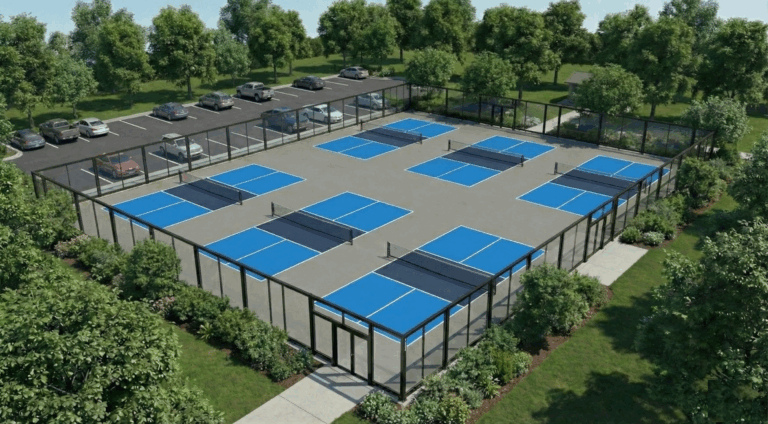
About PICKLETILE™
PICKLETILE™ is the leading design-build firm for premium pickleball court construction and the Official Court Builder of USA Pickleball.
Headquartered in Austin, Texas, PICKLETILE™ simplifies the complex construction process by offering turnkey solutions for residential, commercial, and club-level projects. The company is also the creator of PICKLEGLASS™, a patented soundproof glass wall system engineered to reduce noise by 50% while offering panoramic views and wind protection. For more information, visit www.pickletile.com.
