
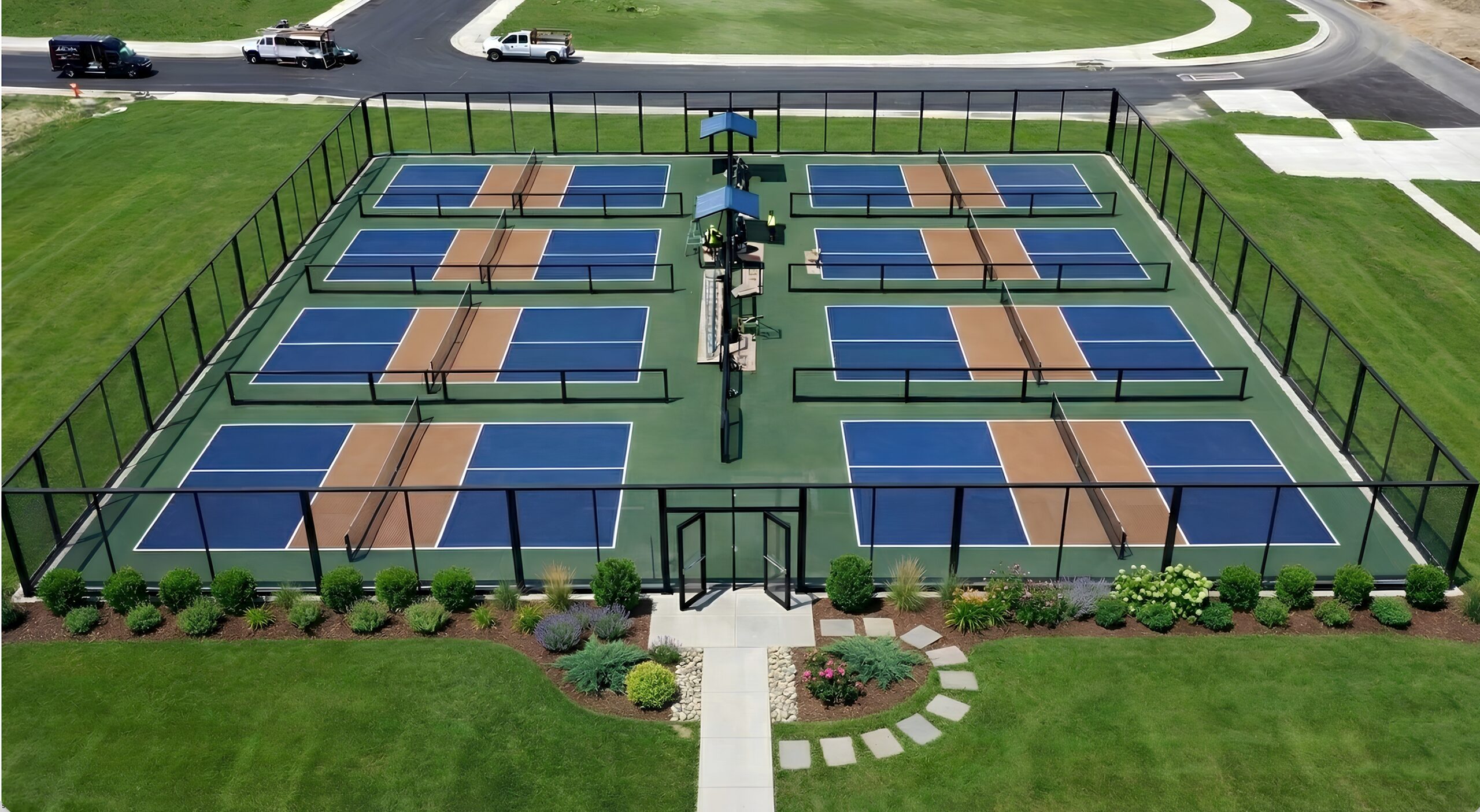
The clubs that hit their target opening dates planned the project twelve to seventeen weeks back from when they needed the facility — the ones that missed started too late.
AUSTIN, Texas – May 17, 2026 – For Directors of Racquets, the construction timeline is not about weeks and milestones. It is about one question: when are my courts offline, and does it conflict with my programming season?
For the GM, the same timeline is also a window question, just a different one: when does the construction become visible to members, when does the project need to be approved by the board to hit the right construction window, and how does the timing interact with the club’s fiscal calendar?
Both views are looking at the same project from different vantage points. Both need to be aligned for the project to start in the right window. Here is how the construction timeline actually works and what each phase means for the club.
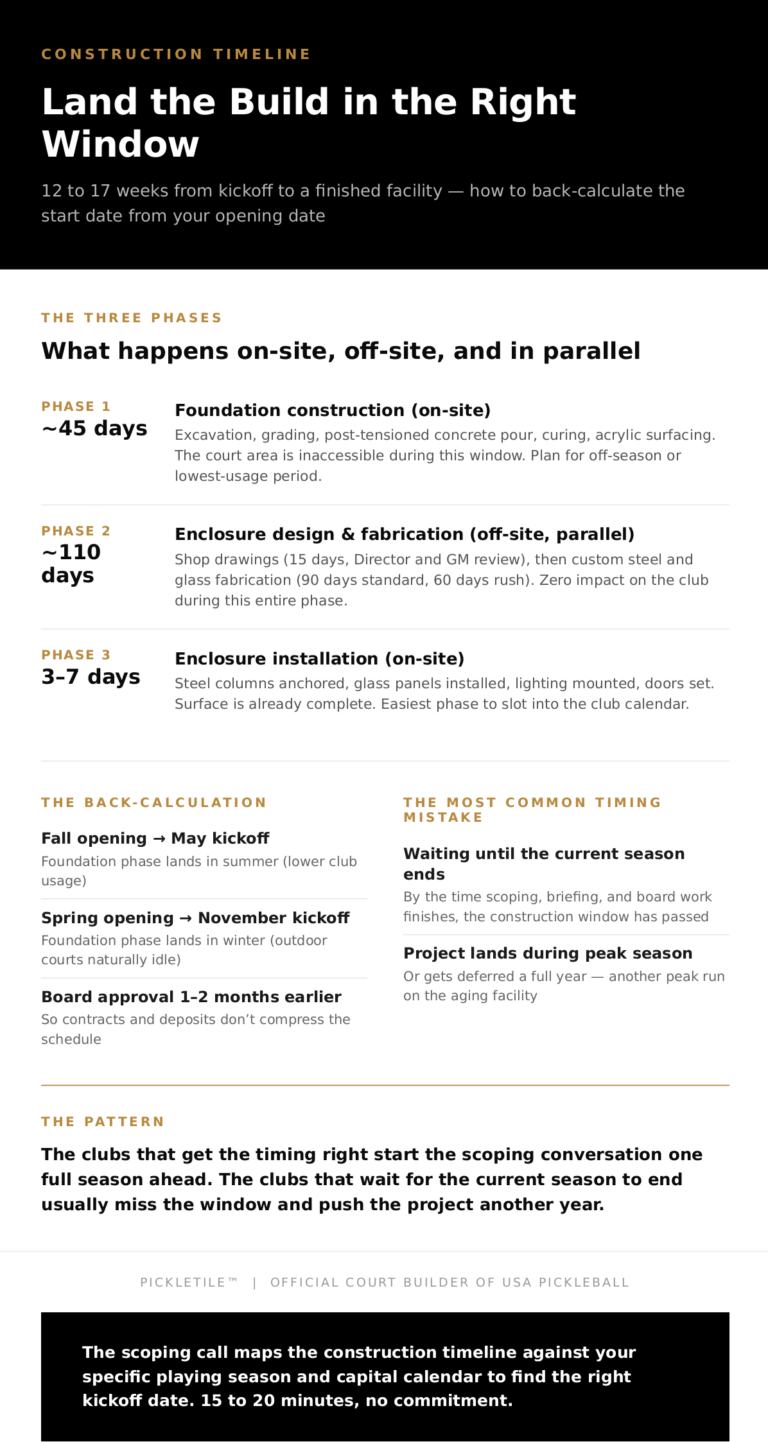
The overall timeline: 12 to 17 weeks
A complete court facility project (foundation, surfacing, enclosure, lighting, and accessories) takes approximately 12 to 17 weeks from project kickoff to a finished, playable facility. The timeline depends primarily on whether standard (90-day) or rush (60-day) fabrication is selected for the enclosure components.
What “kickoff” means for the timeline: contracts are signed, deposits are collected, and engineering work begins. The board approval needs to be complete before this. The fiscal year capital allocation needs to be aligned. Anything that has to happen at the club to authorize the project is upstream of week one.
Phase 1: Foundation construction (approximately 45 days)
This is the on-site construction phase. It includes excavation, grading, concrete pour, curing, and acrylic surfacing. This is the phase when the court area is an active construction zone.
For the Director, this is the phase that affects programming. The court area is inaccessible to members. If the project is building new courts on a separate area of the property, existing courts remain fully operational. If it is replacing or resurfacing existing courts, those courts are offline for this period.
For the GM, this is the phase that affects the broader member experience. Construction equipment is on the property. There is visible activity on the grounds. Member traffic patterns may shift to avoid the work area. The Director and GM need to coordinate communications to members so the work is framed as a known, planned upgrade rather than an unexplained disruption.
The right window: plan Phase 1 during the off-season or lowest-usage period. For most clubs, that is either the heart of summer (when many members travel) or winter (when outdoor court usage naturally drops). The exact window depends on the club’s geographic location and membership patterns. The GM and Director should agree on the target window before the board conversation, not after.
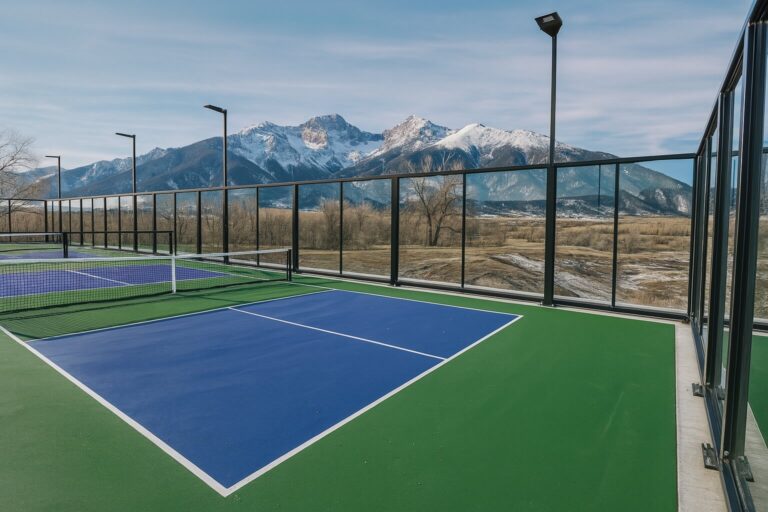
Phase 2: Enclosure design and fabrication (approximately 110 days, runs in parallel)
This phase happens entirely off-site. The engineering team at PICKLETILE™ produces shop drawings and 3D models (approximately 15 days), which the Director and GM review and approve. Then custom fabrication of all steel and glass components takes approximately 90 days (60 with the rush option).
For the GM, this phase has zero impact on the club or its members. No trucks, no equipment, no construction activity on club property. The capital outlay is committed but the visible disruption has not yet begun.
For the Director, the first two weeks of this phase are the most consequential moment of the entire project. The 3D models produced during shop drawings show exactly what the facility will look like: court layout, door placement, spectator sightlines, and how the facility relates to the adjacent club areas. This is the phase where the Director shapes the facility to serve their programming vision. Decisions made here are difficult to change after fabrication starts.
The GM should also weigh in during shop drawing review on anything that affects the club’s broader aesthetic and how the facility integrates with the rest of the property. Both reviews happen in the same window. Both feed into a single approval before fabrication begins.
Phase 3: Enclosure installation (3 to 7 days on-site)
After both the foundation is complete and the fabricated materials arrive, the installation crew comes on-site. Steel columns are anchored to the slab. Glass panels are installed. Lighting is mounted. Doors are set.
This phase is short. It is not heavy construction. It is an assembly process using pre-fabricated components. The court surface is already complete from Phase 1, so the playing surface is not affected during this work. After the final punchout walkthrough (1 day), the facility is open for play.
For both offices, this is the easiest phase to plan around. A 3-to-7-day window can be slotted almost anywhere in the club calendar.
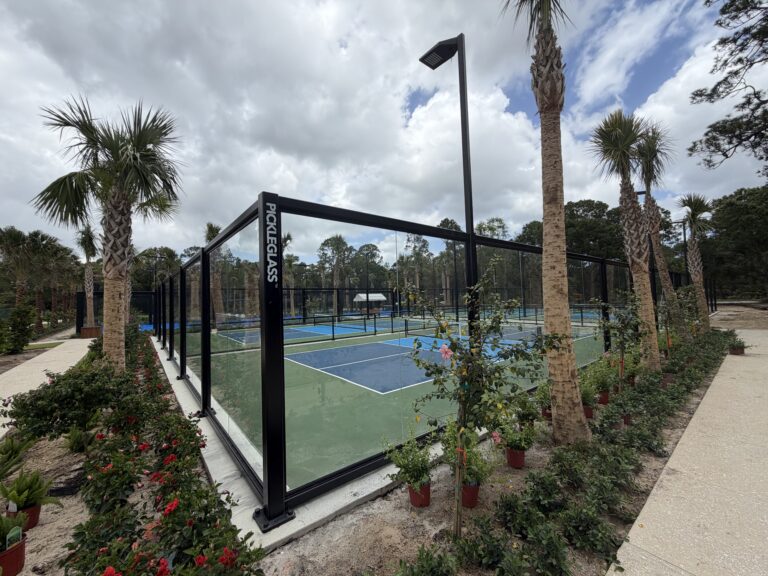
How to plan the timing
The back-calculation is straightforward. Pick the date the facility needs to be open and ready for programming. Subtract 17 weeks (or 13 weeks if using rush fabrication). That is approximately when the project needs to kick off.
For example: if the goal is a facility ready for fall programming season (September), the project would need to start in approximately May. The foundation work happens during the summer (a lower-usage period at most clubs), fabrication runs in parallel through the summer, and the enclosure is installed and turned over before fall programming begins.
If the goal is a spring opening (March), the project would kick off in approximately November. Foundation work happens during the winter low season, fabrication runs through the winter, and the facility is ready for spring.
The board approval has to land far enough ahead of the kickoff date that contracts can be executed and deposits processed without compressing the schedule. For most clubs, that means presenting the project to the board at the meeting one to two months before the target kickoff date.
The most common timing mistake
The Director who waits until the current season ends to start the planning conversation often misses the optimal construction window. By the time the scoping discussion has happened, the GM has been briefed, the board has met, the scope has been finalized, and construction has been authorized, the foundation phase lands during the next peak season rather than the off-season.
The clubs that get the timing right start the planning conversation one full season ahead. They are having the scoping discussion during their current peak season so the project can kick off at the beginning of the next off-season. The Director is using the peak season to gather member demand data and program intelligence. The GM is using the same window to align the project with the board’s meeting cadence and the club’s capital calendar. By the time the next peak season arrives, the new facility is open.
The cost of getting the timing right is a few months of earlier planning. The cost of missing the window is a full year of delay, a peak season run on a deteriorating facility, and a project that competes again with whatever else has come up in the meantime.
If you and your counterpart would like to map the construction timeline against your specific playing season and capital calendar to find the right kickoff date, that is part of what the scoping conversation covers. Worth having now so you can align the project with the right construction window rather than discovering later that the window has passed. Happy to set it up whenever works.
About PICKLETILE™
PICKLETILE™ is the leading design-build firm for premium pickleball court construction and the Official Court Builder of USA Pickleball.
Headquartered in Austin, Texas, PICKLETILE™ simplifies the complex construction process by offering turnkey solutions for residential, commercial, and club-level projects. The company is also the creator of PICKLEGLASS™, a patented soundproof glass wall system engineered to reduce noise by 50% while offering panoramic views and wind protection. For more information, visit www.pickletile.com.
