
On the surface, a racquet facility upgrade at a private country club looks like a standard capital project: assess the need, get proposals, bring a recommendation to the board, execute. Most GMs who have been through the process once describe it as more complex than that, not because the execution is difficult, but because the strategic questions that should precede the scope definition are often skipped.
The country clubs that have had the most successful projects, meaning facilities that are actively used, that the membership takes pride in, and that have held up over time without requiring early capital refresh, are the clubs where leadership worked through a specific set of strategic conversations before the project was defined. This article covers those conversations.
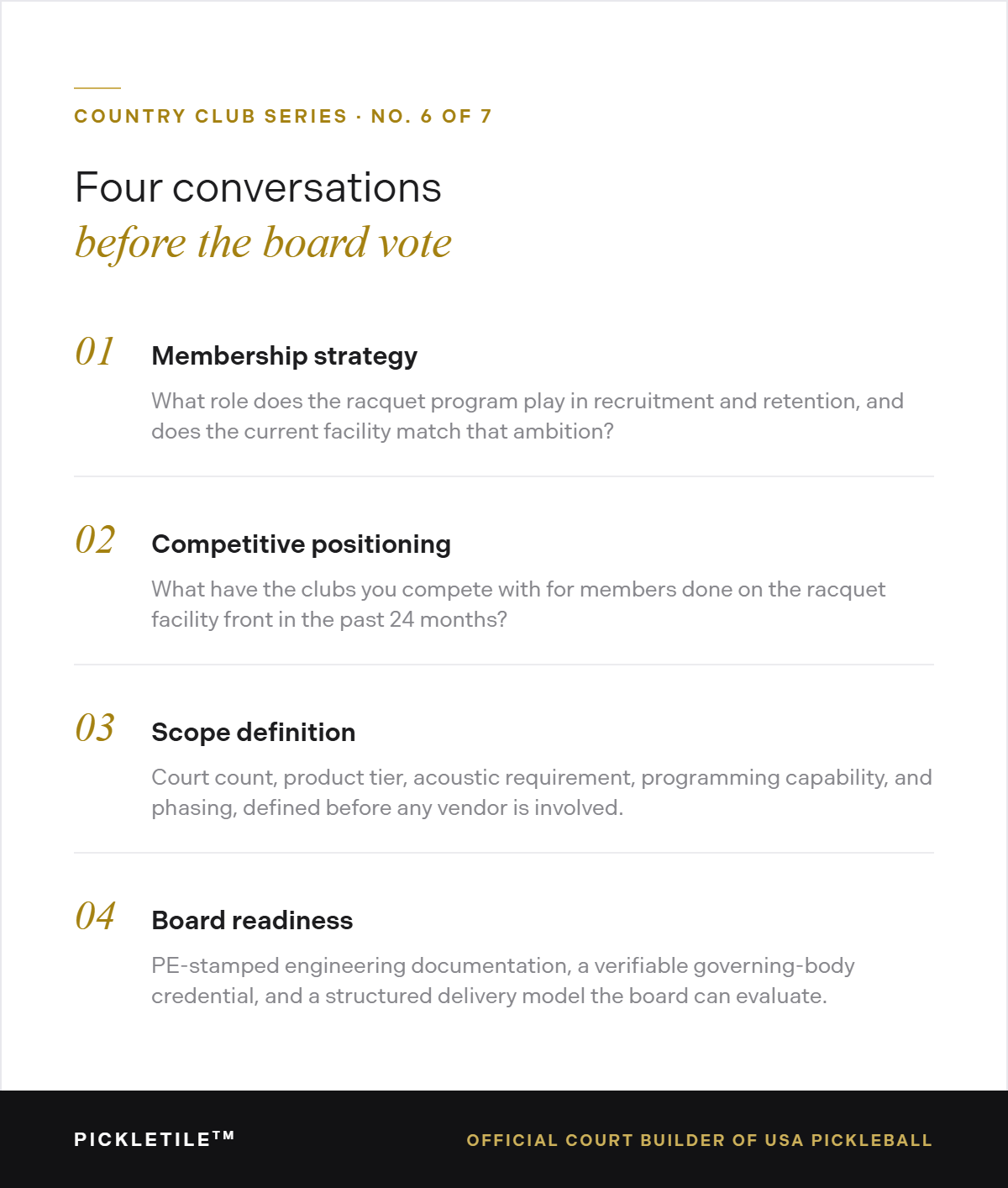
The membership strategy conversation
The first question to answer before defining any racquet scope is: what role does the racquet program play in our membership strategy, and is the current facility consistent with that role?
If pickleball is a primary driver of new member recruitment and existing member retention, the facility needs to reflect that priority. A club that is positioning its racquet program as a core membership differentiator but maintaining a chain-link fence with a converted tennis court is communicating a gap between its ambitions and its investment.
If the racquet program is one of several equally weighted amenity pillars, the scope definition may look different. The point is not that every club needs the same facility. It is that the facility should be a deliberate reflection of a strategic choice, not the result of a deferred decision.
This conversation belongs with the GM and the membership committee before it goes to the board.
The competitive positioning conversation
The second conversation is about the competitive environment. Which clubs are you competing with for new members and for the retention of members who have alternatives? What have those clubs done or announced on the racquet facility front in the past 24 months?
The competitive positioning conversation is often uncomfortable because it requires acknowledging that peer clubs may have made decisions that changed the terms of competition without your club responding yet. But that discomfort is more productive before the board meeting than after a retention problem appears in the membership numbers.
For the Director of Tennis/Racquets: The competitive intelligence question at the operational level is: what are the facilities at peer clubs that your members have played at, and how does yours compare in their assessment? Members who play at multiple clubs do this comparison constantly and informally. The racquets director is typically the first to hear it. That feedback, translated into a clear picture of the competitive gap for the GM, builds a more credible internal case than a board presentation based on general market trends.
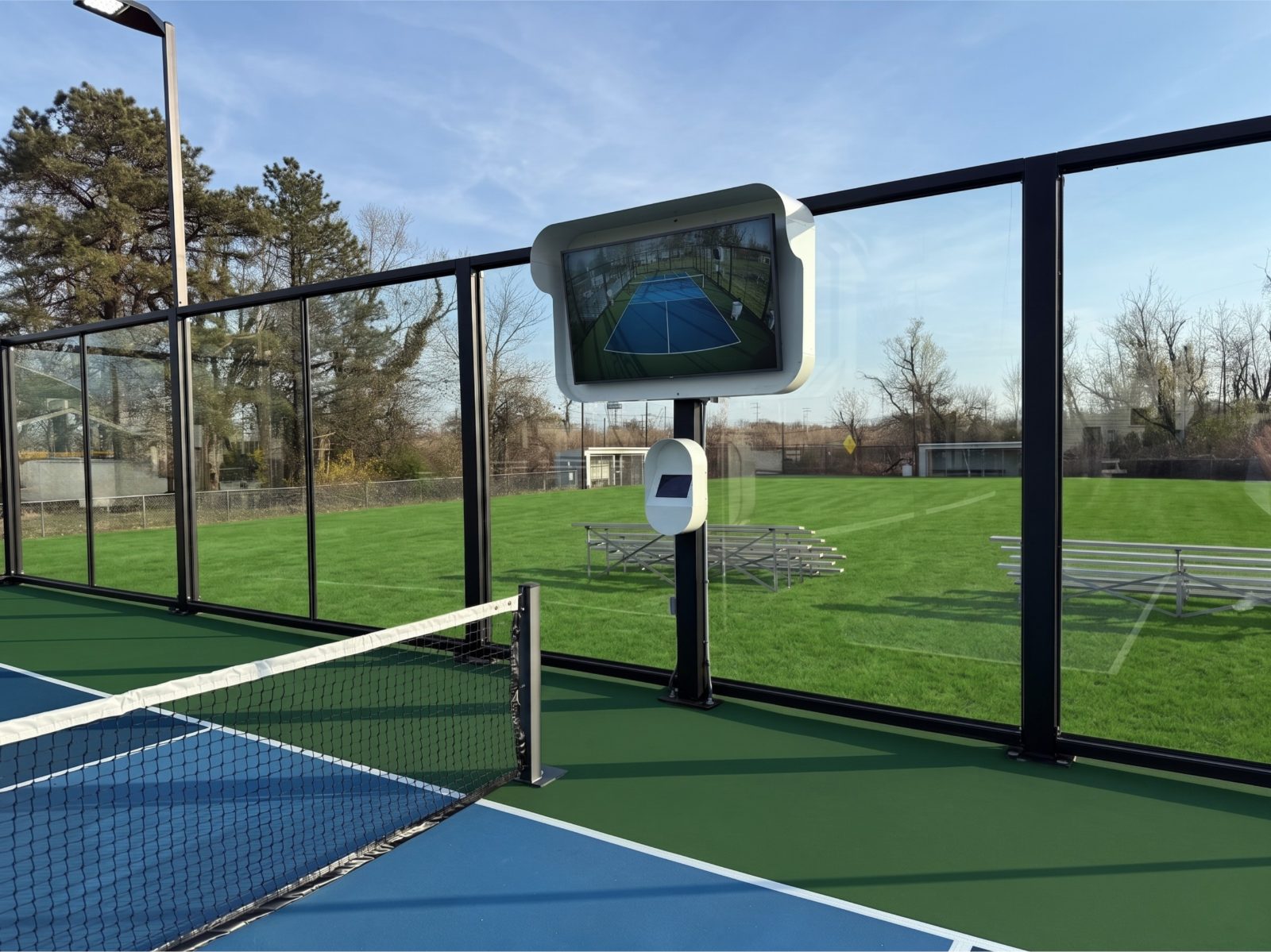
The scope definition conversation
The third conversation, which should happen before any provider or proposal is involved, is about scope: what does the right facility look like, and how does the answer to that question connect to the membership strategy and competitive position defined in the first two conversations?
Scope at the strategic level means: how many courts, what product tier, what acoustic engineering requirement, what access and programming capability, and what phasing approach if the full build is not achievable in a single capital cycle.
These questions have answers that differ meaningfully by club type, market, and membership profile. A club in a dense residential area with courts adjacent to neighboring properties has a different acoustic requirement than a club on a large suburban site with significant buffer. A club whose racquet program is the primary recreational pillar has a different court capacity requirement than one where golf is the dominant activity.
Getting the scope definition right requires site-specific information, not a standard package. It is the primary reason PICKLETILE™’s process begins with a design consultation rather than a proposal.
The board readiness conversation
The fourth conversation is internal: what does the board need to see to approve this project, and does the current proposal package provide it?
Board approval at a private club typically requires a clear articulation of member need, a competitive rationale, a scope that reflects the club’s standards, and confidence in the delivery model. The last point deserves more attention than it typically receives in proposal development.
A capital recommendation for a racquet facility upgrade is strengthened significantly by a delivery partner who can provide PE-stamped engineering documentation, a verifiable credentialing from the sport’s governing body, and a structured project process that the board can evaluate rather than accept on trust. These elements take the selection question off the table and allow the board conversation to focus on whether the project is the right one for the club, not whether the partner is reliable.
PICKLETILE provides that documentation package as a standard component of the project engagement. The Official Court Builder of USA Pickleball credential, combined with the engineering and design documentation from the consultation process, gives GMs a board recommendation that can withstand scrutiny.
Request a quote and we will work through the strategic conversations described above with you, before any scope is defined, and make sure the project that emerges from that process is the right one for your club.
The clubs that have the smoothest board approvals did the strategic work before the proposal. Let’s work through the right questions for your situation.
