



ENGINEERED TO REDUCE NOISE COMPLAINTS

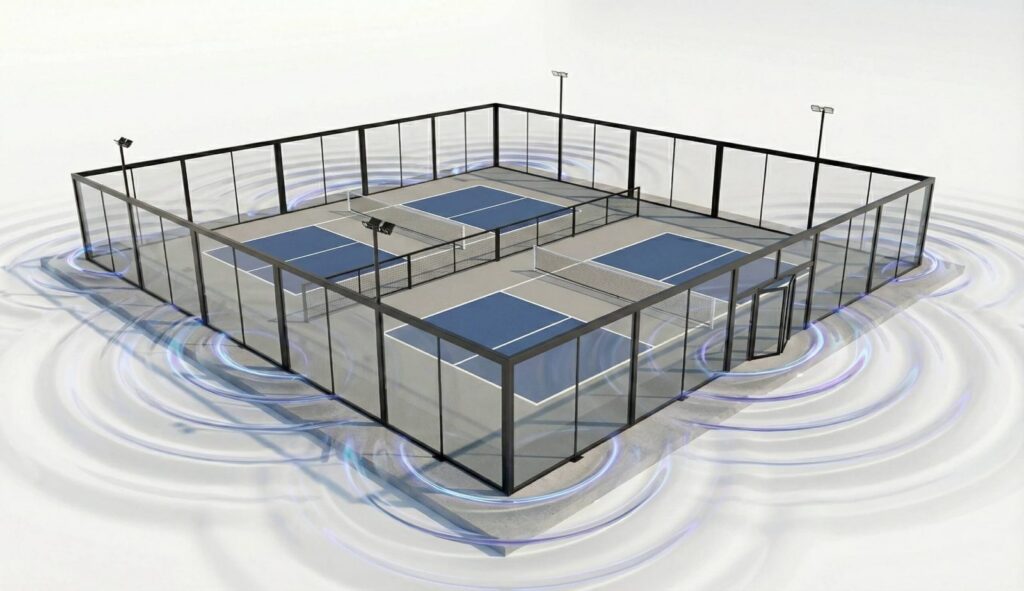
PICKLEGLASS™ reduces off-site court noise by roughly 50%, helping satisfy HOA and municipal requirements. It is the first purpose-built acoustic solution engineered specifically for pickleball, backed by USA Pickleball and leading acoustic engineers.

Trusted by Nation's Leading Devleopers

The Official Acoustic Solution

USA PICKLEBALL QUIET CATEGORY LEADER

PICKLEGLASS™ is the Official Acoustic Solution of USA Pickleball, delivering the most effective sound mitigating system available. Engineered to isolate and suppress disruptive noise, PICKLEGLASS™ addresses one of the sport’s most persistent challenges. This advancement elevates the playing experience while providing a practical solution for noise sensitive communities nationwide.

The Acoustic Challenge

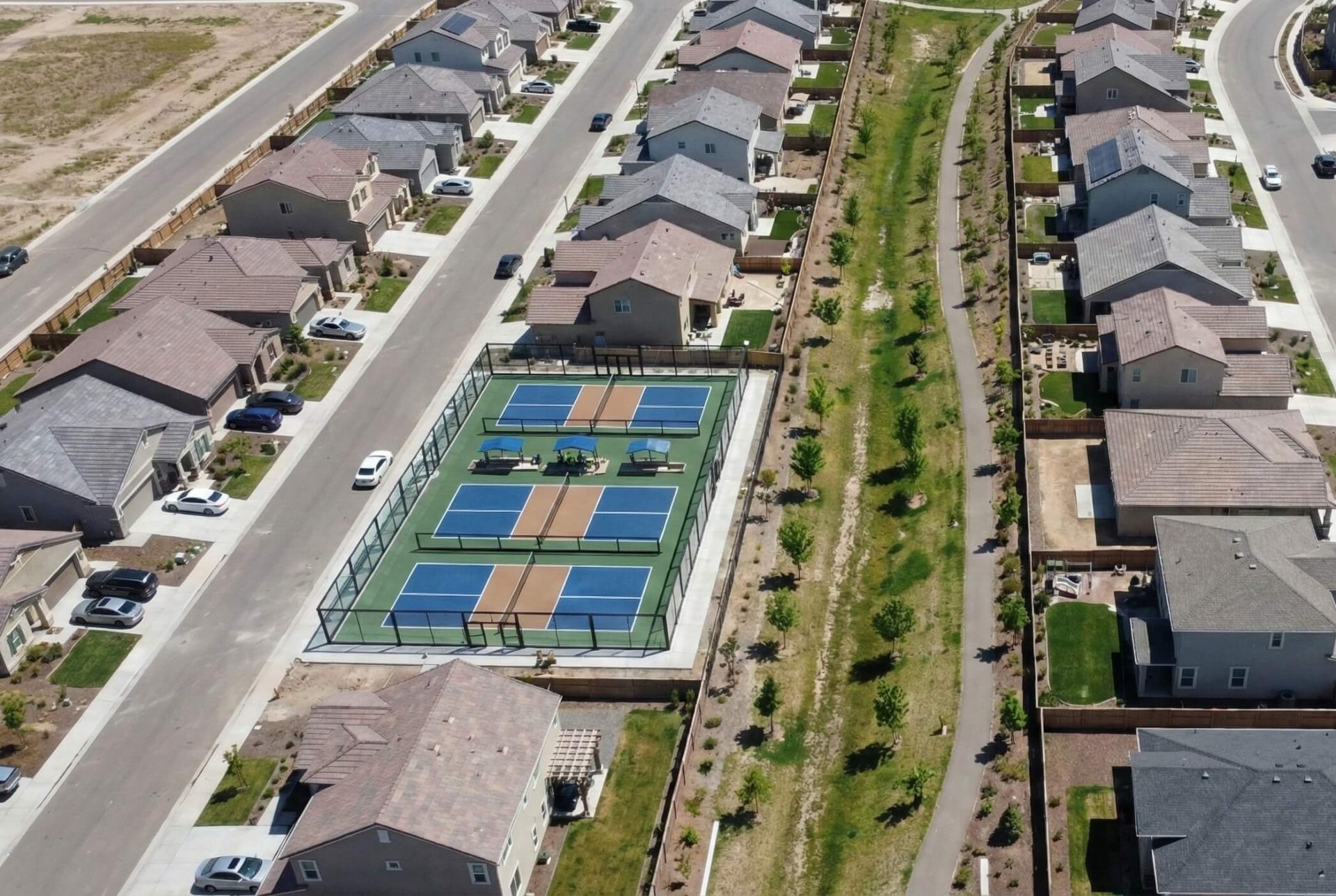
Development roadblocks and increased litigation risk

Resident complaints
and post-installation backlash

Zoning and planning scrutiny on court placement and fencing

Traditional chain link and windscreens offering limited, inconsistent relief

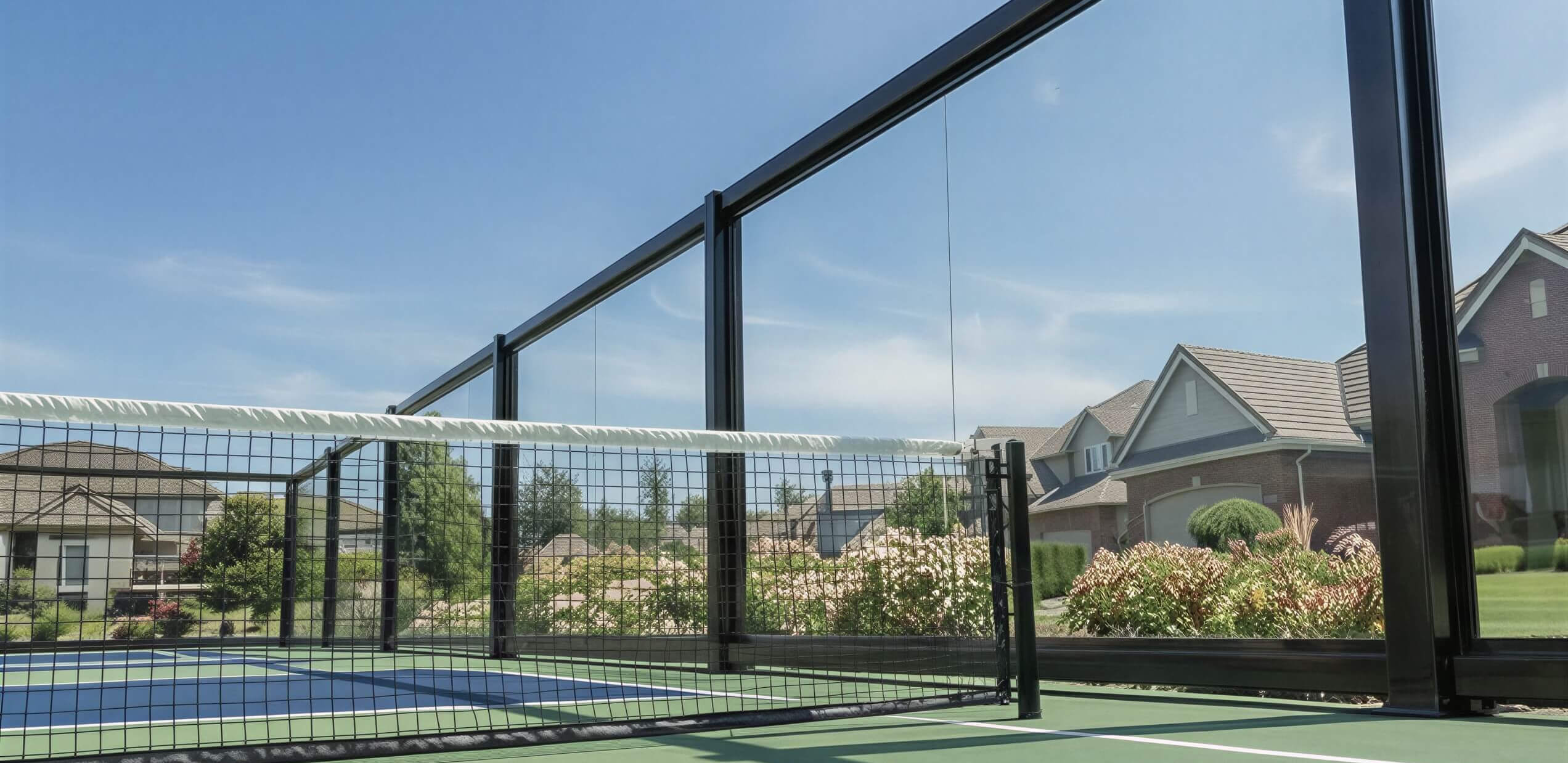
PICKLEGLASS™: Engineered for Acoustics and Performance

LAB RESULTS | STC 36

Tuned for the Dominant Pickleball Frequency

Viracon Acoustic Performance Data Tables,
ASTM E413-87 testing methodology

Independent environmental noise study results

PICKLEGLASS™ performance has been evaluated through an independent environmental noise study prepared by Cerami and Trinity Consultants.

The study modeled pickleball noise propagation for single- and double-court configurations at multiple barrier heights and distances using CadnaA software based on ISO 9613-2 standards.

Modeled using CadnaA Software | ISO 9613-2 Standard
Key Findings Summary

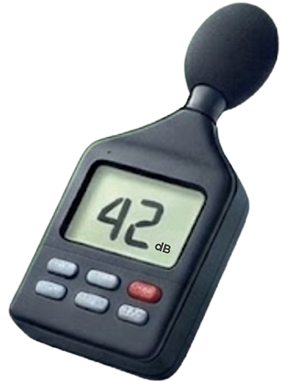
Projected noise attenuation of approximately 10-16 dBA depending on height and distance

A 10 dBA reduction is generally
perceived as roughly half
as loud

Taller barriers consistently
reduce off-site noise more
effectively

Benefits increase with
distance from the court
perimeter

Designed to support planning, zoning, and HOA review

Documented, third-party modeling allows project teams to move discussions from subjective complaints to quantified mitigation strategies during entitlement and community review processes

The "CLEAR" Decision

A purpose-built solution that outperforms temporary alternatives in every category

PICKLEGLASS™

Traditional Sound Tarps

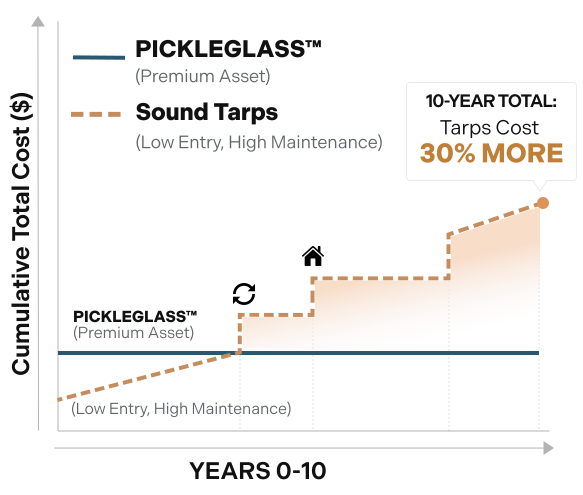
COST OF OWNERSHIP

the smarter 10-year investment by 30%

the smarter 10-year investment by 30%

Don't be fooled by a lower initial price.
Tarp hidden costs add up fast.

THE REPLACEMENT TRAP

Tarps degrade rapidly. Forces a full,
expensive repurchase every 5-7 years.

RECURRING SEASONAL COSTS

Paying crews annually for installation,
removal, & storage.

PERFORMANCE DECAY

Materials break down from UV & wind; acoustics worsen. PICKLEGLASS™ performance is PERMANENT.

Frequently Asked Questions

Does PICKLEGLASS™ eliminate all pickleball noise?

No. PICKLEGLASS™ is designed to materially reduce off-site noise impact, not to create silence. Independent modeling shows meaningful attenuation beyond the court perimeter, which helps reduce complaints and improve compatibility with surrounding uses.

How much noise reduction can I expect?

The independent environmental noise study projects approximately 10–16 dBA of noise attenuation depending on barrier height, court configuration, and distance from the court. For context, a 10 dBA reduction is generally perceived as roughly half as loud.

Traditional fencing and windscreens provide limited and inconsistent noise reduction. PICKLEGLASS™ uses a rigid architectural glass barrier that more effectively limits lateral sound propagation and delivers materially greater, more predictable performance based on independent modeling.

What barrier heights are available, and how do they affect performance?

The study evaluated 8 ft, 10 ft, and 13 ft barrier heights. Taller barriers consistently provide greater noise attenuation, particularly at residential setback distances. The optimal height depends on site constraints, setbacks, and approval requirements.

Is this solution suitable for HOAs and residential adjacency?

Yes. PICKLEGLASS™ was developed specifically for noise-sensitive environments such as HOAs, municipalities, mixed-use developments, and residential neighborhoods where aesthetics and community impact matter.

Has PICKLEGLASS™ been independently tested?

Yes. PICKLEGLASS™ has been evaluated through an independent environmental noise study prepared by Cerami and Trinity Consultants using CadnaA modeling software based on ISO 9613-2 acoustic propagation standards.

What does STC 36 mean for an outdoor pickleball court?

STC is a laboratory metric that measures how well a material reduces sound transmission. PICKLEGLASS™ achieved an STC rating of 36, which is approximately 35% higher than leading fencing and screen-based systems. While STC is not a direct measure of outdoor performance, it provides a standardized benchmark that supports the system’s acoustic capability.

How does outdoor noise modeling differ from lab testing?

Laboratory testing measures sound transmission through materials in controlled conditions. Outdoor modeling accounts for distance, shielding, reflections, and propagation in real environments. The environmental noise study focuses on how sound behaves beyond the court perimeter, which is what most communities care about.

Can PICKLEGLASS™ help with zoning, planning, or community approvals?

Yes. Many projects use the independent acoustic study to demonstrate a quantified mitigation strategy during planning reviews, zoning discussions, and community meetings, helping move conversations from subjective concerns to documented performance.

Does site layout affect performance?

Yes. Court orientation, number of courts, nearby structures, topography, and setbacks all influence results. Single-court and double-court configurations perform differently, which is why site-specific review is recommended.

Is PICKLEGLASS™ safe and durable for outdoor use?

Yes. The system is engineered for outdoor sports environments, combining structural safety, impact resistance, and long-term durability while maintaining clear sightlines and a premium architectural appearance.

How do I determine the right configuration and budget?

Start by sharing a site plan, basic dimensions, or project address. Our team can recommend barrier height, layout, and provide budget pricing based on your specific conditions and approval goals.