
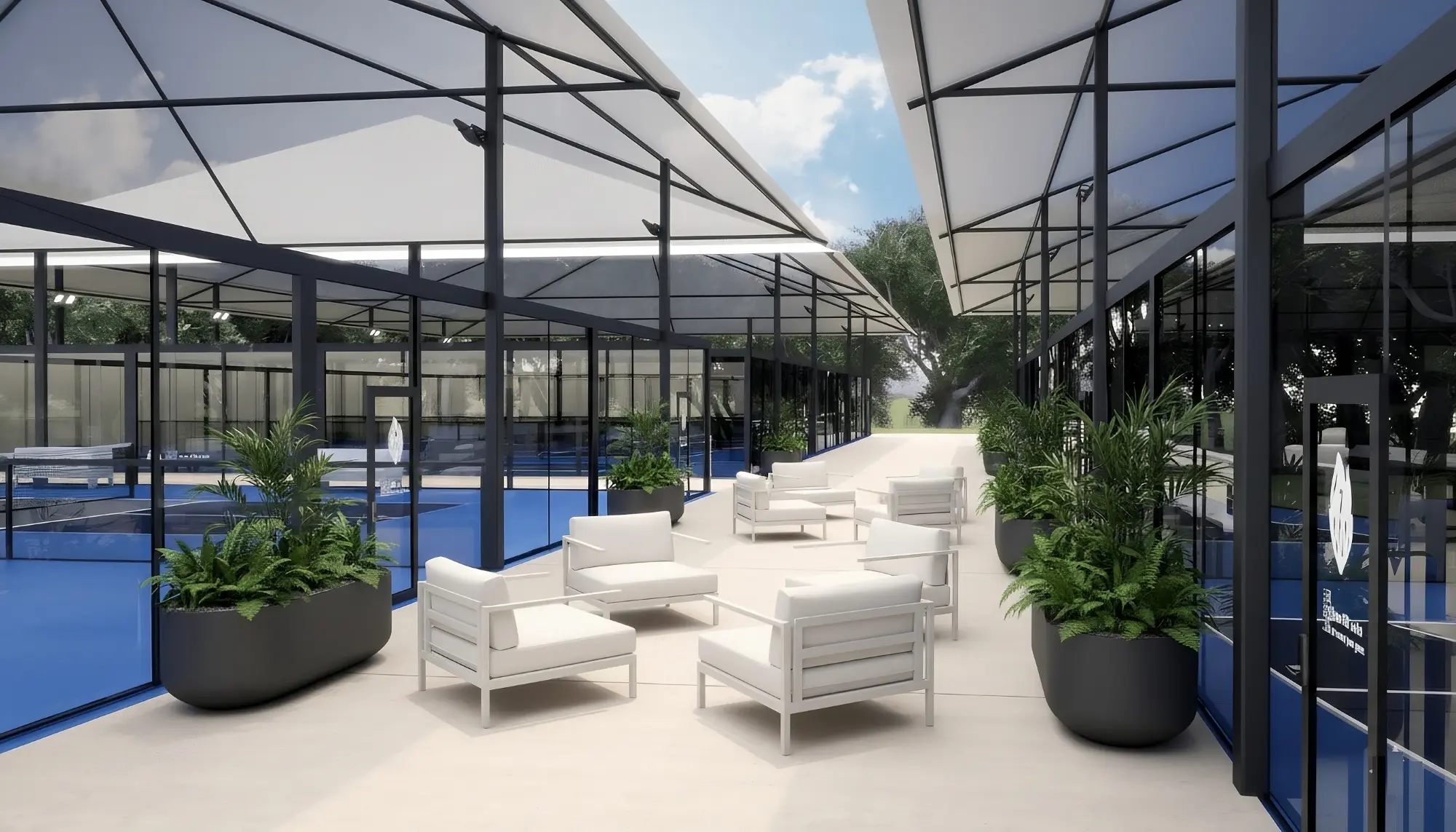
How the court amenity gets categorized in your development budget… Small distinction, big impact on how it gets evaluated.
AUSTIN, Texas – Apr. 4, 2026 – There’s a budget categorization issue on multifamily developments that quietly shapes whether the court amenity gets built well or built cheap, and it happens before anyone evaluates a single bid.
On most pro formas, the court scope sits in the sitework line item. It’s grouped with grading, paving, fencing, and landscaping. The budget is set based on what those categories typically cost, and the court is evaluated against sitework pricing benchmarks.
The problem: a court facility isn’t sitework. It’s an amenity infrastructure investment, the same category as the fitness center, the pool, or the clubhouse lounge. But because it’s historically been treated as “fencing around a slab,” it gets scoped, budgeted, and evaluated like a commodity construction item rather than a designed amenity.
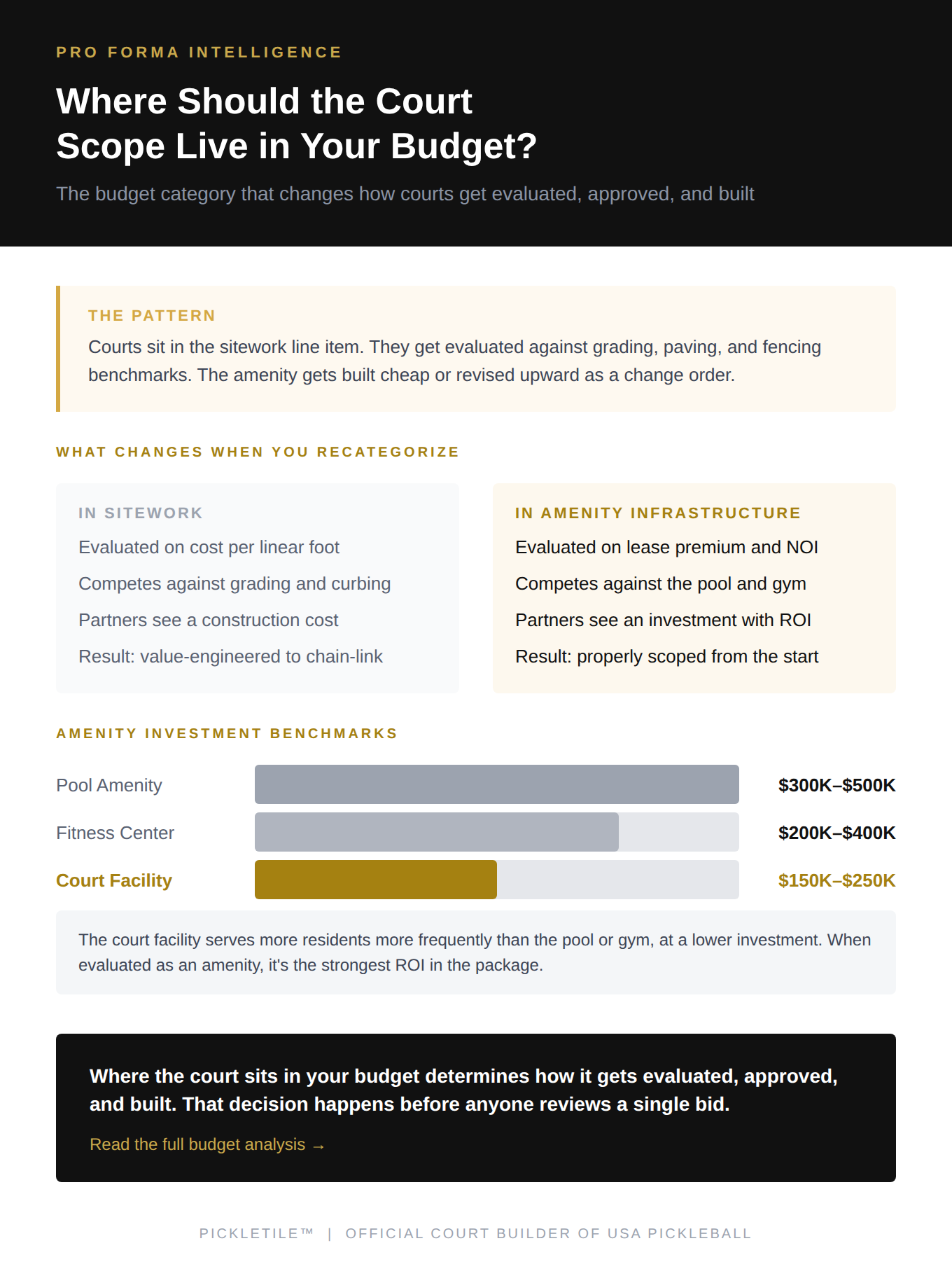
What changes when you recategorize:
When the court moves from the sitework budget to the amenity infrastructure budget, three things shift:
The evaluation criteria change. Sitework is evaluated on cost per linear foot. Amenity infrastructure is evaluated on what it does for the property: lease premium, tenant retention, competitive differentiation, marketing asset quality, and NOI impact. A $40,000 fencing scope and a $100,000 integrated court facility look very different when compared to each other. They look much closer when compared to what they each contribute to the property’s performance.
The comparison set changes. In the sitework budget, the court competes against grading, curbing, and parking lot striping. In the amenity budget, it competes against the pool upgrade, the fitness center buildout, and the co-working lounge. Developers routinely spend $300K to $500K on a pool amenity and $200K to $400K on a fitness center without questioning the ROI. A $150K to $250K court facility that serves more residents more frequently than either of those suddenly looks like the best ROI in the amenity package.
The approval conversation changes. When a partner or investment committee sees “courts” in the sitework line, they evaluate it as a construction cost. When they see it in the amenity line with an ROI case (lease premium potential, competitive differentiation data, tenant demand trends), they evaluate it as an investment. Same dollars, completely different conversation.
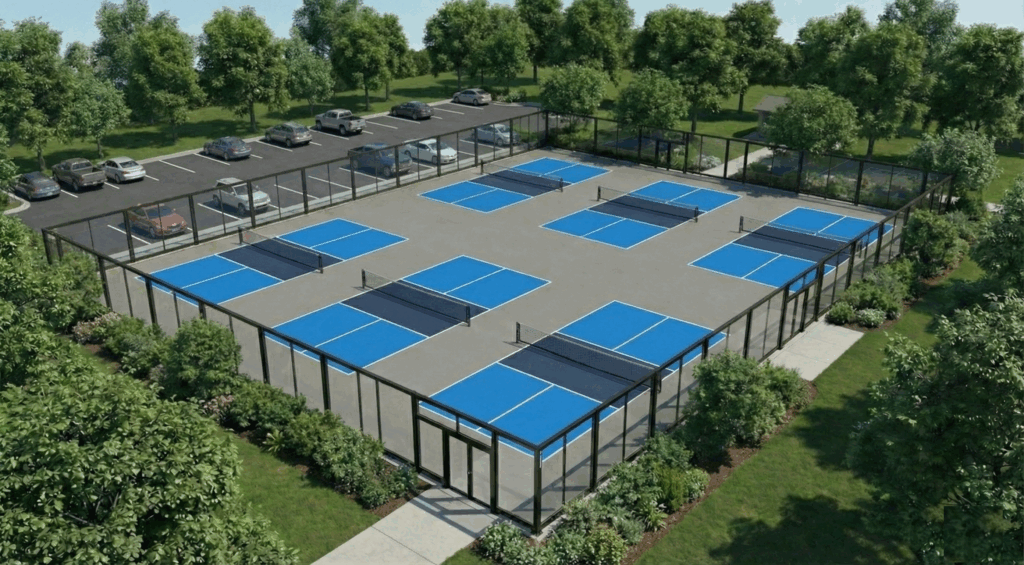
The practical impact on your project:
Developers who recategorize the court scope before budgets are finalized typically end up with better facilities and fewer budget surprises. The number is higher than a fencing estimate, but it’s accurate, it’s evaluated against the right benchmarks, and it doesn’t create a change order when someone realizes mid-construction that the amenity needs to be more than chain-link around a slab.
The developers who leave it in sitework almost always end up in one of two scenarios: the scope gets value-engineered to chain-link because it can’t justify itself against sitework pricing benchmarks, or the scope gets upgraded mid-project as a change order, costing more, disrupting the GC’s schedule, and creating exactly the kind of budget variance that partners and committees notice.
A question worth asking early:
Where does the court scope currently sit in your development budget? If it’s in sitework, it might be worth moving it to the amenity line before budgets are finalized and scoping it against what the amenity actually needs to deliver for your project.
That’s what our scoping conversation covers: what the amenity should include for a project like yours, and what the investment range looks like when it’s properly categorized. Let us know if the timing is right for your project.
About PICKLETILE™
PICKLETILE™ is the leading design-build firm for premium pickleball court construction and the Official Court Builder of USA Pickleball.
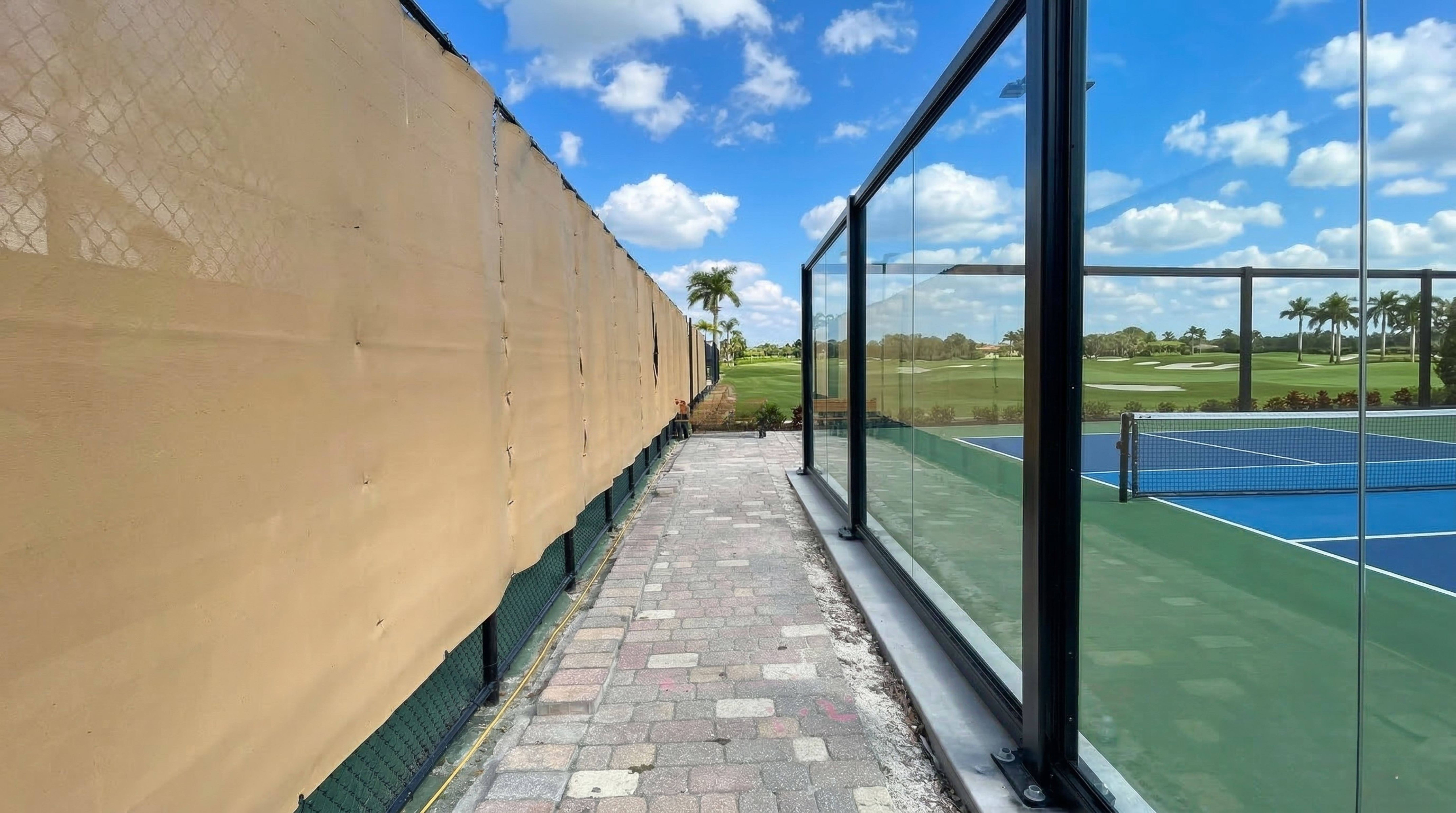
Headquartered in Austin, Texas, PICKLETILE™ simplifies the complex construction process by offering turnkey solutions for residential, commercial, and club-level projects. The company is also the creator of PICKLEGLASS™, a patented soundproof glass wall system engineered to reduce noise by 50% while offering panoramic views and wind protection. For more information, visit www.pickletile.com.
