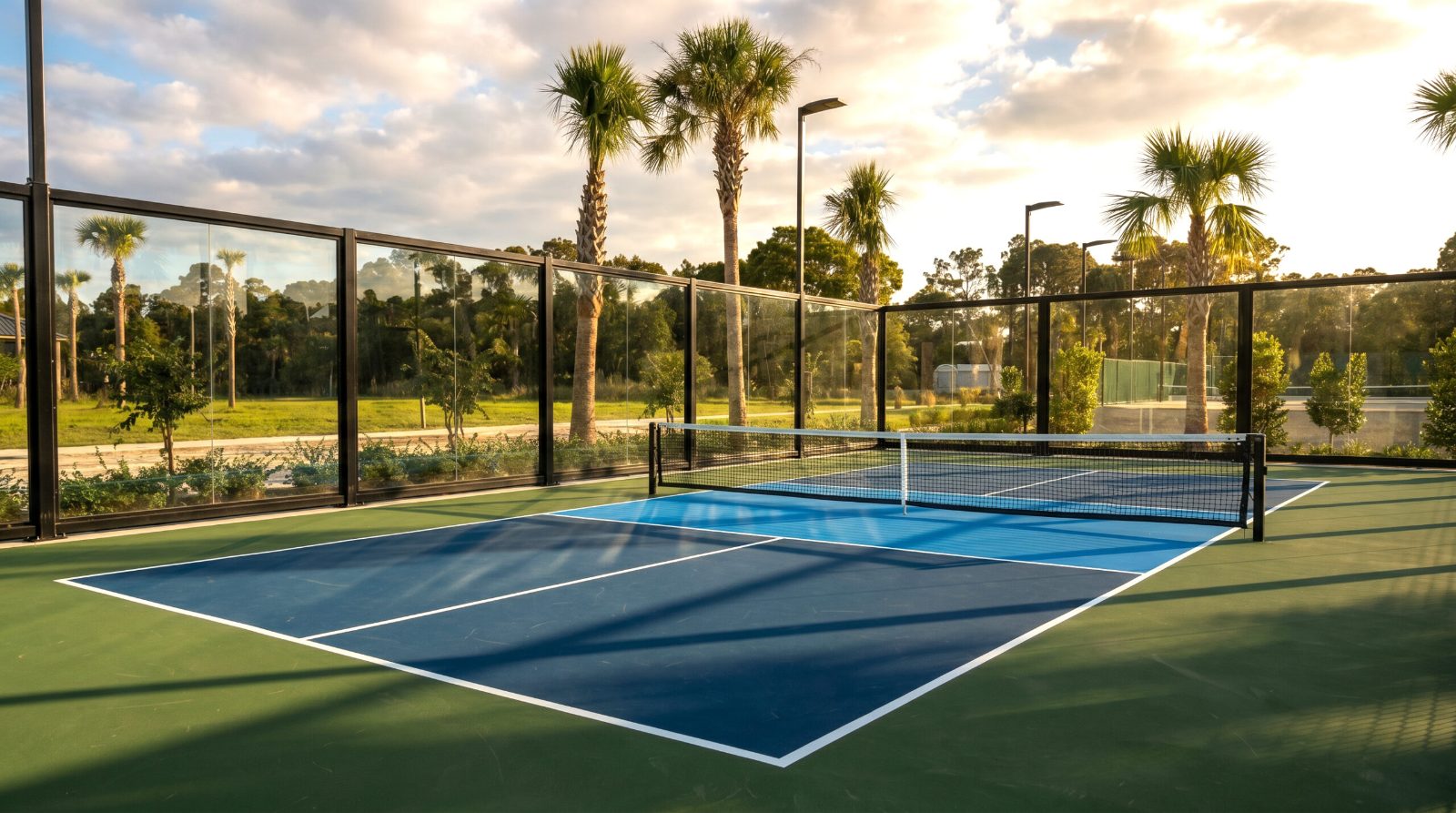
Scoping a premium court amenity means defining it as a system, not a playing surface with extras. A complete package spans the surface, an acoustic-rated enclosure, certified lighting, technology and operations, access and ADA, site and drainage, and the engineering and permitting that tie them together. The expensive errors are almost never the surface; they are the items left out of the original scope, then added later as change orders, noise retrofits, or rework. Scope the full system up front, with one accountable owner, and the project stays on budget and on schedule.
01The scope iceberg
When most buyers picture a court, they picture the part above the waterline: the surface, the lines, the color. That is the visible 10%. The 90% that determines whether the amenity performs, gets approved, and lasts sits below it: the acoustic enclosure, the lighting design, the drainage and base, ADA access, and the stamped engineering that lets the whole thing be permitted. A scope that prices only the visible part is not cheaper, it is incomplete, and the missing items resurface later at a worse price.
The discipline is to scope from the bottom of the iceberg up. Decide how the court will be used and who is near it, and the rest of the system follows from there.
02The complete amenity stack
A premium court amenity is built from distinct, specifiable components. Each is a decision, and each has a cost of being skipped.
Playing surface system
The court surface, base, and drainage. The visible layer, and the one most scopes stop at.
Acoustic-rated enclosure
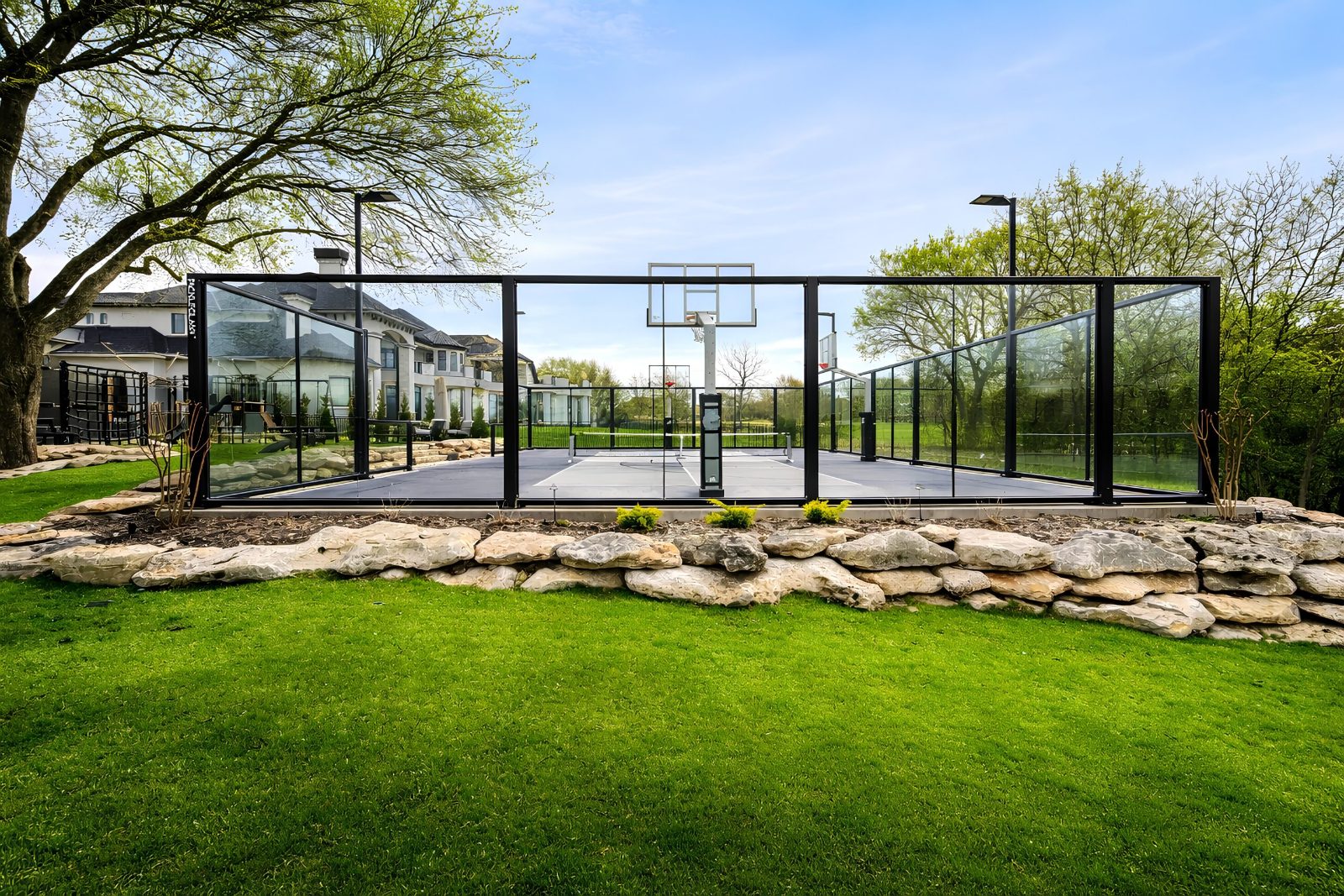
PICKLEGLASS™ at STC 36, in 4, 6, 8, 10, or 13 ft heights, sized to each side’s exposure. The item most often missing until a complaint forces it.
Lighting
Integrated LED at 50 foot-candles, USA Pickleball-certified, designed in rather than retrofitted after pour.
Technology & operations
AUTONOMOUS™ facility operating system for access, scheduling, and play management where the court is programmed or monetized.
Access & ADA
Compliant approach, gates, and circulation. Non-negotiable on public and shared sites, costly to add after the fact.
Engineering & permitting
PE-stamped drawings and the acoustic basis that clear review. The connective tissue that makes the rest buildable.
03The questions that set the scope
Scope is not guessed, it is derived from how the court will live. Answer these before pricing anything, because each answer moves the spec.
Who uses it, and how many courts? Member play, public use, and revenue programming imply different capacity, durability, and operations. What sits near it? Proximity to homes, units, or guest rooms determines the acoustic enclosure, which is the largest swing in the whole scope. What hours? Evening play requires the lighting layer and tightens the acoustic requirement against nighttime ordinances. What climate? Coastal and high-wind sites drive the durability spec (the enclosure is rated to up to 200 mph, ASCE 7-22, with a 10-year no-rust guarantee). Is it programmed or monetized? If so, the technology and operations layer belongs in the original scope, not a phase two. Will it expand? Designing for future courts now is far cheaper than retrofitting later.
04Where scope gaps cost the most
Under-scoping does not save money, it defers and inflates it. The recurring offenders are predictable. An enclosure left out becomes a noise retrofit after the first complaints, at a premium and under pressure. Lighting added after the surface is poured means rework and trenching that should have been a single coordinated install. ADA treated as an afterthought triggers redesign on a shared or public site. And a scope assembled from separate orders with no single owner produces the gaps in the first place, because no one is accountable for the seams between them.
This is the strongest argument for scoping the full system through a single accountable partner: the components are designed to integrate, the engineering covers the whole, and there is one party responsible when the lighting has to clear the enclosure and the enclosure has to clear review. The trade-offs of that model against a multi-party approach are covered in the companion guide on single-partner versus multi-party court delivery.
| Item | If left out of original scope |
|---|---|
| Acoustic enclosure | Noise retrofit under complaint pressure, often after use is restricted |
| Lighting | Trenching and rework after the surface is in; evening play delayed |
| ADA / access | Redesign and re-review on public or shared sites |
| Drainage / base | Surface failure and premature resurfacing |
| Engineering / permitting | Approval delays, redesign, and stalled timelines |
05A scoping checklist you can hand to a partner
A complete scope request names each layer of the stack and the conditions that size it. At minimum it should specify: number of courts and intended use; the nearest noise-sensitive receptor and required enclosure heights by exposure; lighting to 50 foot-candles if evening play is intended; operations and access technology if the court is programmed or monetized; ADA and circulation requirements; drainage and base for the site conditions; and PE-stamped engineering with the acoustic basis for permitting. With those defined, pricing is comparable across partners and the timeline (approximately 12 to 17 weeks from deposit to installation for the engineered system) is realistic rather than optimistic. You can route the product depth to the PICKLEGLASS™ page and the acoustic basis to sound suppression.
- Scope the court as a system of six layers: surface, acoustic enclosure, lighting, technology and operations, access and ADA, and engineering and permitting.
- The visible surface is the cheap part. The items below the waterline determine whether the amenity performs, gets approved, and lasts.
- Scope is derived from use. Who plays, what is nearby, and what hours set the spec, especially the acoustic enclosure, the largest swing in the scope.
- Items left out return as change orders, retrofits, and rework. A single accountable partner removes the seams where gaps form.
FAQFrequently asked questions
What is included in a complete pickleball court amenity?
More than a surface. A complete package includes the playing surface and base, an acoustic-rated enclosure, certified lighting, technology and operations where the court is programmed, ADA and access, drainage, and the PE-stamped engineering and permitting that tie them together. Scoping only the surface leaves the items that most affect performance and approval for later.
How many courts should I plan for?
It depends on intended use and capacity. Member or resident play, public use, and revenue programming each imply different court counts, durability, and operations. The more useful question early is who will use the court and how often, because that, along with future expansion, sets capacity before any surface is priced.
What does a premium court cost?
Cost is driven by the scope, not a single number, and the largest swing is the acoustic enclosure required by what sits near the court. Lighting, technology, site and drainage conditions, climate-driven durability, and the number of courts all move the figure. A complete, comparable price requires defining the full stack first; pricing a partial scope produces a low number that grows through change orders.
Do I need lighting and an enclosure, or are they optional?
Lighting is required for any evening play and is far cheaper designed in than retrofitted after the surface is poured. An acoustic-rated enclosure is effectively required wherever the court sits near homes, units, or guest rooms, because it is the item that prevents the noise complaints that restrict use. Both belong in the original scope when those conditions apply.
How long does a court take to deliver?
For the engineered system, approximately 12 to 17 weeks from deposit to installation, across three stages: design with PE-stamped drawings, fabrication, and installation. Timelines stretch when scope gaps surface mid-project, which is the practical reason to define the full system up front.
What about ADA and permitting?
ADA access and PE-stamped engineering belong in the original scope, not a later phase. On public and shared sites ADA is non-negotiable and costly to add after the fact, and PE-stamped drawings with a documented acoustic basis are what clear review. PICKLETILE provides stamped drawings on every project and reports a 100% permit success rate across submitted projects to date.