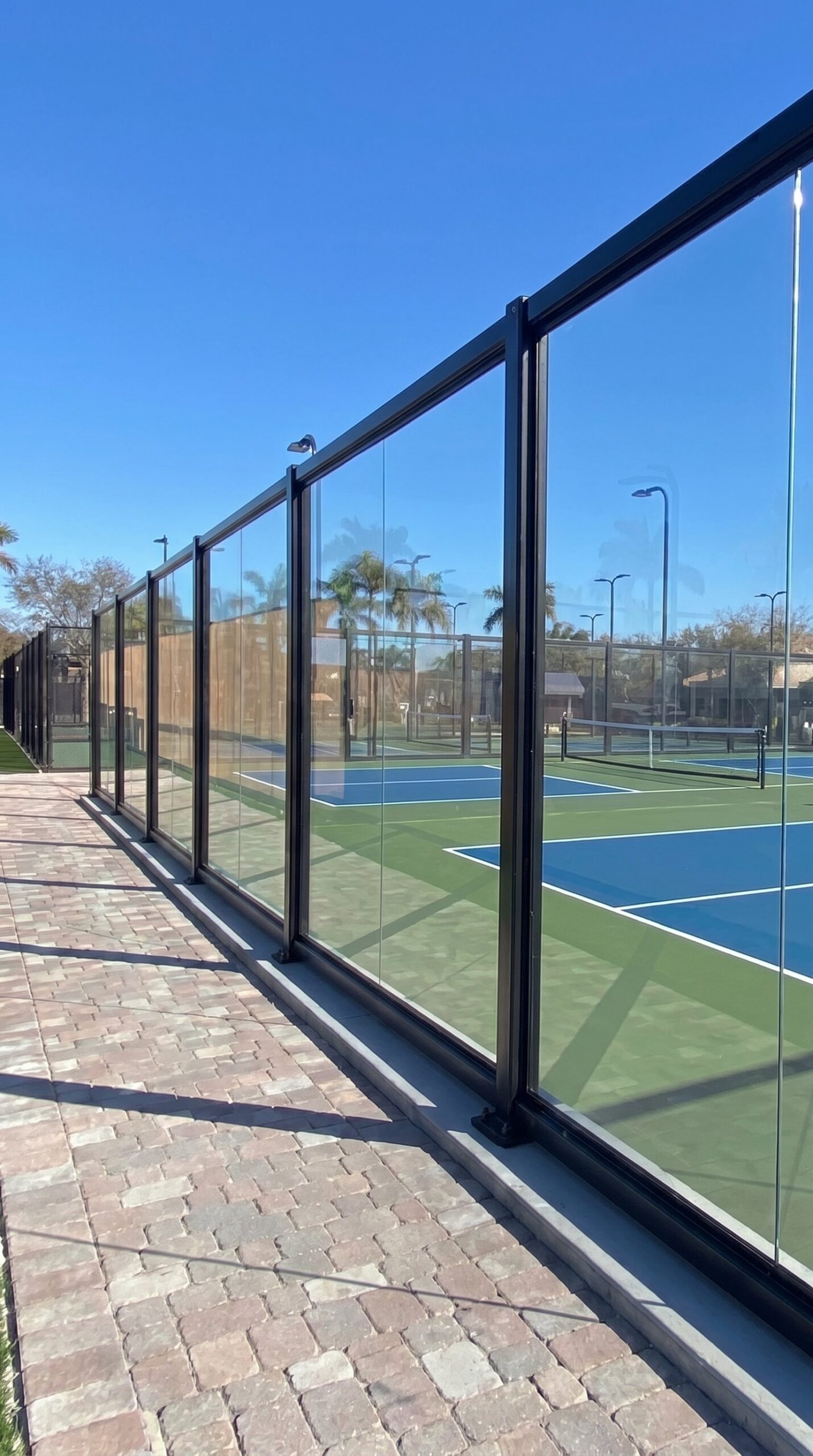
The most useful question is not what a court costs to install, but what it costs to own. On a ten-year horizon, the cheapest court at purchase is frequently the most expensive to keep: an independent analysis found that traditional sound tarps cost roughly 30% more to own over ten years than a PICKLEGLASS system, because they degrade and require repeated repurchase, seasonal labor, and maintenance. An engineered system carries a higher line item once and a known cost curve after that, backed by a 10-year no-rust guarantee, an AAMA 2605 super-durable finish, and a coating that cuts maintenance up to 90%. Lifetime cost, not sticker price, is how a serious buyer compares.
01Purchase price is not the cost
Every court decision starts with a quote, and the quote almost always understates the truth. Purchase price captures one moment; ownership plays out over a decade or more of weather, use, repair, and replacement. The two numbers can diverge so far that the lower quote becomes the more expensive court.
Total cost of ownership is the honest comparison: the installed price plus everything it takes to keep the court performing and presentable over its life. For a temporary or lower-grade system, that includes seasonal labor, cleaning and repair, and the repurchase that comes when the system fades, sags, or tears. For an engineered system, ownership cost is largely front-loaded into a build that then holds, which is why the curves cross well before year ten.
This is not an argument that more expensive is always better. It is an argument that the right number to compare is the one that includes the next ten years, because that is the number a board, an asset manager, or a thoughtful owner is actually signing up for.
02Where temporary systems quietly leak money
Chain-link enclosures and acoustic tarps are inexpensive to install because they are temporary by design. That same design is what makes them costly to own. They are exposed to weather and use with no engineered defense, so they degrade visibly, sag, fade, tear, and rust, and degradation is just deferred spending.
The leaks compound. A tarp or screen that has to be replaced two or three times over a decade carries its purchase price more than once. Each season adds labor to clean, re-tension, and patch. A faded or torn enclosure also imposes a cost that never shows on an invoice: a court that looks neglected stops being an amenity people value. The independent analysis behind the roughly 30% higher ten-year cost of sound tarps is driven precisely by this pattern of repeated repurchase, seasonal labor, and maintenance.
Temporary system
Engineered system
03What engineered durability actually buys
An engineered enclosure costs more once because it is built not to come back to you. That durability is specified, not promised, and it is what flattens the ownership curve after the install.
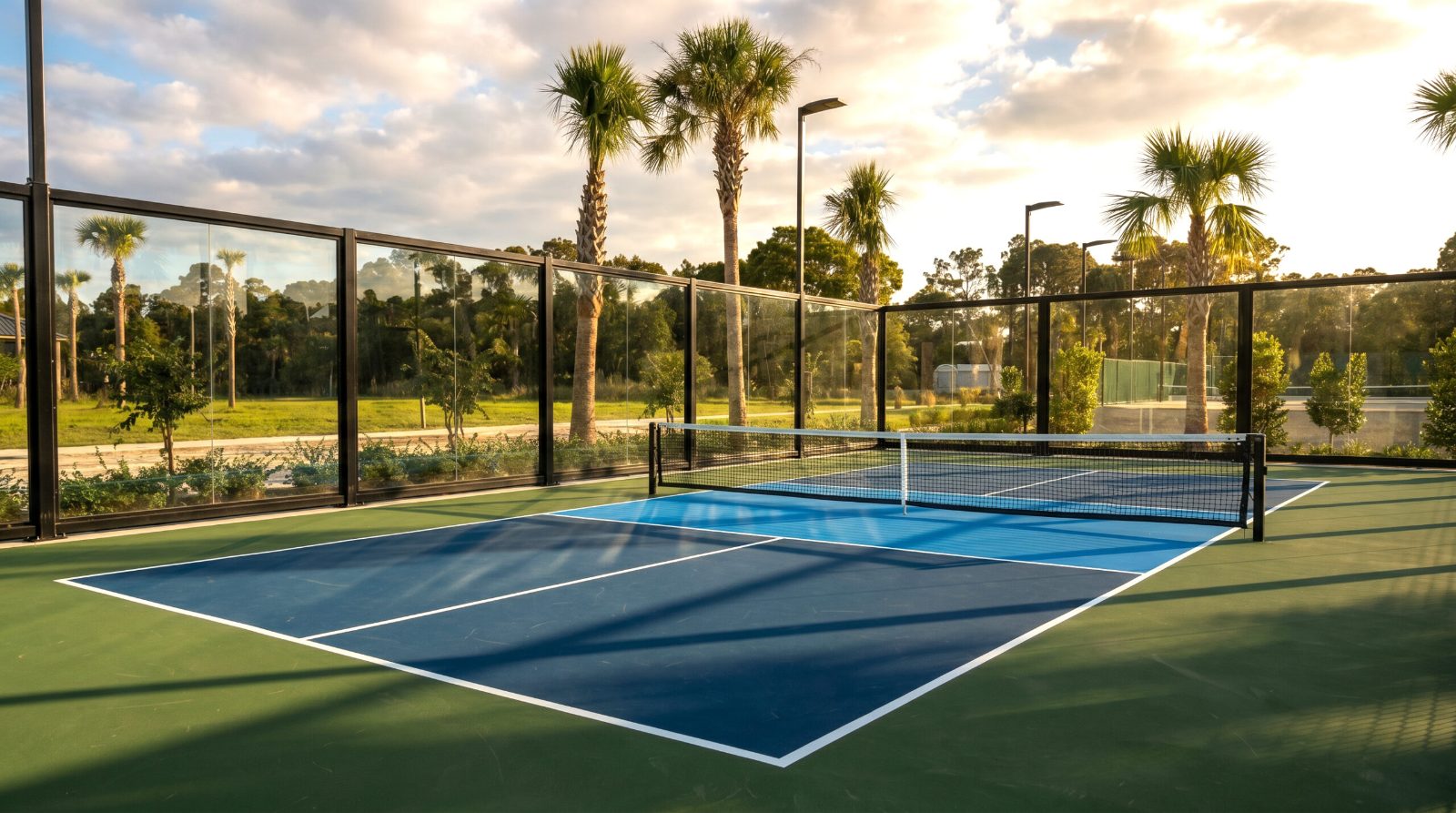
PICKLEGLASS™ carries a 10-year no-rust guarantee with no geographic carve-outs, an AAMA 2605 super-durable powder coat, and an EnduroShield coating that reduces maintenance by up to 90%. The structural glass is engineered to up to 200 mph (ASCE 7-22) wind load and holds 92%+ optical clarity, so it does not just survive a decade, it still presents as a premium amenity at the end of it. Each of those specifications is a line of cost that does not recur: no rust to remediate, far less cleaning and upkeep, and no replacement cycle.
04The cost of the things that go wrong
The biggest ownership costs are often the ones a spreadsheet never anticipates, because they come from failure rather than maintenance. A court that generates noise complaints can be forced into restricted hours or, in the worst case, a use restriction that takes the amenity offline entirely. For income property, downtime is lost revenue; for a club or community, it is a capital improvement that no longer delivers what justified it.
This is why acoustic performance belongs in a cost conversation, not just a comfort one. An acoustic-rated enclosure, PICKLEGLASS™ is rated at STC 36 and reduces noise by up to 16 dBA, experienced as up to roughly 65% quieter at the peak per an independent study by Trinity Consultants and Cerami Longman Lindsey (2025), keeps the court in play and out of dispute. The same logic applies to approval: an under-engineered court that gets shut down or never clears review is the most expensive outcome of all. See the related guidance on single-partner delivery and the full acoustic data on the sound suppression page.
05How to compare courts on lifetime cost
When two quotes sit side by side, normalize them to ten years before you compare. Ask each provider what the system will require in seasonal labor and maintenance, how many times any component will need to be replaced in a decade, what is actually guaranteed and for how long, and what happens to cost if the court draws a noise complaint. A single accountable partner who designs, engineers, and builds the system can answer those questions with a known cost curve; an assembly of separate trades and a lowest-bid enclosure usually cannot.
| Cost component | Temporary system | Engineered system |
|---|---|---|
| Install price | Low | Higher, once |
| Repurchase / replacement | Multiple cycles in 10 years | None within the guarantee |
| Seasonal labor & maintenance | Recurring | Up to 90% less |
| Rust & finish remediation | Likely | 10-year no-rust, AAMA 2605 |
| Noise-driven downtime | At risk | Controlled (STC 36) |
| 10-year cost to own | ~30% higher | Lower and predictable |
- Compare ownership, not purchase. Over ten years, traditional sound tarps cost roughly 30% more to own than an engineered PICKLEGLASS system.
- Temporary systems leak through repurchase, labor, and repair. The low install price is recovered by the seller over the decade.
- Durability is specified. A 10-year no-rust guarantee, AAMA 2605 finish, and up to 90% less maintenance are line items that do not recur.
- The worst cost is failure. Noise-driven downtime or a court that never clears review dwarfs any install saving; acoustic control (STC 36, up to 16 dBA) protects the investment.
FAQFrequently asked questions
How much does a pickleball court cost to build?
Install price depends on site conditions, the enclosure system, acoustic requirements, lighting, access control, and how many courts are built together, so a single number quoted in isolation is rarely useful. The more decision-relevant figure is lifetime cost. PICKLETILE provides a detailed, engineered estimate after a short consultation rather than a blind ballpark.
Is a glass court enclosure worth the higher price?
On a ten-year horizon, generally yes for any court near occupied buildings. An independent analysis found traditional sound tarps cost roughly 30% more to own over ten years because they degrade and require repurchase, labor, and maintenance. An engineered structural glass enclosure front-loads cost into a build that then holds, backed by a 10-year no-rust guarantee and up to 90% less maintenance.
What is the total cost of ownership of a pickleball court?
Total cost of ownership is the installed price plus everything required to keep the court performing and presentable over its life: seasonal labor, cleaning and repair, replacement of degrading components, finish remediation, and the cost of any noise-driven downtime. Temporary systems carry recurring versions of most of these; an engineered system converts them into a largely one-time, guaranteed cost.
Why do sound tarps cost more over time?
Because they are temporary by design. Exposed to weather and use with no engineered defense, they fade, sag, tear, and rust, which forces repeated repurchase and ongoing seasonal labor. An independent analysis attributes their roughly 30% higher ten-year cost to exactly this pattern of replacement and maintenance.
How long does a PICKLEGLASS court last?
It is engineered as permanent infrastructure rather than a temporary feature. PICKLEGLASS™ carries a 10-year no-rust guarantee with no geographic carve-outs, an AAMA 2605 super-durable powder coat, and structural glass rated to up to 200 mph wind load (ASCE 7-22), and it holds 92%+ optical clarity so it still presents as a premium amenity years after install.
How should I compare two court quotes?
Normalize both to ten years. Ask each provider about seasonal labor and maintenance, how many replacement cycles the system will need in a decade, what is guaranteed and for how long, and what happens to cost if the court draws a noise complaint. A single accountable partner can answer with a known cost curve; a lowest-bid assembly usually cannot.