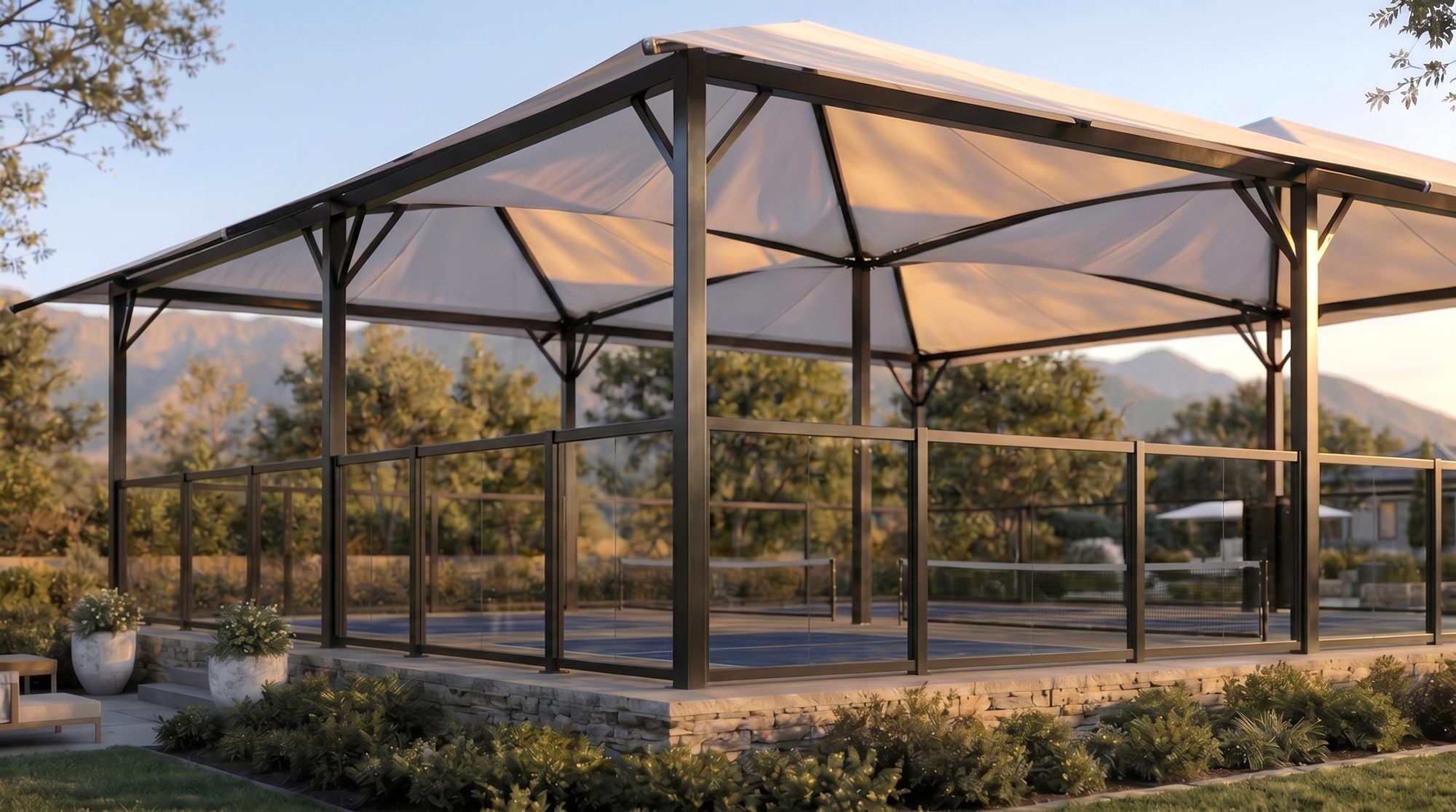
For a permanent racquet facility, PTFE-coated fiberglass is the highest-performing canopy material: a 30+ year design life, a Class A non-combustible fire rating, and a self-cleaning surface. PVC or PVDF membrane is a mid-market step that typically lasts about 15 to 20 years on a combustible base. HDPE shade cloth is a temporary cover, typically 7 to 12 years, that is porous rather than weatherproof. The right choice is the one measured over decades of ownership, not the lowest install price.
01The three materials, plainly
Almost every court cover on the market is one of three materials, and the differences between them are not cosmetic. They determine how long the structure lasts, whether it passes fire review, how much it costs to maintain, and how the space feels to play in. Understanding the three is the whole decision.
PTFE-coated fiberglass is architectural tensile membrane: a woven fiberglass fabric encapsulated in PTFE (the same family as Teflon). It is the material specified for stadiums, airports, and landmark civic structures, engineered for permanent outdoor installations. PVC or PVDF membrane is a coated polyester fabric, a real upgrade over shade cloth but built on a combustible base with a shorter service life. HDPE shade cloth is a woven plastic mesh designed to block sun; it is the least expensive option and behaves like one, porous to rain and prone to fading and sagging.
02Lifespan and fire are where they separate
The first divergence is how long each material stays in service. A PTFE membrane is engineered for a 30+ year design life and holds its performance with minimal degradation, which is why it is used on permanent structures. PVC membrane typically reaches 15 to 20 years before it discolors and weakens. HDPE shade cloth typically fades and sags within 7 to 12 years and is replaced. Over a 30-year horizon, that is the difference between building once and rebuying two or three times.
The second divergence is fire. PTFE-coated fiberglass is Class A and non-combustible, one of the highest fire classes in tensile architecture and frequently the requirement that decides institutional and municipal approval. PVC and shade cloth are built on combustible bases. For a club, a developer, or a parks department, the fire rating is not a detail; it is often the box a project has to check to be approved at all.
Temporary cover
Permanent architecture
03Weather, daylight, and what it costs to keep
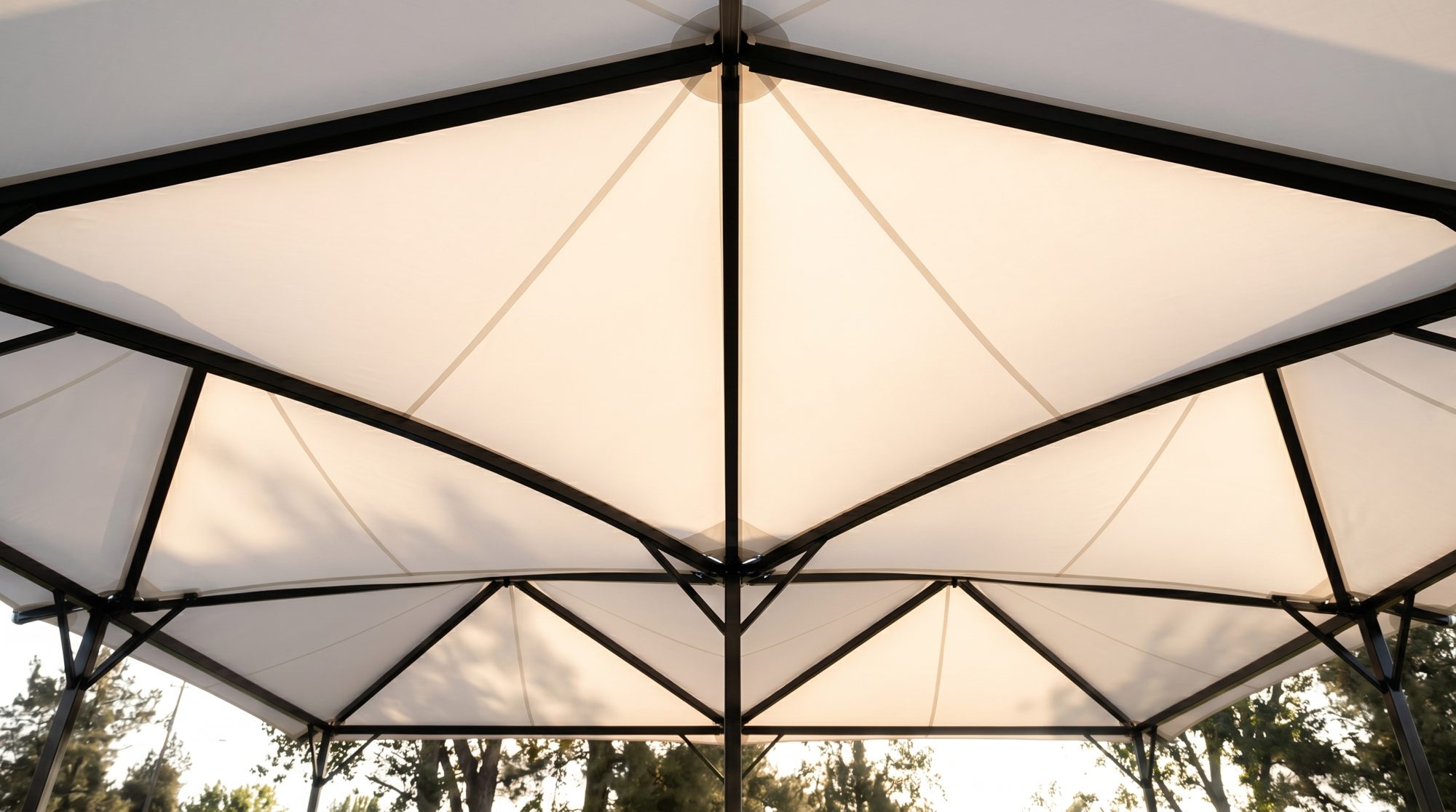
Beyond lifespan and fire, the day-to-day experience separates the materials further. PTFE is weatherproof and provides full overhead cover, where shade cloth is porous and lets rain through. The PTFE surface is also self-cleaning: it is naturally non-stick, so ordinary rainfall carries dirt away and the canopy keeps its bright finish with near-zero maintenance. Shade cloth and PVC require periodic cleaning and visibly age.
Then there is light. A PTFE membrane transmits 12 to 15% of natural light as soft, diffused daylight, giving even, glare-reduced visibility on the court and cutting daytime lighting load. Shade cloth simply blocks light, and PVC can discolor in a way that yellows the light it passes. The structure underneath matters too: PICKLEGLASS™ CANOPY is built on a hot-dip galvanized steel frame engineered for the same permanence as the membrane, so the whole system is built to last, not just the fabric on top.
04Which material is right for your facility
The honest filter is permanence. If a cover is meant to be a temporary or low-budget fix, shade cloth does that job at the lowest price. If a facility intends the court to be a lasting amenity, a permanent PTFE system is the material that matches that intent, and it is the only one of the three that is non-combustible, weatherproof, self-cleaning, and engineered for 30+ years on a galvanized structure. PVC sits in between: better than cloth, but not built for the decades a serious facility plans around.
Country clubs, developers, municipalities, and hospitality groups are usually buying permanence whether they frame it that way or not, because the court has to look and perform like an asset years after it opens. For those buyers, the comparison below is the decision in one view. The full system is the PICKLEGLASS™ CANOPY, engineered to complete the PICKLEGLASS™ envelope.
| Attribute | PTFE (PICKLEGLASS™ CANOPY) | PVC / PVDF | HDPE shade cloth |
|---|---|---|---|
| Design life | 30+ years | ~15 to 20 years | ~7 to 12 years |
| Fire | Class A, non-combustible | Combustible base | Combustible |
| Weather | Permanent, weatherproof | Weatherproof, shorter life | Porous, not weatherproof |
| Maintenance | Self-cleaning | Periodic cleaning | Fades, sags |
| Daylight | 12 to 15% diffused | Translucent, can discolor | No daylight quality |
| Class | Permanent architecture | Mid-market upgrade | Commodity shade |
- Three materials, one real decision. PTFE, PVC, and HDPE shade cloth differ on lifespan, fire, weather, and daylight, not just price.
- PTFE is the permanent option. A 30+ year design life, Class A non-combustible rating, and a self-cleaning surface, backed by a 10-year warranty.
- Fire rating often decides approval. Class A non-combustible is frequently the requirement for institutional and municipal projects.
- Compare over decades. The cheapest cover at install is typically rebought two to three times across 30 years.
FAQFrequently asked questions
What is the best canopy material for a pickleball court?
For permanent facilities, a PTFE tensile membrane is the highest-performing option: a 30+ year design life, a Class A non-combustible fire rating, and a self-cleaning surface, outperforming PVC membrane and HDPE shade cloth on durability and total cost of ownership.
What is the difference between PTFE and PVC canopies?
PTFE-coated fiberglass lasts 30+ years, is non-combustible, and is self-cleaning. PVC membrane typically lasts 15 to 20 years, has a combustible base, and needs periodic cleaning. PTFE costs more initially but is engineered as permanent infrastructure.
How does PTFE compare to shade cloth?
Shade cloth blocks some sun but is porous, not weatherproof, and typically fades and sags within 7 to 12 years. PTFE is a solid architectural membrane that is weatherproof, non-combustible, and engineered for 30+ years.
Is a PTFE canopy worth the higher price?
For facilities that intend the court to last, generally yes. A PTFE canopy is a single capital investment engineered to outlast the 7-to-20-year replacement cycle of shade cloth and PVC, and it stays a premium-looking, non-combustible, weatherproof amenity for decades.
Does a PTFE canopy provide weather protection or just shade?
Both. The PTFE membrane is weatherproof and provides full overhead cover, while transmitting 12 to 15% of natural light as soft, diffused daylight.